Main content
City of Alexandria Homepage
Thursday, May 23  •  80°Cloudy Air Quality: Green
CloseWeather Forecast
Today: High 78° Low 64°
Scattered ThunderstormsAir Quality: Green
Fri: High 65° Low 50°
PM Showers/WindAir Quality: Green
Alert
Memorial Day Holiday Schedule of Services -- Updated 5/23/2013 12:40:57 PM

All Alexandria City government offices will be closed on Monday, May 27, in observance of the Memorial Day holiday.

Read More...
City of Alexandria, VA City of Alexandria, VA
Solid Waste & Recycling
Share Share RSS RSS Print Print Text Size Text Size NormalText Size LargeText Size Extra Large
Page updated Apr 2, 2013 11:55 AM
CloseComments

No Comments Posted Yet

Yard Waste Recycling


Spring Leaf & Wood Mulch Program

As leaves and wood compost, they become a valuable nutrient supplement for garden and lawn applications. Each Spring, leaves collected each autumn are shredded in a large "tub grinder" to produce a product referred to as "leaf mulch." The Christmas trees collected in January are also shredded and chipped into "wood mulch."

Pick Up of Mulch:
For a limited time during the Spring and early Summer months, mulch is available free of charge at the site on a first-come, first-served basis. However, on-site pick up is limited to Alexandria residents and private contractors who use the mulch for pre-approved Alexandria City government projects only. Residents must bring own shovels, buckets, etc for mulch pick-up. Proof of residency will be checked at the site.

Mulch Site Location and Hours:
The City of Alexandria's mulch site is location at 4215 Eisenhower Avenue. Hours of operation are Monday through Saturday, 7:00 a.m. to 3:30 p.m. (Gates close at 3:30 p.m.).

Delivery of Mulch:
Mulch Delivery Services – Place Orders Now!
Starting Friday March 8, orders can be placed for delivery of mulch throughout April and May. Delivery dates and times are limited, and appointments are on a first come first served basis.

For a limited time during the Spring and early Summer months, mulch is also available for delivery. Deliveries are made to Alexandria residents only. The charge is $40 for each load (full, or half). Delivery of mulch loads, which equal about six cubic yards (one dump truck load) are scheduled each day Monday through Friday. No deliveries are scheduled on weekends or holidays.

Please call 703.746.4410 to schedule delivery

Please note: Checks must be received prior to delivery, and must be made payable to the City of Alexandria. If you are planning to schedule a delivery, please be prepared to let us know the specific location at which the mulch should be delivered, as it must be left on your property. Mulch cannot be delivered on the street in front of your property or behind it.

**Mulch Disclaimer: Mulch is a natural, unprocessed material that has been stored outside. As a result, it may contain allergens, poison ivy, termites and/or carpenter ants or other foreign matter. Users should wear proper clothing and protection when handling the mulch. The City of Alexandria makes no guarantee concerning the quality of the mulch, and assumes no liability for injury or property damage as a result of the use or delivery of the mulch. Residents who self-haul from the mulch site do so at their own risk. 

BACK TO TOP

2012 Residential Leaf Collection Information

The City's annual curbside leaf collection program is a service provided free of charge to all City residents receiving residential refuse and recycling services.

Loose Leaf Collection Schedule

Leaf Collection Services - Updated Weekly Schedule

Paper leaf bags will be collected at the front curb, one business day after regular refuse collection, and plastic bags will be collected as refuse.

Three Ways to Recycle Your Leaves!

  1. Compost Leaves & Yard Waste
    Composting is an easy way to take advantage of nature's recycling to make a valuable organic supplement.
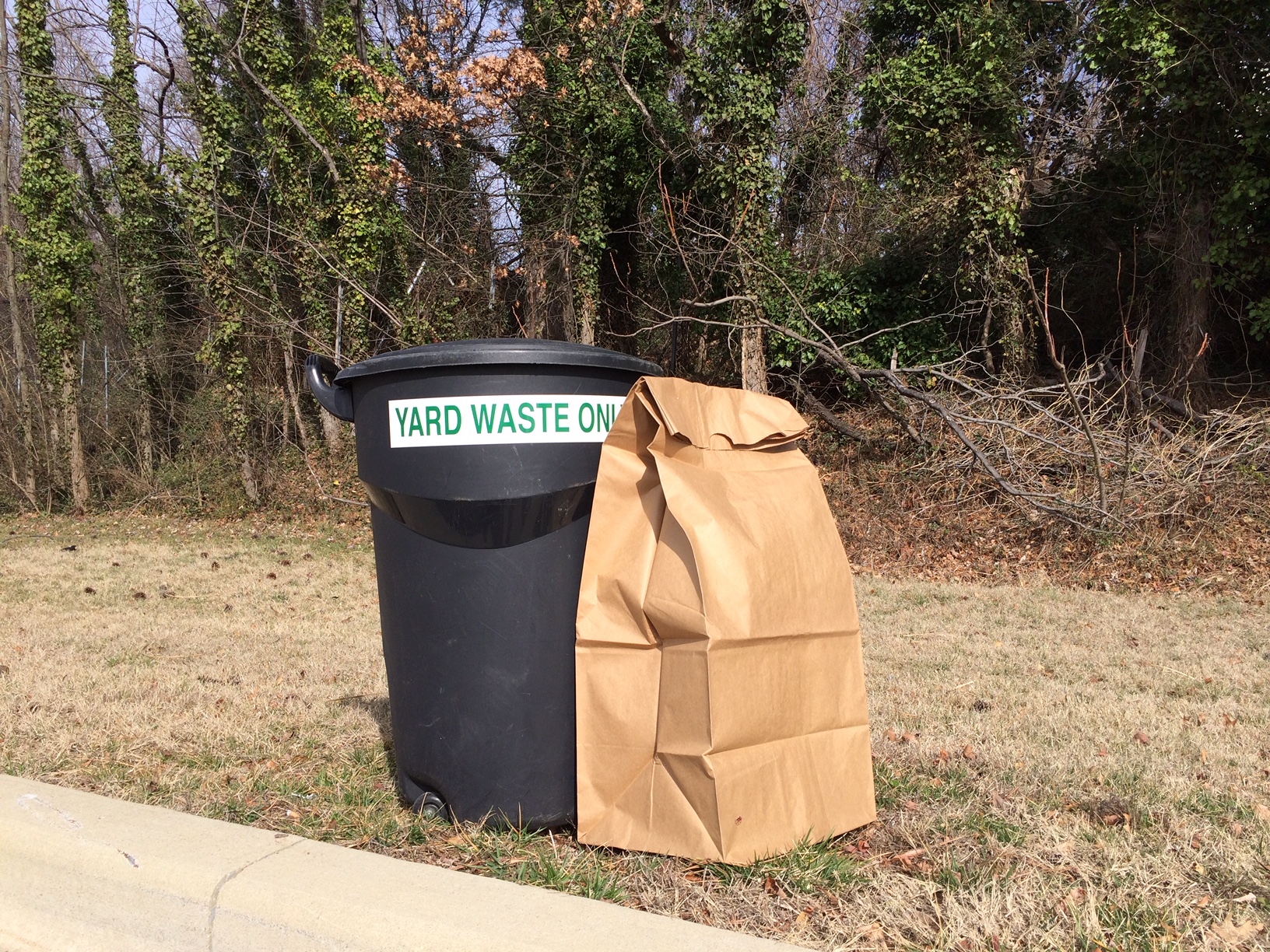
  2. Place Leaves in Paper Bags
    The City provides free biodegradable bags for leaf collection. These bags are located at several City facilities during the collection season and are free of charge. Bags are collected, at the curb, one business day after your regular refuse collection day.
  3. Rake Leaves to the Curb
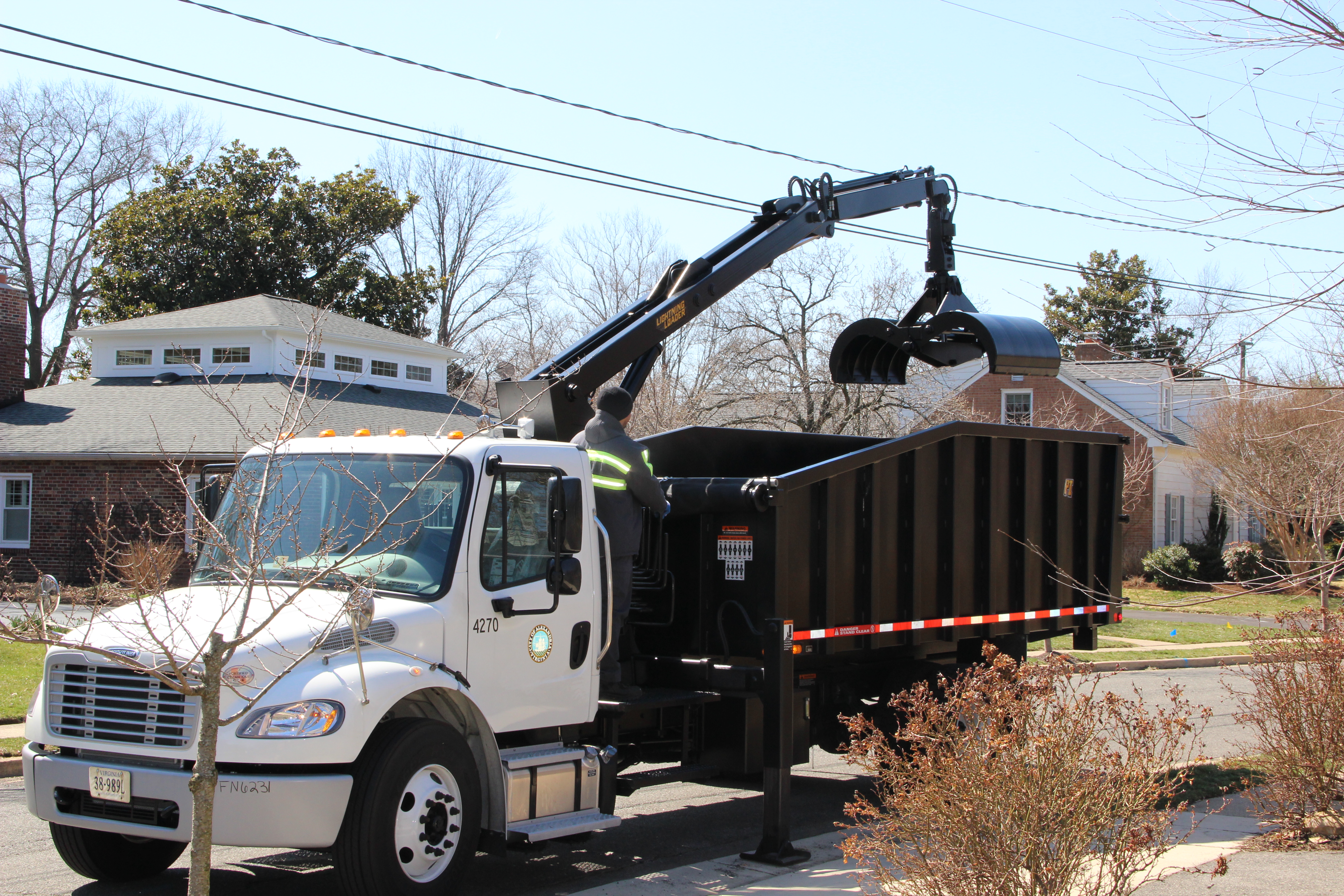
    Leaf crews will collect leaves raked to the curb with a vacuum truck. The annual leaf collection season is typically from the end of October to the beginning of January.

The City encourages residents to use the first two options to reduce the leaf collection costs.

  • Use only paper bags for leaves.
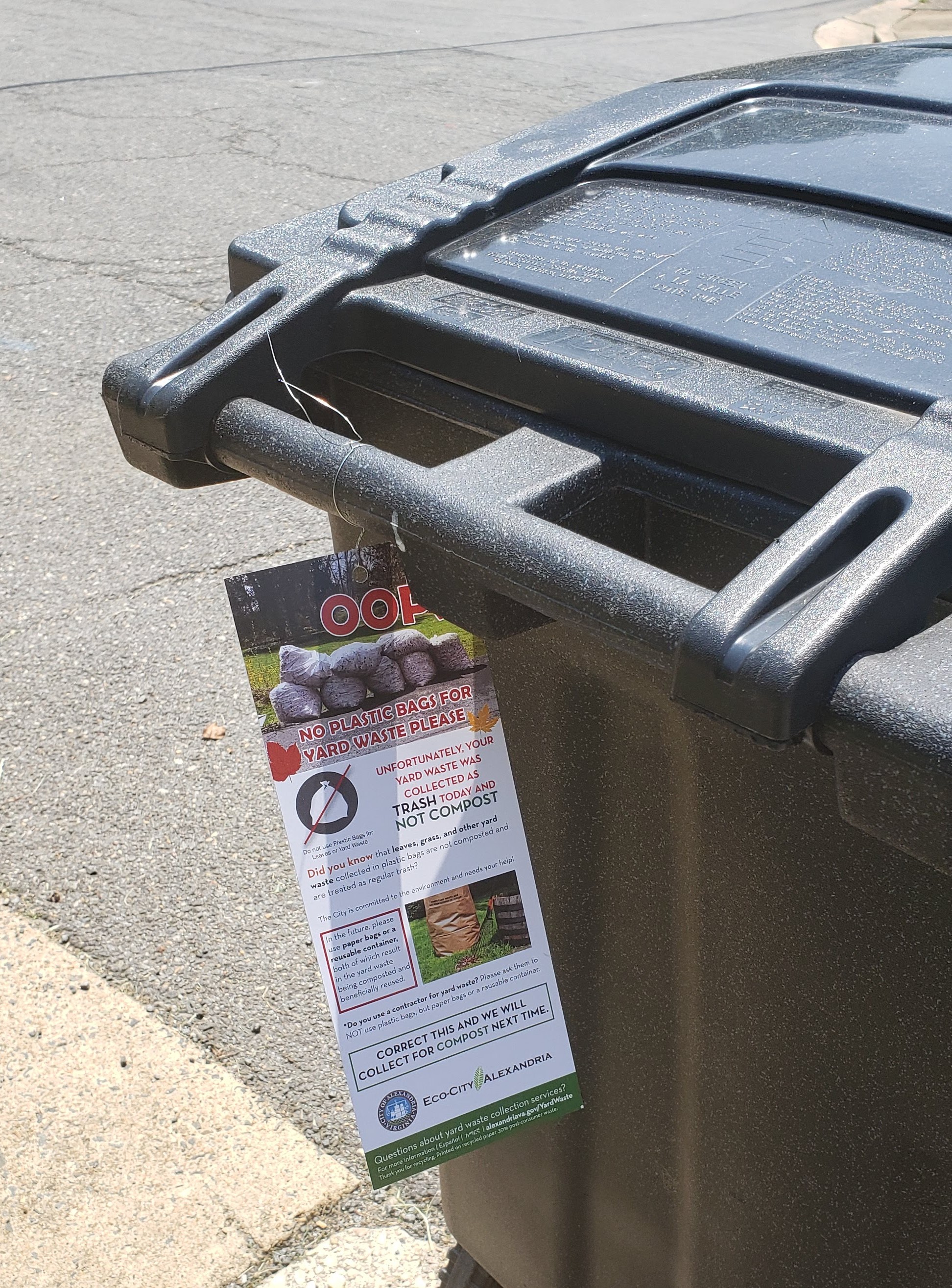
  • Remove dirt, stones, litter and other debris from leaves before placing in bags. Leaves placed in plastic bags will not be recycled through the City's leaf collection program. Yard waste and leaves in plastic bags will be disposed of at the Waste-to-Energy Plant and not recycled.
  • Bags must be placed at the curb for collection, one business day after your regular refuse collection day.

Leaf Bag Locations - Limit 15 bags per visit!
Pick up your free biodegradable bags at the following locations:

  • City Hall, 301 King Street
    Monday - Friday, 7 a.m - 5 p.m.
  • Solid Waste Division, 2900 A Business Center Drive
    Monday - Saturday, 8 a.m. - 5 p.m.
  • Charles Barrett Recreation Center, 1115 Martha Custis Drive
    Monday - Friday, 2 p.m. - 9 p.m.
  • Chinquapin Park Recreation Center, 3210 King Street
    Monday - Thursday, 6 a.m. - 9 p.m.
    Friday, 6 a.m. - 6 p.m.
    Saturday & Sunday, 8 a.m. - 6 p.m.
  • William Ramsey Recreation Center, 5650 Sanger Avenue
    Monday - Friday, 9 a.m. - 9 p.m.
    Saturday, 9 a.m. - 6 p.m.
  • Mount Vernon Recreation Center, 2701 Commonwealth Avenue
    Monday - Friday, 9 a.m. - 9 p.m.
    Saturday, 9 a.m. - 6 p.m.

Leaves Raked to the Curb Preparation

  • Remove stones, litter, branches or other debris. These items can damage our equipment and could hurt our workers!
  • Avoid placing leaves in front of storm drains or water meter covers.
  • Park cars away from leaf piles.
  • Rake leaves into a pile(s) at the curb, this enables crews to move more quickly and collect leaves more efficiently.
  • Do not rake leaves into alleys or service roads.
  • Rake leaves out the day before the earliest collection day scheduled for your area.

Leaf Season Information & Frequently Asked Questions (FAQ)

When and how are leaves picked up?
Leaves are picked up at the curb Monday-Friday. Inclement weather and amount of leaves on the ground heavily affect collection.

Where are the crews, why aren't they picking up my leaves?
If crews are behind schedule, the crews will get to you; please call the leaf hotline for further information on leaf collection delays.

Where do I rake or take my leaves?
Leaves should be raked to the curb, avoiding gutters and sewers.

When will my leaf bags be collected?
Our bagged leaves will be picked up the day following normal trash collection. (For instance, if trash is collected Monday, leaf bags will be collected Tuesday

Why were my leaves not collected, if they were put in a plastic bag on the curb?
Leaves in plastic bags will be collected with normal trash pickup. We prefer you put your leaves in biodegradable paper bags so we can recycle them into leaf mulch in the spring.

I am having an event and I need my leaves picked up before it takes place?
Unfortunately we cannot schedule special leaf pick ups. If you have leaves you would like collected before our next leaf collection pass through your neighborhood, please put them in the provided leaf bags for collection after your normal collection day.

What day will my leaves be picked up?
We cannot give you an exact date for leaf collection, due to rate of leaves falling throughout the city, however, please know that we will try our very best to get to you within the scheduled pickup dates, which have been designated for your zone.

I want my leaves picked up today, why can't I schedule a pickup?
Unfortunately the City does not offer special pickup services; we will collect your leaves during the scheduled pickup for leaf collection area.

I saw crews in my neighborhood, but they did not get my leaves or, they went to the other side of the street and did not do my side?
There is no set route for leaf collection. Crews often complete the whole left side of the street and then return for the right side. There is also a chance that crews needed to dump their truck, and circle back to finish their route.

It's snowing and raining, will crews collect during inclement weather?
Weather is directly connected with collection schedule, if the weather is bad crews cannot collect, all collection will be delayed a day, please call the leaf hotline for further information

I raked my leaves out to the curb too late, will they come back to get them?
If crews have not yet reached your neighborhood, you may still rake them out to the curb. If crews have in fact already been through your neighborhood, then you may want to wait until another pass is made or bag leaves in paper bags, which will be collected the day following your normal trash collection.

What happens to my leaves once they are picked up?
Leaves are ground and turned into mulch for our spring mulch collection.

You missed my leaves on the last pass through my neighborhood?
When did you rake your leaves to the curb? If not raked out by proper date: I am sorry however due to the late rake out, we will be unable to come back to your neighborhood until the next pass, if you would like to dispose of your leaves before that please make use of the paper bags, they are also available for pickup in recreation centers, and city facilities throughout the city.

Where can I get information about the City's leaf collection program?

  • The City provides a leaf collection brochure, which is mailed at the start of each Solid Waste customer, who receives leaf collection services.
  • Additionally, you can find your leaf collection zone, get your collection date, and up to date schedule information as we are passing through collection zones by visiting: alexandriava.gov/LeafCollection.
  • We also encourage our residents to become T&ES' friend on Facebook by connecting at: facebook.com/TESAlexandriaVA for immediate information updates.
  • Report a collection issue online directly by visiting the City's Service Request Portal
  • The City's Leaf Collection hotline is 703.746.5323, and the Solid Waste division can be reached at 703.746.4410.

Still have more questions?
Call the Leaf Collection Hotline: 703.746.LEAF (5323).

BACK TO TOP


Composting - "An Everyday Way to Fight Global Climate Change"

Learn more about Backyard Composting, view our "How to Compost 101" video.

What is Compost?

Compost is one of the most valuable resources for beautifying your landscape, preventing waste and saving money. Typical yard waste such as leaves, grass clippings, and shrub trimmings are some of the ingredients used to make compost. Finished compost is produced when bacteria and fungi break down organic matter in the pile or bin.

Why Composting?

  1. Prevents waste and saves both you and the city valuable tax dollars. Few residents realize that 20 percent of the refuse picked up on collection days is yard waste. Composting also prevents yard waste from being raked or blown into the street, where it can clog storm drains and street gutters.
  2. Avoids the trouble and expense of purchasing mulch.
  3. Assists the soil in holding nutrients and moisture where plants can use them, reducing the need for fertilizers and excess watering.
  4. Decreases soil erosion and water run-off. Plant roots penetrate compost-rich soil easier and hold the soil in place.
  5. Retains moisture and restricting weed development in the soil.

How to Compost

Composting is generally easy following 4 easy steps:

  1. Choose or construct an appropriate bin for your compost. General yard waste and grass clippings can be composted in almost any type of compost bin. Enclosed bins may be more difficult to turn and aerate, but they are also better for regulating moisture and temperature, which can accelerate the composting process. NOTE: Although vegetable and fruit scraps make excellent compost, we highly recommend you choose an enclosed container with a secure lid to avoid attracting unwanted animals or other pests.
  2. Fill your bin with a balanced mixture for best results: (1 to 3 rule)
    • 1 part Green stuff (high in nitrogen) to activate the heat process in your compost. Perfect heat-generating materials include: young weeds (before they develop seeds); comfrey leaves; yarrow; chicken, rabbit or pigeon manure; grass cuttings; etc. Other green items that compost well include fruit and vegetables; fruit and vegetable scraps; coffee grounds and tea leaves (including tea bags - remove the staple if you wish); vegetable plant remains; plants.
    • 3 parts Brown stuff (high in carbon) to serve as the "fiber" for your compost. Brown stuff includes fall (autumn) leaves; dead plants and weeds; sawdust; cardboard & cardboard tubes (from foil wraps etc); old flowers (including dried floral displays, minus plastic/foam attachments); old straw and hay; and small animal bedding.
    • Other items that can be composted but you may not have thought of before: paper towels; paper bags; cotton clothing (torn up); egg shells; hair (human, dog, cat etc.) Use all these items in moderation.
    • Air. It is possible to compost without air (anaerobically), but the process employs different bacteria and an anaerobic compost pile will take on a sour smell like vinegar. If you believe your compost pile needs more air, turn it, and consider adding more dry or brown stuff to open up the structure.
    • Water. Your pile should be about as damp as a sponge that has been wrung out. Depending on your climate, you can add water directly or rely on the moisture that comes in with "green" items. A lid on the compost bin will help to keep moisture in. If a pile gets too much water in it, it might not get enough air.
    • Soil or starter compost. This is not strictly necessary, but a light sprinkling garden soil between layers can help to introduce the correct bacteria to start the compost cycle a little more quickly. If you are pulling weeds, the soil left on the roots may be sufficient to serve this purpose.
  3. Layer or mix the different materials in your bin so that they come into contact with one another and so that you avoid any large clumps. Especially avoid compacting large quantities of green materials together.
  4. Turn your pile regularly, once every week or two. Mixing the pile in this way helps to keep air flowing inside the pile and encourages the growth of the right kind of bacteria and makes for a nice, sweet-smelling pile which will decompose faster.
  5. If you live in a colder climate that has a shorter composting season, be careful of adding slow rotting items such as tough branches, twigs and hedge clippings; wood ash; wood shavings and wood pruning. They can be composted, but you may want to compost them separately due to their longer break-down time.

What not to Compost

*Avoid composting bread, pasta, nuts, cooked food, and newspaper. They don't break down very easily, become quite slimy, and can hold up the heating, rotting-down process. (Old nuts left in the garden will disappear quickly if you have squirrels or monkeys around!!)

Never compost the following items for reasons of health, hygiene and inability to break down:

  • Meat and meat scraps
  • Bones
  • Fish and fish bones
  • Plastic or synthetic fibers
  • Oil or fat
  • Pet or human feces (except for manure of herbivorous creatures such as rabbits and horses)
  • Weeds that have gone to seed
  • Diseased plants
  • Disposable diapers (nappies)
  • Glossy magazines
  • Coal and coke ash
  • Cat litter

These items should be removed in the normal garbage or recycling collection.

Trouble Shooting
Composting can be one part science and one part art form. Learning how to achieve the right balance of materials in your compost pile often takes practice. Below is a list of common problems that can arise with compost piles.

Problem

Possible Causes

Solution

Rotten Odor

- excess moisture
(anaerobic conditions)
- compaction
(anaerobic conditions)

- turn pile or add dry porous "brown" material such as straw, leaves, or sawdust (untreated)
- turn pile or make pile smaller

Ammonia Odor

- too much nitrogen or "green material" (lack of carbon)

- add high carbon or "brown" material such as straw, wood chips, sawdust, or leaves

Low Pile Temperature

- pile too small
- insufficient moisture
- poor aeration
- not enough nitrogen or "green material"

- make pile bigger or insulate sides
- add water while turning pile
- turn pile
- add "green material" (nitrogen sources) such as grass clippings

Pests such as rats, raccoons, insects

- presence of meat scraps or fatty food waste

- NEVER include meat, dairy or fatty foods in a compost pile.
- Composting should not attract pests or cause of any rodent problem, however, it can aggravate existing problems if improper composting is practiced.

Resources:

Additional Information on Composting is available by contacting:

BACK TO TOP


Grasscycling

What is Grasscycling?

Grasscycling involves leaving the grass clipping on your lawn, to fertilize the grass and return their nutrients to the lawn. Grasscycling is an alternative to throwing away the valuable nutrients in your grass.

Why Grasscycling?

Each year, the average lawn generates eight tons of grass clippings per acre. Your grass clippings can account for as much as 50% of your yard waste during the peak growing season. You can leave these clippings on the lawn to feed the soil. This practice is known as "grasscycling." It enhances the health of your lawn by adding moisture and acting as a natural fertilizer. It also saves you time – no more bagging clippings and dragging them to the curb!

Materials Needed:

  • Lawnmower and a yard

Time Required:

  • Grasscycling will substantially reduce the time you are spending on lawn care. Specifics will depend on the size of your lawn.

How to Grasscycle:

  1. Mow your lawn to between 2 and 2 ½ inches to hide clippings. Cut no more than 1/3 of grass height to keep clippings small. Leave the clippings on the lawn. They will break down quickly and not result in thatch. Mow the lawn when it's dry to avoid clumping.
  2. Water deeply, but infrequently. (If you have clay soil, it is better to water more frequently for a shorter period of time.)
  3. If you need a new mower, consider a push mower or an electric mulching lawn mower. The best mulching mowers can blow finely chopped clippings down into your lawn where they disappear from sight, decompose, and fertilize the lawn quickly. An electric mulching mower also cuts down on air pollution and a push mower eliminates it completely!

Resources:

BACK TO TOP


Holiday Tree Collection

If you receive City curbside recycling service, you can set out your Christmas tree for recycling. Remove all tinsel, lights, ornaments and set it at the curb by 6 a.m. Trees will be ground into mulch, and distributed for free to residents in the spring.

To prepare trees for collection, residents are reminded to:

  • Remove all ornaments, tinsel and stands.
  • Do not place in plastic bags.
  • Place the tree at the curb no earlier than 5 p.m. on Friday and no later than 6 a.m. on the Saturday before collection.

BACK TO TOP


2900-B Business Center Drive
Alexandria, VA 22314
703.746.4410
Fax: 703.751.2569
E-mail

Office Hours:
Monday-Friday
8:00 a.m. - 4:00 p.m.