
Every September, communities across the country recognize Suicide Awareness and Prevention Month. This is a time to shed light on a difficult topic that touches countless lives. In Alexandria, the Department of Community and Human Services (DCHS) is at the forefront of this effort, working to ensure that residents know they are not alone and that help is available.
Suicide is one of the leading causes of death in the United States, yet it is also one of the most preventable. Behind every statistic is a person with a story, a family, and a community affected by loss or living through the struggles of a mental health condition for many, the journey includes moments of deep pain, isolation, or shame, but also resilience, healing, and hope. DCHS works to create pathways to support each stage of that journey, ensuring residents have tools to recognize warning signs, access care, and support loved ones.
Through partnership with the Suicide Prevention Alliance of Northern Virginia (SPAN), DCHS connects Alexandrians with practical resources like Check-Up from the Neck-Up, a free mental health self-assessment that can help people take the first step in understanding what they are experiencing. SPAN also shares guides that outline risk factors and warning signs, as well as clear action steps anyone can take to help. Short videos are available for teens, parents, and peers. These videos help to recognize that suicide impacts people differently depending on their stage of life and relationships.
Prevention also means reducing access to lethal means during a crisis. DCHS supports the Lock & Talk program, which provides free firearm locks and medication lock boxes to residents. These simple tools can interrupt a critical moment and give someone the chance to find safety and support.
Crisis Support for Every Moment of the Journey
For those facing immediate distress, help is just a call or text away. Trained professionals are available 24/7 at 988, the National Suicide & Crisis Lifeline. By calling or texting 988, where crisis workers provide compassionate, confidential support whether someone needs to talk through overwhelming feelings, connect to treatment, or simply be reminded that they are not alone.
Many people who survive a suicide attempt share that they did not truly want to die. They wanted relief from unbearable pain. Hearing a voice at the other end of the line, or knowing someone is listening, can be the first step toward finding that relief in healthier, safer ways.
Building Community of Prevention and Healing
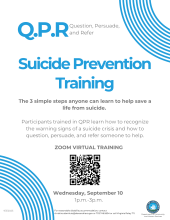
DCHS also invests in prevention programs that prepare community members to recognize when someone might be struggling and step in with support. With the help of federal funding, DCHS is expanding programs like Everyone’s an Asset Builder Training, which equips adults to strengthen young people’s resilience, Youth Mental Health First-Aid , which trains community members to identify signs of mental health crises and respond appropriately and QPR-Suicide Prevention Training. These trainings equip parents, teachers, mentors, and neighbors with skills to listen, support and guide others to care.
Meeting People Where They Are
Mental health and suicide are often shaped by culture, language, and community. DCHS recognizes this reality and offers multilingual and multicultural resources for BIPOC, immigrant, refugee, and LGBTQIA+ residents. Materials are available in Spanish, and crisis support is accessible to people of all backgrounds. By acknowledging the diverse ways people experience mental health challenges and stigma, DCHS ensures that no one is left behind.
The path to healing is not always linear. For some, it begins with a small step. Taking a self-assessment, opening up to a trusted friend, or attending community training can change the trajectory of someone’s life. For others, it may mean finding the courage to pick up the phone in the middle of the night and ask for help. Each journey is different, but all share a common thread: the need for connection, understanding, and compassion.
DCHS emphasizes that recovery is possible and that reaching out is a sign of strength. Many who once felt hopeless have gone on to rebuild their lives, find joy again, and become advocates for others. Their stories remind us that with support, no one’s story has to end in tragedy.
Start the Conversation
This Suicide Awareness and Prevention Month, Alexandria is encouraging residents to learn, share, and get involved. That may mean requesting a Lock & Talk safety lock, enrolling in Mental Health First-Aid, or simply starting a conversation about mental health in your family, workplace, or neighborhood.
Together, we can reduce stigma, spread hope, and ensure that every Alexandrian knows help is here, healing is possible, and you are not alone.
If you or someone you know is in crisis, dial 988, the national Suicide & Crisis Lifeline. By calling or texting 988, you’ll be connected right away with trained crisis counselors who are available 24/7 to provide support, guidance, and resources.
Learn more about Suicide Risks and Prevention: alexandriava.gov/youth-development/suicide-risks-and-prevention-resources
