
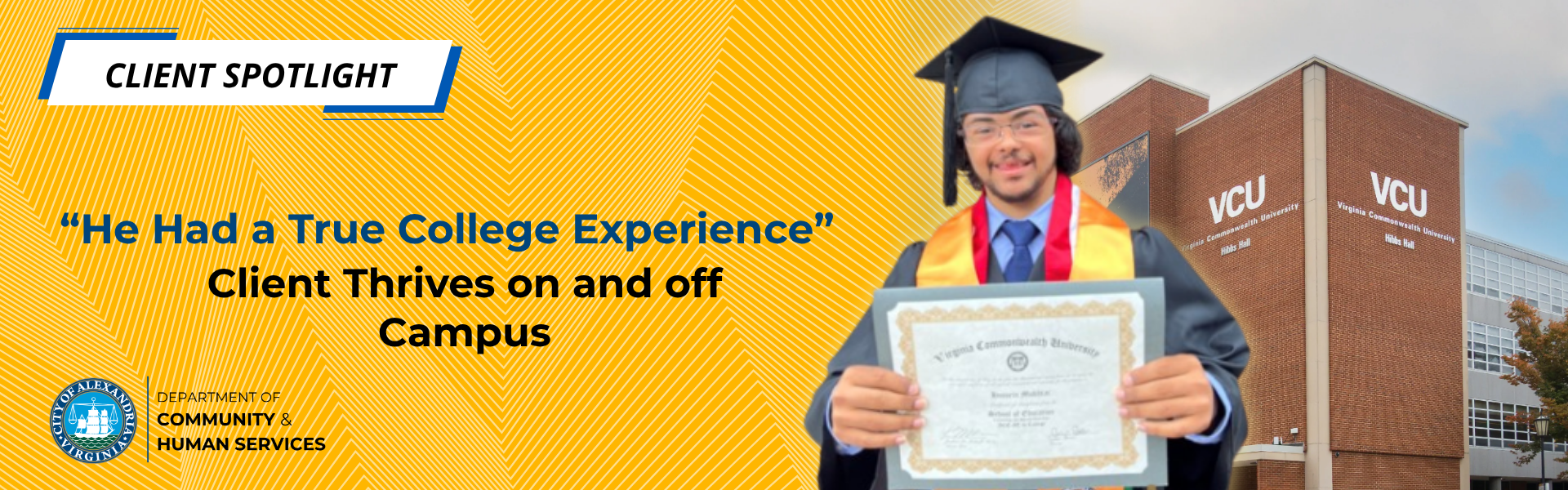
“He Had a True College Experience”: DCHS Client Thrives on and off Campus
October 28, 2026 – October is National Down Syndrome Awareness Month, a time to celebrate people with Down Syndrome and the vibrancy they add to our communities. In honor of the month, we’re excited to highlight the story of DCHS client Hussein. Hussein’s story is a powerful example of how robust support systems can create inclusive communities where people with intellectual and developmental disabilities can live, work, and thrive on their own terms.
When 22-year-old Hussein looks back on his college experience at Virginia Commonwealth University (VCU), the first thing that comes to mind is how amazing the food was.
Which isn’t surprising because VCU has an award-winning campus dining program and Richmond itself is a foodie’s heaven, with many restaurants, coffee shops, and bakeries just off campus.
But after some prompting from his mom, Omaima, Hussein expands on his answer.
He also enjoyed his classes, especially ANTH 103: Intro to Anthropology and THEA 103: Stagecraft, a crash-course in all the behind-the-scenes work that goes into a theatrical production. Taking walks in Monroe Park–a popular hangout spot for VCU students. Dancing at the many events held by the college’s 500+ student organizations. “I love to dance,” Hussein says. And hanging out with his co-workers from the college gym, where he worked for two semesters.
“He had a true college experience,” says Eva Statler, Children & Youth Intellectual and Development Disability (ID/DD) Medicaid Waiver Program Supervisor. “[VCU] was a great fit for him.”
With support from the Youth ID/DD Medicaid Waiver Program, Hussein was able to attend VCU’s Academic Career Exploration-Individualized Techniques (ACE-IT) program, a post-secondary certificate program for students with intellectual and developmental disabilities.
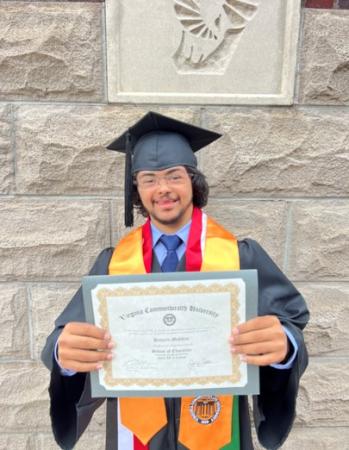
Over four semesters, he took classes in line with his career goals and interests, gained valuable work and internship experience, and even lived in his own apartment.
Hussein thrived at VCU. He got to experience independence by living away from home, and grew his social, problem-solving, and time-management skills. The transformative experiences Hussein had on campus have allowed him to build a strong foundation as he transitions into adulthood.
Statler, who was Hussein’s case manager for nearly a decade, is quick to credit Hussein’s success to his energetic personality, curiosity, and warmth. “He just loves people,” Statler says. “And is always excited to do more.”
The journey that led Hussein to where he is today is a powerful example of what’s possible when people with intellectual and developmental disabilities have the support, resources, and tools to live, work, and thrive on their own terms.
An Early Start
On the recommendation of his pediatrician, Hussein began early intervention services through the Parent and Infant Education (PIE) program soon after he was born.
“[A caseworker] used to come each week,” Omaima, Hussein’s mom, remembers. “The first thing they started with was physical therapy.”
PIE provides extra help to infants and toddlers who are developing at a different pace. Program staff come to the child’s home, childcare center, or other places where their family spends time, instead of taking the child out of their community. The program also teaches parents, caregivers, and other important people in the child’s life intervention strategies that they can use across everyday activities and family routines.
Week after week, Hussein was able to access physical, occupational, and speech and language therapy to support his growth and development. And by the time he completed PIE, he was walking confidently and had already built strong speech and language skills.
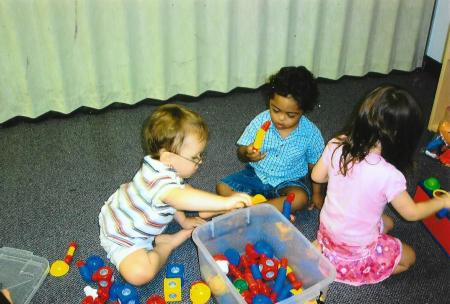
“He did not actually say a lot until three years old,” says his mom Omaima. She credits the PIE program as a big reason Hussein was able to reach that milestone.
With each visit, she watched him grow his cognitive, social, and motor skills. And the service coordination support offered through PIE helped make it easier to keep track of everything. “I really needed the support,” Omaima says. “[PIE] helped me a lot when he was younger, until we started school.”
Services Grow Alongside Hussein and His Family
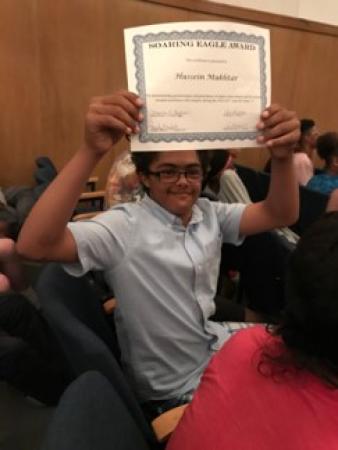
As Hussein’s education progressed, his support services adapted to fit his changing needs.
For example, when Hussein started middle school and started to develop his sense of independence, he was able to access specialized support to meet his changing needs through a Personal Care Attendant (PCA).
Through the Commonwealth Coordinated Care Plus Waiver (formerly the Elderly or Disabled with Consumer-Direction Waiver), and later the Developmental Disability Medicaid Waiver, Hussein and his family could hire a part-time staff member to support him with daily tasks, helping him to live safely and independently in his community.
Hussein’s PCA helps him to do tasks like cleaning and tidying his home, and makes sure Hussein sticks to a gluten-free diet to manage his Celiac disease. They also help Hussein get around by driving him to his appointments, sports practice, community events, and other outings.
“We want to make sure that Hussein has access to anything he wants to do in the community,” says Statler. “And has his needs and wants met.”
Hussein’s PCA also accompanies him on walks, plays board games with him, and takes Hussein and his friends out to the movies, the mall, and other spots around the city. When Hussein moved to Richmond to attend VCU, his PCA helped make sure he was safe in his apartment and attended events and activities around campus with him.
Integrated Services Help Build Community and Life Skills
Naturally, spending so much time together means that friendships develop. And that’s exactly what happened with one of Hussein’s former PCAs, Norma.
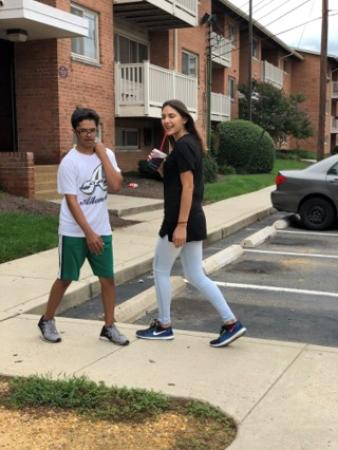
“She's like family to us now,” his mom Omaima says. Norma, who worked with Hussein for over two years, grew close to him and continues to stay in touch with Hussein and his family.
And sometimes the exchange goes the other way– family members, neighbors, and others already a part of a person’s community, become paid PCAs.
Hussein’s younger sister has been his PCA while home for the summer from college, and Ammar, Hussein’s current PCA, is a childhood friend he has known for years.
Having a family member or other community member serve as a PCA can help make the relationship smoother and help people with intellectual and developmental disabilities nurture stronger community ties.
“I always tease him because his social life is better than mine,” says Ammar. “He has all these activities that he does on a day-to-day basis.”
Hussein is active in his community and has a jam-packed schedule.
He volunteers at the local food pantry with his Group Day Support cohort – a non-residential skill building program for adults with intellectual and developmental disabilities. Hussein also stays active by playing basketball, golf, and soccer through Special Olympics, and spends lots of time hanging out with his friends. They recently scored tickets to see a live wrestling match as part of the World Wrestling Entertainment (WWE) Summer Tour – Hussein is a huge WWE fan.
As Hussein’s PCA, Ammar accompanies him to most of these activities. “He's the one who brought me out of my shell. So, I appreciate him for that,” Ammar says.
Hussein also joins Ammar at work.
Ammar’s family owns a small electronics and hardware store, and Hussein helps greet customers, stocks the shelves, and takes inventory.Every week, he meticulously goes through each item on the shelves, noting which items need to be restocked and tracking any discrepancies.
“It helps him not only identify what everything is,” says Ammar. “But learn what those items are and what they may be used for.”
In the process, Hussein is also building valuable problem-solving and leadership skills that will appeal to future employers and strengthen his resume.
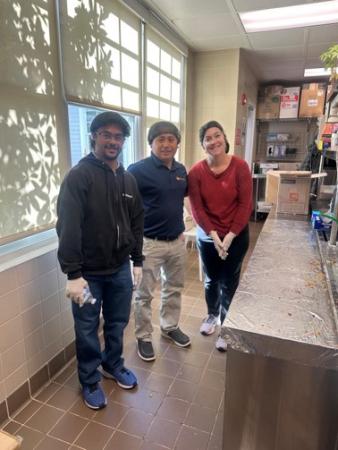
In fact, Hussein has gotten so good at taking inventory that he now independently manages the store’s inventory. “It’s entirely his responsibility. I don't do it anymore,” says Ammar.
Looking Towards the Future
After graduating from the ACE-IT program at VCU, Hussein decided to move back to Alexandria to be closer to his family. He is now focused on tackling a new challenge: finding a job. Hussein has his sights set on a role at a local coffee shop, museum, or library, and continues to participate in support services through the DD Medicaid Waiver, including Group Day Support, PCA, community coaching, and electronic-based home support, as he navigates the next steps in his journey.
To learn more about intellectual and developmental disability services available, visit alexandriava.gov/adult-behavioral-health/developmental-disability-services.