
City Manager's Presentation to the City Council
Background
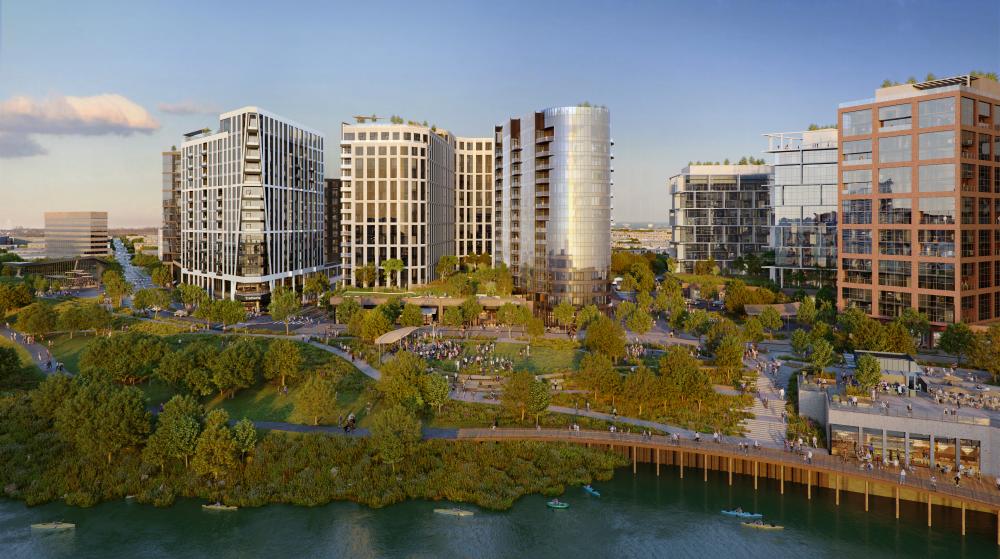
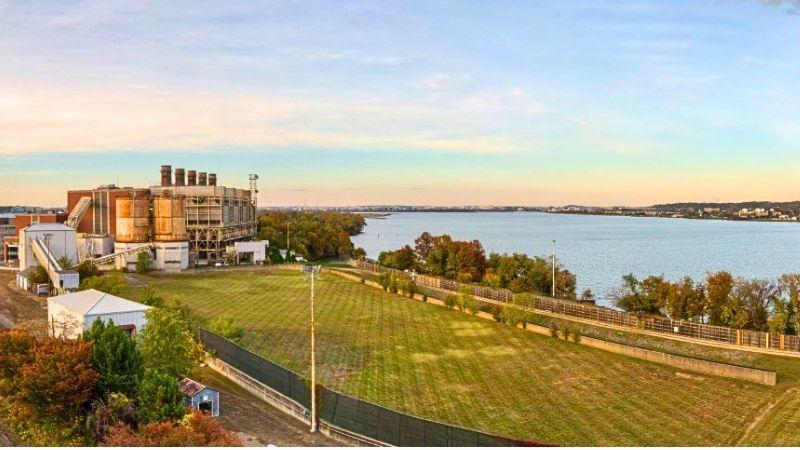
PRGS is an 18.87-acre site comprised of a defunct coal-fired power plant, constructed from 1947 to 1957 to support the energy needs of the Washington D.C. area. PRGS required 33 tons of coal daily to operate when first opened, and for several years the facility was the single largest source of air pollutants in Northern Virginia. Its closure in 2012 was a culmination of efforts by residents and the City for more than a decade. Since the power plant’s closure in 2012, there have been no uses on site, and it has remained inaccessible to the public. Redevelopment at this site has been planned since the PRGS’s closure.
In September 2017, the City Council adopted the Old Town North Small Area Plan (OTNSAP) after an eighteen-month community planning process. At the time of the plan adoption, many details about the site were unknown and no future owner/developer had been identified. The OTNSAP included an illustrative concept to integrate the site into the fabric of Old Town North, expand open space and incorporate key principles identified in the planning process. The OTNSAP recommended rezoning from UT (Utility) to a Coordinated Development District (CDD). Key principles included extending retail, arts and cultural uses into the site, meeting sustainability targets and creating significant open space along the waterfront and rail corridor.
In late 2020, the HRP Group specializing in complex redevelopment projects purchased the site and began developing conceptual plans for City review and approval of a CDD Conceptual Design Plan. That process involved community outreach and meeting with stakeholders, including civic and neighborhood groups, the Urban Design Advisory Committee, the Parks and Recreation Commission, the Waterfront Commission, the Environmental Policy Commission and the Alexandria Housing Affordability Advisory Committee, over the course of a year before the CDD was approved in July 2022. Following CDD approval, HRP Group developed the Infrastructure Development Site Plan (IDSP) for City review and approval, which took one year and was approved in June 2023. HRP is currently engaged in the City planning review process for the first phase of development which includes Blocks B and C, the Waterfront Park and the Rail Corridor Park. HRP has conducted site tours and led community engagement with neighbors and other stakeholders as a part of the planning process.
Based on the power plant deconstruction, abatement, site preparation and infrastructure costs, HRP Group requested that City staff review a potential opportunity to utilize City investment, in the form of tax incremental financing, to enable transformation of the site into a vibrant mixed-use development. In total, the realization of the plan would encompass up to 2.5 million square feet of commercial and residential development with a projected capitalization of approximately $2 billion, and more than five acres of publicly accessible open space on site as well as off-site improvements. The total redevelopment is estimated to generate over $1 billion in tax revenue over the financing period and help realize the vision of the OTNSAP.
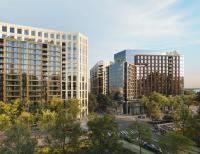
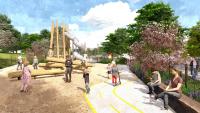
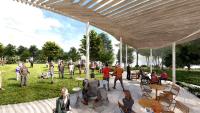
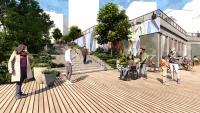
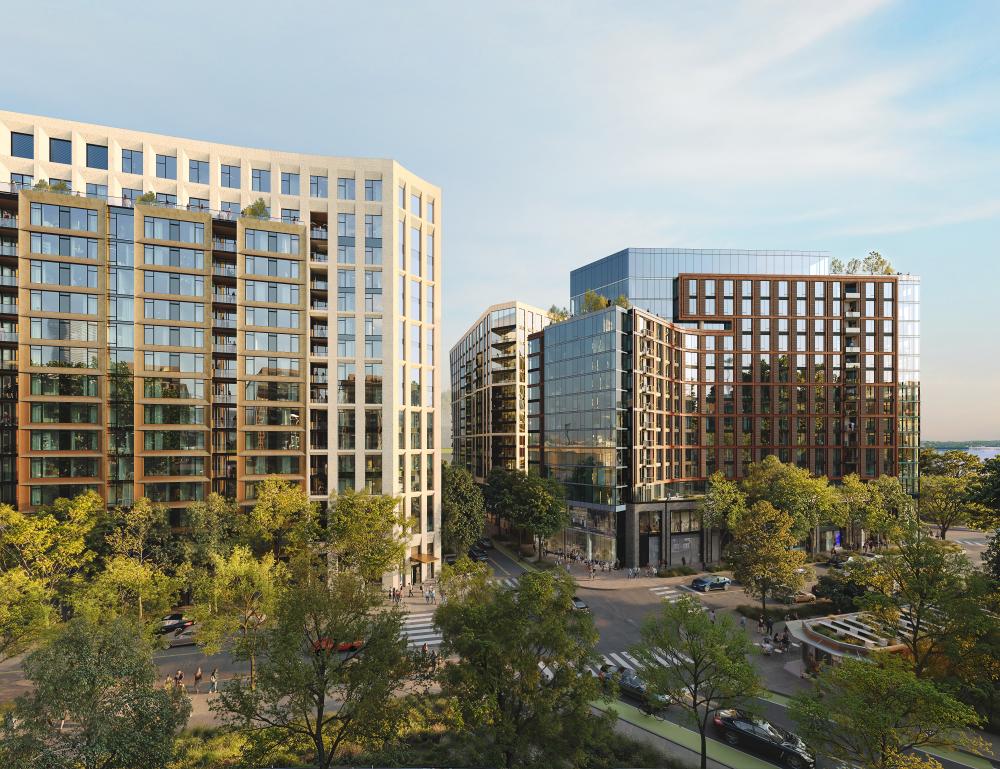
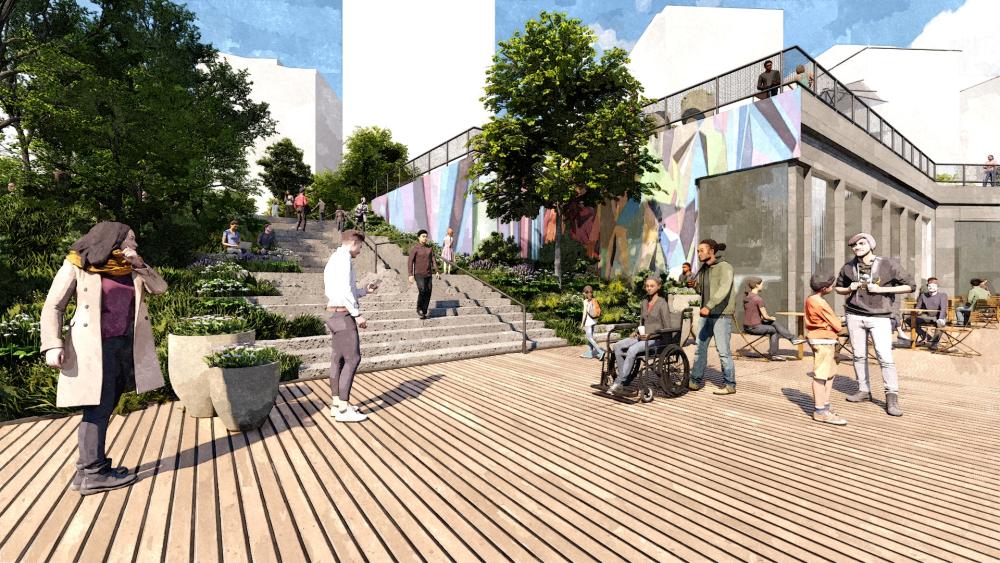
The remediation and proposed redevelopment will transform the defunct 18.87-acre former coal-fired power plant site into a mixed-use, walkable neighborhood with arts and cultural uses and forward-thinking sustainability targets near the City’s waterfront. Under Goal Area 1. Place-Based Development of the City adopted ALX Forward Economic Growth Strategic Framework, Old Town North is identified as one of the City’s catalyst sites to prioritize large-scale opportunities that encourage bold, transformative investments to spur mixed-use development, to enhance Alexandria’s quality of place, and to generate new revenue. Consistent with the Economic Development Investment Decision Matrix adopted as a part of ALX Forward, the City’s financial involvement meets the City’s “but for” requirement .i.e. the project has a financial gap and would not be feasible as envisioned without City investment. Additionally, the proposed transaction structure as described below boosts future debt capacity via increased tax revenue and mitigates any impact to the City’s AAA credit rating.
The site must be made “ready,” which will require the deconstruction of the coal-fired power plant, remediation and infrastructure improvements to be sequenced as vertical development occurs. The developer has requested City participation for a portion of the site readiness costs, to be provided through tax increment financing (TIF) split over two phases, and the creation of a Community Development Authority (CDA) to backstop the TIF. Unlike City general obligation bonds that are secured by general fund revenues and the full faith and credit of the City, any City investment for eligible improvements under section 15.2-5158 of the Code of Virginia will be structured and facilitated through the issuance of revenue bonds (“Revenue Bonds”) that are intended to be repaid from a portion of eligible incremental tax revenues (real property tax, retail sales and use tax, meals tax, and transient lodging tax) generated from the site. Other City taxes which will be directly generated by the redevelopment (personal property, business tangible, business and professional license, utility, real estate transfer and other miscellaneous taxes) will not be considered eligible incremental tax revenues, and will belong to the City general fund. The City intends to backstop the TIF with special assessments to be imposed on the taxable property comprising the CDA district. The special assessments will provide a second source of funds to cover the debt service paid on the Revenue Bonds to the extent eligible incremental tax revenues are insufficient to timely pay such debt service. However, the special assessments may only be imposed upon the request and agreement of the owners of the land comprising the CDA district and can only be collected and applied as approved by the CDA. Thus, the City can access the additional security for the financing of the infrastructure improvements (i.e., the special assessments) through the establishment of the CDA. The City has experience leveraging a similar financing structure with the CDA for the Landmark Mall Redevelopment.
In discussions with the developer, City staff also reviewed the request to utilize City investment to achieve two of the City Council’s strategic priorities – strengthening our economy through infrastructure investment in a defunct site to return it to active tax revenue generating use as noted above, and advancing housing options. The City’s investment aims to catalyze the conversion of a challenging site to mixed-use development while also meeting Alexandria’s need for housing with the creation of up to 2,000 units as permitted by the CDD.
The Developer’s affordable housing commitment will be delivered in three forms:
- Delivery of on-site affordable units, included in all residential phases of development (~60 units)
- Affordable housing contribution to the Housing Trust Fund
- Public-Private Partnership (PPP) to construct a dedicated +/- 100-unit affordable building (100,000 SF).
- In the approved CDD, the affordable housing contributions may be used as a source of funding for the 100,000 SF all affordable P3 project. The Developer has proposed using the affordable housing contribution to create a pathway to the on-site all affordable housing P3 project.
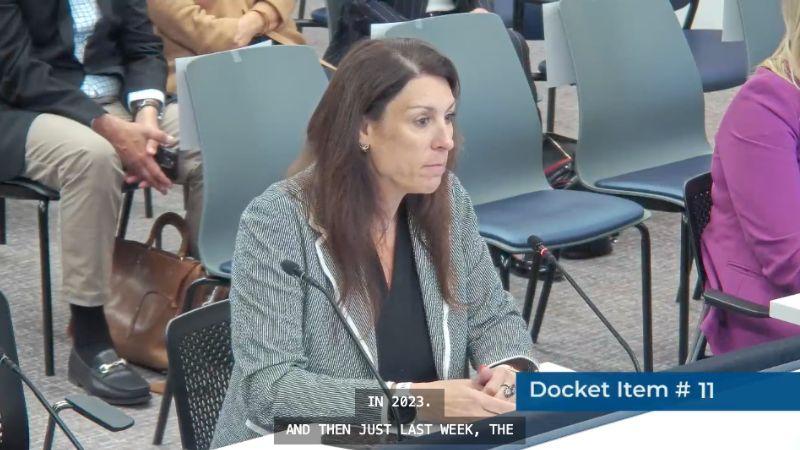
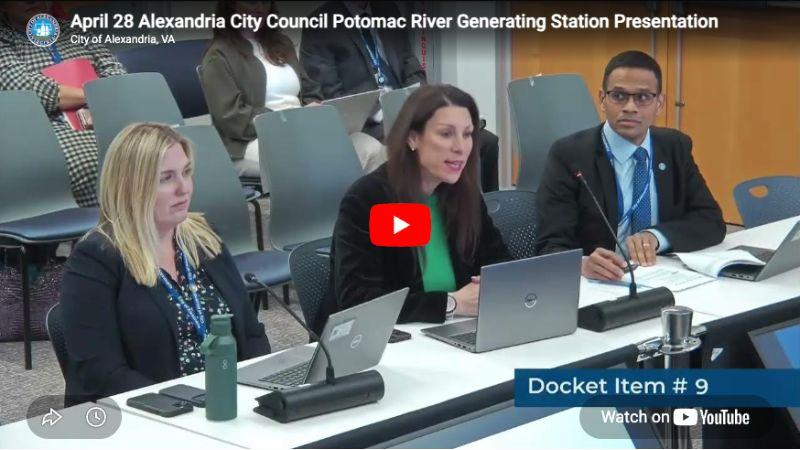
During the April 28, 2026 Legislative Meeting, the City Manager introduced details regarding possible City investment and public benefits. The Developer hosted a virtual community meeting on May 4, with about 370+ registrants and 170+ attendees. The attendees asked questions about deconstruction, remediation, construction, TIF proposal, transportation and parking, design, open space, and community benefits. On May 26, the Developer hosted a second virtual community meeting, with about 180 registrants and approximately 120 attendees, focused on topics related to project phasing, arts and cultural uses, environmental remediation of the site, and the power plant deconstruction plan.
At the June 13, 2026 Public Hearing, City Council approved the $135 million tax increment financing package to support the public infrastructure needed to prepare the site for redevelopment, including environmental remediation, open space, new streets, and improved pedestrian and bicycle connections.
Preliminary Development Details
This summary outlines the key terms of a proposed agreement between the City of Alexandria and HRP Potomac, Inc. for redevelopment of 1300 N. Royal Street (the “Property’). This term sheet is not final. It is an early framework to guide negotiations.
All elements of this proposal remain subject to City Council approval.
- Main Components
- Development of +/- 2.5 million square feet of mixed use, commercial, and residential development in conjunction with demolition and environmental abatement/remediation of the existing power plant site (the “Project”).
- The Property is planned to be developed in multiple blocks, which are identified as Blocks A, B, C, D, E, and F in the City Council-approved Master Plan Amendment Nos. 2022-00002 and 2022-00001 and Coordinated Development District Conceptual Design Plan No. 2021-00004 for the Potomac River Generating Station (the “Development Approvals”).
- Total estimated private investment: $2 billion +/-.
- Development of +/- 2.5 million square feet of mixed use, commercial, and residential development in conjunction with demolition and environmental abatement/remediation of the existing power plant site (the “Project”).
- Development of approximately $290M in public infrastructure, including public open space, public roadway and street improvements, utilities, pedestrian and bicycle facilities, site readiness, and related supportive improvements and scope necessary to facilitate the above (“Public Infrastructure”).
- Phases:
- Phase I: deconstruction of the power plant, associated environmental abatement and site remediation, site infrastructure, associated open space for Blocks A, B, and C.
- Phase II: site remediation, site infrastructure and associated open space for Blocks D, E, F.
- Phases:
- Financial Overview
- The City will structure and facilitate the issuance of $135M in net infrastructure proceeds from revenue bonds (the “Bonds”) to support eligible Public Infrastructure improvements associated with the Project. This bond issuance is independent of the City’s bonding capacity.
- No more than $70M will be allocated to Phase I of the Project.
- The remaining revenue bond balance will be allocated to Phase II of the project, provided that the Developer satisfies all terms of the future agreement(s) and performance criteria.
- Funds can only be used for Public Infrastructure, not any private development.
- Reimbursement Model
- The Developer will be responsible for all costs up front and will take on construction risk.
- The Bond proceeds will reimburse Developer for eligible costs only after the work or a portion thereof is completed and verified.
- Payments to the Developer will be conditioned on meeting agreed Project milestones and availability of funding.
- Upon completion, and subject to inspection and acceptance by the City, the Developer shall dedicate to public use and convey or provide public easements to the City, and the City will accept ownership or easement rights of, the Public Infrastructure improvements.
- Tax Increment Revenues to Primarily Fund Debt Service on Bonds
- The City expects to appropriate and transfer a portion of specified incremental tax revenues generated from the Project—limited to real property, sales, discretionary meals, and transient lodging tax revenues—sufficient to fund the debt service payments on the Bonds (“Tax Increment Revenues”). Any such transfer shall be subject to annual appropriation by City Council.
- The Bonds will be repaid through new revenue generated by the Project, not existing City revenue.
- Tax Increment Revenues will not include non-discretionary meals tax (1% for affordable housing) and 3.2 cent carve out from real property taxes (1 cent for housing and 2.2 cents for transportation).
- CDA “Backstop.” The City expects to create a Community Development Authority (“CDA”), governed by a board appointed by the City Council, to issue Bonds and work with the City to structure how the Bonds are repaid.
- If Tax Increment Revenues are insufficient to pay debt service on the Bonds for the Public Infrastructure, then the CDA could apply a special assessment (additional tax) on properties within
- The City expects to appropriate and transfer a portion of specified incremental tax revenues generated from the Project—limited to real property, sales, discretionary meals, and transient lodging tax revenues—sufficient to fund the debt service payments on the Bonds (“Tax Increment Revenues”). Any such transfer shall be subject to annual appropriation by City Council.
- Timeline Requirements
- Phase I: The Developer shall commence construction by December 31, 2027, and complete construction by December 31, 2030, including all Public Infrastructure and private development. The City Manager may, in his sole discretion, extend the commencement and completion deadlines for up to 24 months, upon a showing that Developer is diligently pursuing the Project and is in compliance with all applicable agreements. In no event shall the commencement date be extended beyond December 31, 2029, or the completion date beyond December 31, 2032.
- Phase II: The Developer shall commence construction by December 31, 2030, and complete construction by December 31, 2034, including all Public Infrastructure and private development. The City Manager may, in his sole discretion, extend the commencement and completion deadlines for up to 24 months, upon a showing that Developer is diligently pursuing the Project and is in compliance with all applicable agreements. In no event will the commencement date be extended beyond December 31, 2032, or the completion date be extended beyond December 31, 2036.
- The Parties shall negotiate enforcement mechanisms in the future agreement(s) which may include ineligibility for Bond proceeds and other remedies if the foregoing timelines are not met, subject to reasonable cure provisions.
- Financial Requirements
- Developer will be responsible for initially funding all costs for all Phases.
- Developer/Developer’s Lender(s) must invest a minimum of $110M in Public Infrastructure in Phase I , including costs spent to date, before receipt of any Phase I Public Infrastructure financing proceeds.
- In order to support the financing of the contemplated on-site affordable housing P3 project described in the Development Approvals, the affordable housing contributions provided by the Developer may, in the sole discretion of the City, be used as a source of funding for the P3 project. Any Affordable Housing Trust Fund contribution provided by the developer after the first Certificate of Occupancy will increase in amount over time, based on inflation, at a rate equal to the lesser of: (i) CPI + 100bps or (ii) 5% per annum. In the event the CPI is less than 2% for a given year, the assumed CPI for that year will be 2%.
- The full Affordable Housing Trust Fund contribution, including increases, must be used for the Project’s affordable housing project, or paid to the City, no later than June 30, 2034.
- The City Manager may extend this timeline up to 24 months if the Developer is making good-faith progress.
- The Developer shall, in coordination with the City, identify and secure the City’s approval of the Affordable Housing developer, with qualifications and through a selection process acceptable to the City, as will be further defined in future agreement(s), prior to commencing vertical construction of Phase II of the Project.
- The solicitation process for the Affordable Housing developer shall commence prior to any Phase II Bond issuance.
- The full Affordable Housing Trust Fund contribution, including increases, must be used for the Project’s affordable housing project, or paid to the City, no later than June 30, 2034.
- The Developer will support local workforce and apprenticeship programs, including partnerships with the City and Alexandria City Public Schools, to benefit residents and students.
Frequently Asked Questions
Tax increment financing (TIF) is a performance-based financing arrangement pursuant to which the locality agrees to appropriate amounts equal to all or a portion of the incremental tax revenues realized from a specific development or redevelopment above an agreed upon base amount for the provision of infrastructure improvements.
The Community Development Authority Act was enacted in Virginia in 1993. It was codified as Va. Code Article 6, Chapter 51, Title 15.2 (§§15.2-5152 et seq.) as part of Water and Waste Authorities Act. The first CDA in Virginia was formed in 1998 and issued bonds for Dulles Town Center infrastructure in Loudoun County. The CDA is a financing tool available to local governments that enables partnering with the private sector to provide infrastructure improvements and services. A CDA is a separate political subdivision which can be created by the locality for a specific development and may include voluntary special assessments imposed on the landowners within the CDA district if so requested and agreed to by the landowners. CDAs are generally created to facilitate the financing of infrastructure improvements and the provision of services made necessary by development or redevelopment within the CDA district and to generate revenues to support the acquisition of improvements and the delivery of services through special ad valorem taxes or assessments on property within the CDA district or other arrangements such as tax increment financing. Fairfax County (Mosaic District), Arlington County (Ballston Quarter), and other Virginia localities have created CDAs to facilitate development and redevelopment. The City of Alexandria also created a CDA for the Landmark Mall Redevelopment.
The proposal is consistent with the Old Town North Small Area Plan (OTNSAP) and achieves many of the goals and objectives for the site as well as the greater plan area. The PRGS site falls under Subarea 5 which is envisioned as a Mixed-Use/Innovation District. The proposed Conceptual Design Plan meets the following Principles for Subarea 5:
- Improve connectivity to, from and within the site, including extension of the existing street grid and establishing urban-scale blocks;
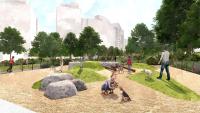
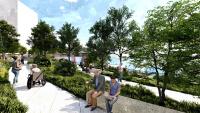
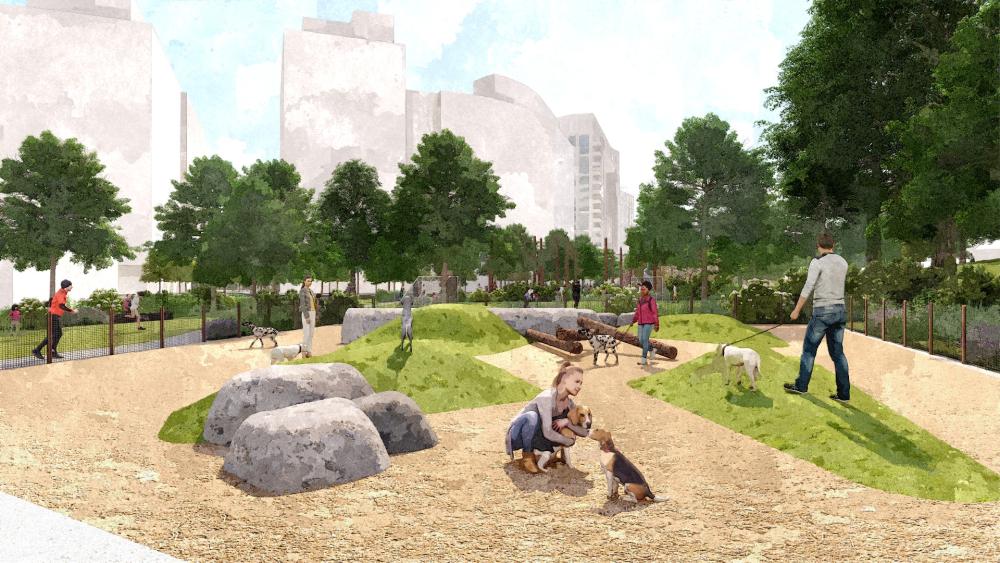
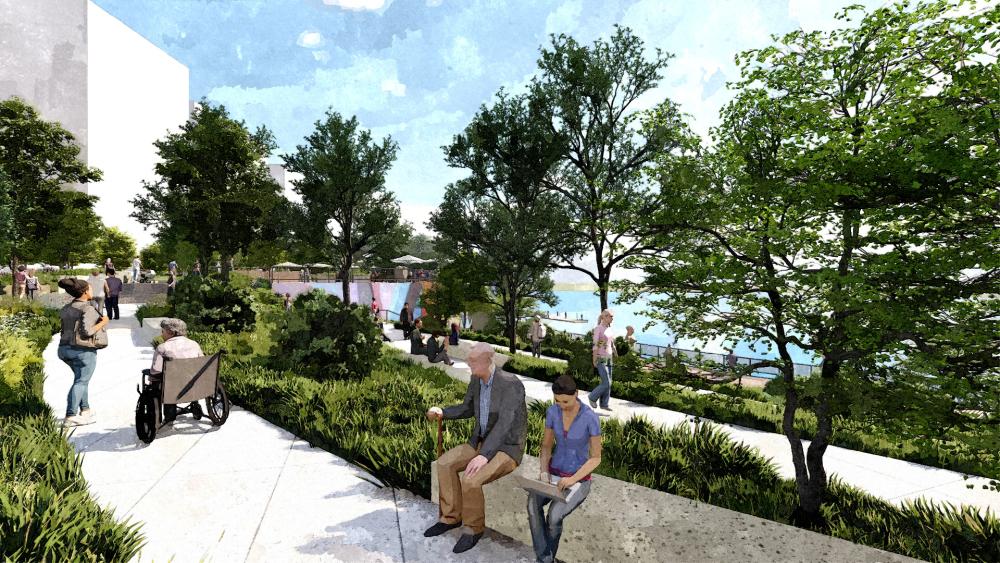
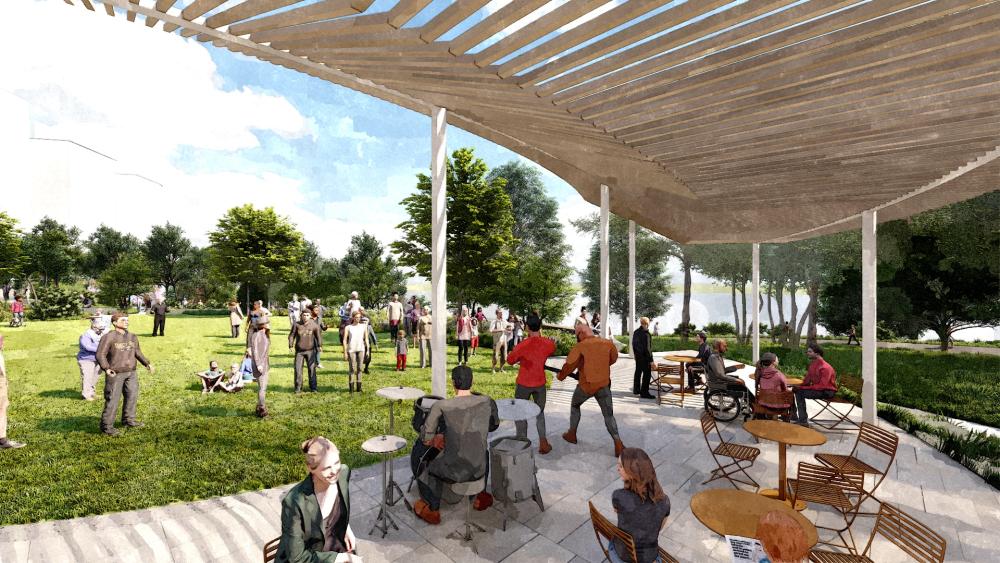
- Expand the waterfront public open space (2-4 acres);
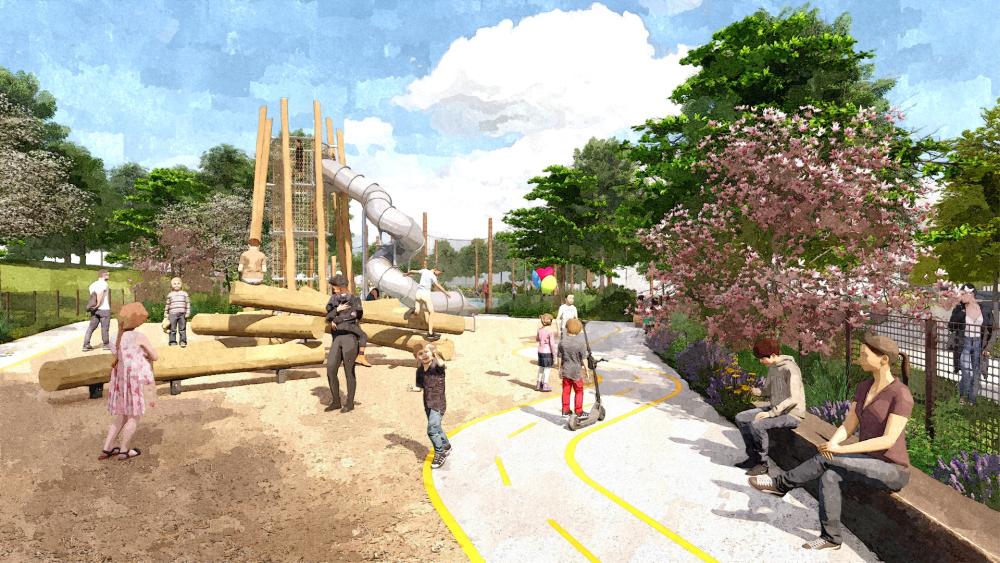
- Create an east/west linear park within the rail corridor;
- Provide a 1-2 acre public park on the southwest portion of the site;
- Expand and improve Mount Vernon Trail access and safety;
- Create a network of open spaces within the site;
- Expand the tree canopy;
- Retain and adaptively reuse portions of the railroad tracks and other industrial elements;
- Identify retail focus area;
- Establish minimum building heights and provide a variety of building heights with consideration to views from the Potomac River and the neighborhood; and
- Prioritize environmental sustainability in building and infrastructure design.
- In addition to meeting the principles above, the approved CDD concept plan included full abatement and remediation of the site, a minimum of 20% non-residential development, affordable housing in the form of set-aside units and a potential on-site Public-Private Partnership for an on-site project, a minimum of 30,000 square feet of dedicated arts and cultural space, off-site transportation improvements and a comprehensive environmental sustainability strategy.
Community engagement has been a fundamental aspect of the planning process for this site, beginning with the 18-month OTNSAP process which established principles and objectives for the site. Additionally, the developer has hosted a robust community engagement process with regular thematic community meetings as well as open house tours of the site. The HRP website includes links to all community meeting videos, presentations and Q&A since the first meeting in 2021.
The Coordinated Development District (CDD) rezoning and CDD Conceptual Design were approved by City Council on July 5, 2022. The approval included the development of site-specific Urban Design Standards and Criteria and Design Excellence Prerequisites and Criteria. On June 6, 2023, the Planning Commission approved the Infrastructure Development Site Plan and a related subdivision. The Coordinated Sustainability Strategy was also approved in 2023.
Over the past year, the applicant has developed plans for the first two redevelopment blocks as well as the two open spaces. In late spring of 2026, HRP is requesting approval of Development Special Use Permits for Block B, Block C, the Waterfront Park and the Rail Corridor Park. The applicant has presented the proposed designs to the Waterfront Commission, the Parks and Recreation Commission, the Urban Design Advisory Commission (UDAC), the Human Rights Commission and the Alexandria Housing Affordability Advisory Committee (AHAAC) as well as at community meetings. Additionally, the applicant continues regular coordination with the National Park Service on improvements to the adjacent NPS land and the George Washington Memorial Parkway.
During the Alexandria Housing Affordability Advisory Committee (AHAAC) meeting on May 7, AHAAC endorsed the affordable housing plan for Blocks B and C, part of Phase I of the development. Amendments to Coordinated Development District Concept Plan for the entire development and the Development Special Use Permits for Block B, Block C, the Waterfront Park and the Rail Corridor Park were recommended for approval by Planning Commission during the hearing on June 2, 2026.
Community Engagement and Feedback
Opportunities for community engagement prior to Council Consideration of City Investment
- Public Presentation at Legislative Meeting: Tuesday, April 28, 2026
- Developer’s Project Specific Community Meeting: Monday, May 4, 2026 6:00 p.m.- 7:00 p.m. (Virtual)
- Recording, presentation and Q&A available at https://www.hrpalx.com/
- Alexandria Housing Affordability Advisory Committee Meeting: Thursday, May 7, 2026 7:00 p.m. (Virtual)
- Additional Developer’s Project Specific Community Meeting: Tuesday, May 26, 2026 6:00 p.m.- 7:00 p.m. (Virtual)
- Recording, presentation, and Q&A available at https://www.hrpalx.com/. Please submit any questions to: hrpinfomidatlantic@hrpgroup.com
- Planning Commission Hearing for Development Approvals: Tuesday, June 2, 2026
City Council Consideration of City Investment
- Introduction of Term sheet at Legislative Meeting: Tuesday, June 9, 2026
- Public Hearing (In-person public comments will be received at this meeting. If you have a prepared statement or written comments for the record you may email it to the City Clerk at CouncilComment@alexandriava.gov.): Saturday, June 13, 2026