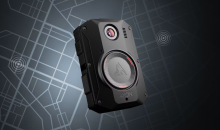
Body Worn / In-Car Cameras
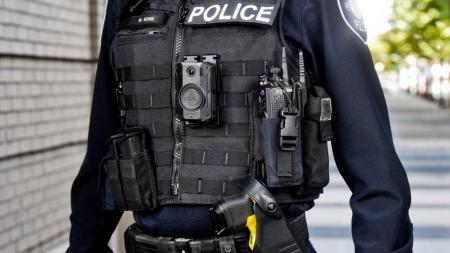
The Alexandria Police Department is committed to using technology to strengthen trust, enhance transparency, and improve public safety. Through the Technology pillar of the Department's G.R.E.A.T. (Geographical Policing, Relationships, Enforcement, Assessment, and Technology) framework, body-worn cameras (BWCs) and in-car cameras (ICCs) help foster accountability while supporting positive interactions between officers and the community.
Body-worn cameras have been deployed department-wide since 2023. In August 2026, the Department will began installing in-car camera systems in marked patrol vehicles. Together, these systems provide a more complete view of police interactions, improve evidence collection, enhance officer safety, and support fair, transparent, and professional policing.
All recordings are managed in accordance with Alexandria Police Department Directive 2.8 and applicable Virginia law.
In-Car Camera Program
Beginning in August 2026, the Alexandria Police Department will begin installing in-car camera systems in marked patrol vehicles.
The in-car camera system is designed to:
- Capture incidents from the perspective of the police vehicle
- Supplement body-worn camera footage
- Improve documentation of traffic stops, crashes, and other police interactions
- Enhance transparency and accountability
Like body-worn camera recordings, in-car camera recordings are securely stored and managed through the Department's Electronic File Management System.
Body Worn / In-Car Cameras FAQ
The Alexandria Police Department began wearing BWCs as part of their uniform in 2023. In August 2026, the Alexandria Police Department began installing in-car camera systems in marked patrol vehicles.
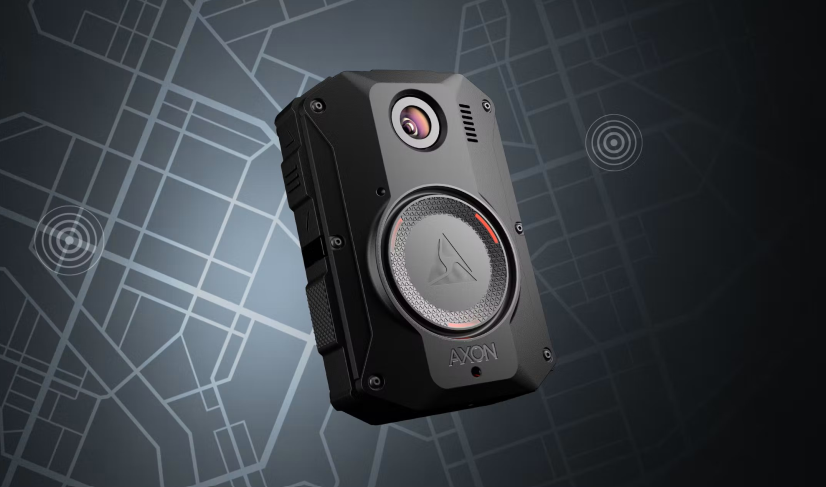
A BWC is a small device that is attached to an officer’s uniform and records interactions between community members and the police department. The cameras will capture both audio and video through a forward-facing camera. The recordings are then downloaded onto a digital storage platform where the encrypted evidence is managed and stored.
In-car cameras are video and audio recording systems installed in marked Alexandria Police Department vehicles. They work alongside body-worn cameras to provide an additional perspectives during police interactions, helping document incidents, improve evidence collection, enhance transparency, and build public trust.
The BWCs include a front-facing screen, a one-touch record button, and up to 12 hours of battery life. A dashboard camera is affixed to the vehicle, therefore only capturing images from the front of the vehicle. BWCs allow the footage to capture the officer's movements and what is in front of them. Closed Circuit Television Cameras (CCTVs) are stationary systems that monitor public spaces, without audio, for crimes in progress.
- A BWC does not follow an officer's eyes or see as they see.
- Camera speeds differ from real life.
- Cameras may see better than the human eye in low light.
- An officer's body may obstruct the camera’s view.
- The camera only provides one angle of a scene.
- A camera can never replace a thorough investigation.
The use of BWCs and ICCs benefit members of the community and APD by improving police services, increasing accountability and transparency for individual interactions, and will help strengthen trust among law enforcement and the community.
Yes, the Virginia Freedom of Information Act (FOIA) allows members of the public to request access to Body-Worn Camera (BWC) files. Additionally, if an individual is charged with a crime, they may also be able to obtain access to these files through the legal process of discovery.
While there are many situations that require BWC/ICC activation, employees must rely on their best judgment to determine when to activate the device in situations not explicitly covered by this policy. Employees shall activate their BWC/ICC device before the activity to be recorded or at the earliest safe and practical opportunity.
To ensure complete and accurate records of official law enforcement contacts and activities, employees are required to activate their BWCs in the following circumstances:
- In-person interactions with members of the public, unless such contact is informal, non-investigative, and non-adversarial.
- Application of force, the threat of force, or where force is reasonably anticipated.
- Use of law enforcement weapons, such as firearms, tasers, pepper spray, or impact weapons
- On-scene activities related to an active search, pursuit, or apprehension of a fleeing, concealed, or barricaded individual.
- On-scene activities associated with the care and investigation of an injured or deceased individual.
- On-scene searches of individuals and tangible property, as well as any subsequent seizures of property or evidence, excluding those searches occurring within APD Headquarters.
- Activities within the boundaries of a crime scene.
- Emergency vehicle operations, including vehicle escorts where emergency equipment is continuously or intermittently activated.
- Transporting members of the public, whether in custody or not, except during a department-approved ride-along.
- Immediately following any officer-involved accident, injury, or vehicle crash, unless it is impractical or unsafe to do so.
- Obtaining a breath or blood sample for a DUI arrest, including during the observation period.
- Interactions with a Magistrate, provided the employee is accompanied by an arrestee, suspect, victim, or witness.
- As directed by a supervisor.
- Employees may record incidents that are not explicitly covered by this policy, as long as it serves a law enforcement purpose and is not otherwise restricted by policy.
Both body-worn cameras and in-car cameras include technology that can assist with recording activation under certain circumstances. Cameras may also be activated manually by officers when required by Department policy. The systems are designed to work together to document police interactions.
All BWC/ICC files shall be securely stored in accordance with the Virginia Public Records Act and the retention schedules for law enforcement records issued by the Library of Virginia. BWC recordings that have administrative or evidentiary value will be retained in accordance with the General Schedule (GS) 17 Records Retention guidelines for law enforcement records. Employees will log BWC/ICC videos into four categories for retention purposes, as follows:
Category 1: Informal Contacts and Accidental/False Activations: This category includes any BWC/ICC activation during an informal, non-enforcement contact, resulting in no enforcement action, including accidental and inadvertent signal activations. Records are retained according to appropriate schedules, such as Series 200163, with a minimum retention period of six months.
Category 2: Formal Contacts with No Criminal Activity: This category includes any BWC/ICC activation during an official law enforcement contact, such as traffic stops, subject checks, and calls for service, that do not involve an actual or suspected criminal offense. Records are retained according to appropriate schedules, such as Series 200148, with a minimum retention period of five years.
Category 3: Formal Contacts Involving Actual or Suspected Misdemeanor Crimes: This category includes any BWC/ICC activation related to an official law enforcement contact involving an actual or potential misdemeanor offense. Records are retained according to appropriate schedules, such as Series 200147, with a minimum retention period of fifty years.
Category 4: Formal Contacts Involving Actual or Suspected Felony Crimes: This category includes any BWC/ICC activation during an official law enforcement contact involving an actual or potential felony offense. Records are retained according to appropriate schedules, such as Series 200145, with a minimum retention period of one hundred years.
All sworn employees of this department will be assigned a BWC device. Certain employees are exempt from the BWC wear and use requirement, fully or in part, based on the nature of their assignment. These exemptions are as follows:
Senior Command Staff: Captains and Executive Staff are not required to wear a BWC.
Undercover Employees: Employees assigned to full-time undercover assignments are not required to wear and use their BWC during investigative or administrative tasks. However, when transitioning to an enforcement role, and if time and circumstances permit, they shall wear and use their BWC in accordance with this policy.
Covert Employees: Employees not permanently assigned to undercover roles but occasionally assume a covert function are exempt from wearing and using their BWC during those specific instances. However, upon completing the covert assignment or when transitioning to an enforcement role, they must wear and use their BWC in accordance with this policy.
Office of Professional Responsibility (OPR): OPR employees may choose not to wear a BWC during administrative or investigative activities related to their job function, if they reasonably can articulate that doing so would adversely impact their investigation. However, in all other situations, OPR employees must adhere to this policy and wear their BWC in accordance with this policy.
Task Force Employees: Employees assigned to a regional, state, or federal task force are required to wear and use their BWC in accordance with this policy, unless prohibited by their respective task force policy. If a prohibition exists, the task force officer shall comply with this restriction to the extent explicitly restricted by the task force policy.
Class-A Uniformed Employees: Employees wearing a Class-A Uniform are not required to wear a BWC as these uniforms are intended for ceremonial activities.
Employees are not required to obtain consent or provide notification to members of the public when recording an interaction. However, employees should remain mindful that choosing to provide notification may be beneficial in de-escalating incidents and achieving compliance.
Employees shall answer affirmatively if asked if an interaction is being recorded, unless doing so would adversely impact officer safety or an investigative objective.
Employees are not required to deactivate their BWC at the request or demand from a member of the public. However, employees may choose to honor the request if they believe it will improve the outcome of the interaction. Employees who choose to comply with a request to deactivate their BWC shall comply with all of the following conditions:
- The decision to deactivate the BWC device shall be based on the best judgment of the employees and the desired outcome of the law enforcement interaction.
- The request for deactivation shall be initiated by a member of the public, and employees shall capture the request on their recording and document it in a report.
- The interaction shall be non-confrontational and stable, with no foreseeable need for force or apprehension.
- Employees shall be accompanied by at least one other employee who can serve as a witness. Alexandra Co-Response Program (ACORP) Officers may rely on their partner clinician to satisfy this witness requirement.
Supervisors have the authority to permit employees to deactivate their BWCs in situations that do not meet the above conditions, based on their best judgment and consideration of department and community interests.
In-car cameras provide another perspective during police interactions. Combined with body-worn cameras, they improve documentation, evidence collection, investigations, training, and transparency. These are among the core goals identified in Department policy.
Cameras will be installed in a majority of the Department’s marked patrol vehicles.
The addition of in-car cameras does not replace body-worn cameras. Officers will continue wearing body-worn cameras in accordance with Department policy.