
Bring Habitats Home: Backyard Habitats in Alexandria
If you have a backyard, deck, or patio, you can take steps to create habitat for wildlife such as birds and pollinators. Converting your turf grass into a native wildflower garden, reducing the use of chemicals for weeds and pests, providing shelter and water sources are just some examples as steps you can take to protect our native biodiversity. Not only that, providing a natural habitat in your backyard "stretches" our natural areas creating connections for our wildlife to move through the City safely.
If you have already done so, tell us about it! The Natural Resources Management division is in the beginning stages of creating a city-wide initiative to achieve a reachable goal of converted certified yards every year. As this develops, be on the lookout for updated information!
Listed below are several initiatives with a very brief description of what it would take to become certified. Some even provide incentives! Please visit their websites for full information.

Semi-Natural Habitats of Alexandria
While these habitats are not traditional natural landscapes, they still serve many ecological functions for native plants and wildlife and have the potential to offer ecosystem services.
Impoundment Wetlands
Impoundment wetlands do not occur naturally; rather, they form when man-made structures are used to alter the water level of streams, rainwater, or groundwater flow. These wetlands still offer many ecosystems found in their natural counterparts, including habitat for wildlife such as amphibians, fish, and dragonflies. Impoundment wetlands can be found at Dora Kelley Nature Park, as well as other private and public properties around Alexandria.
Meadows, Hedgerows, and other Open Areas
Meadows and open areas are prolific in Alexandria, such as All Veteran's Park or Fort Williams Park. These areas can act as biodiversity hotspots and offer refuge for migrating birds and pollinators. Because these areas are often small in acreage and directly adjacent to developed areas, they are also at risk of invasive species. Additional Resources for Meadows include:
Flora Inventory and Analysis of Grow Zones
Successional Forest
After disturbance, habitats can transition from open meadows into early successional forests. In Alexandria, upland successional forests are comprised of mature, tall stands of Virginia Pine (Pinus virginiana) intermixed with a diversity of maturing hardwoods and other flora. Stands at Chinquapin Park and Fort Ward Park are the best remaining examples of successional forest in Alexandria.
Old Town Masonry
Did you know even the City of Alexandria’s old stonework can act as a form of habitat? The exterior stone and brick walls of the historic Wilkes Street Tunnel (old Orange & Alexandria Railroad, c. 1851) between S. Royal and S. Fairfax streets in Old Town, as well as the brick masonry seawall along the north side of the Windmill Hill Park cove, are the only known stations in Alexandria for Purple Cliff-brake (Pellaea atropurpurea), a fern that primarily grows on exposed rock. Other plant species that can be found living amongst the stone and brick include Rock Pellitory (Parietaria pensylvanica), Trailing Pearlwort (Sagina decumbens ssp. decumbens), and Blunt-lobed Woodsia (Woodsia obtusa ssp. obtusa).
Certify Your Backyard
Natural Resources Management Plan
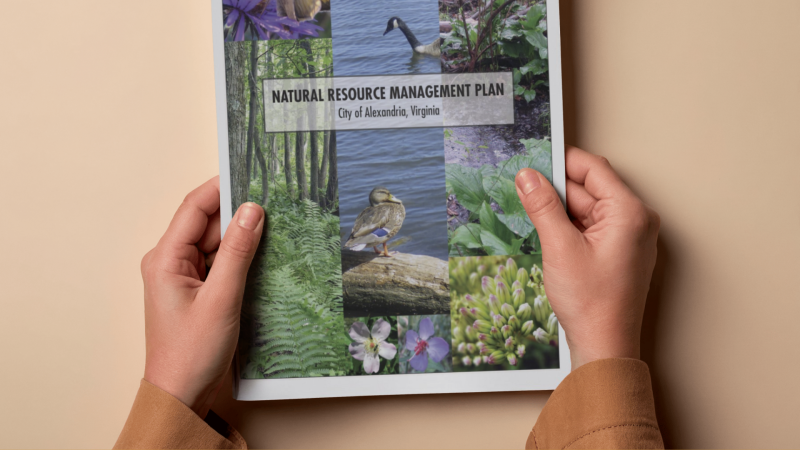
Learn more about all the habitats that can be found in the City of Alexandria in our Natural Resources Management Plan.
Remnant Natural Areas Archive
This 2012-2015 series documents the remnant natural areas present in the City of Alexandria.