
MULTICULTURAL MENTAL HEALTH RESOURCES
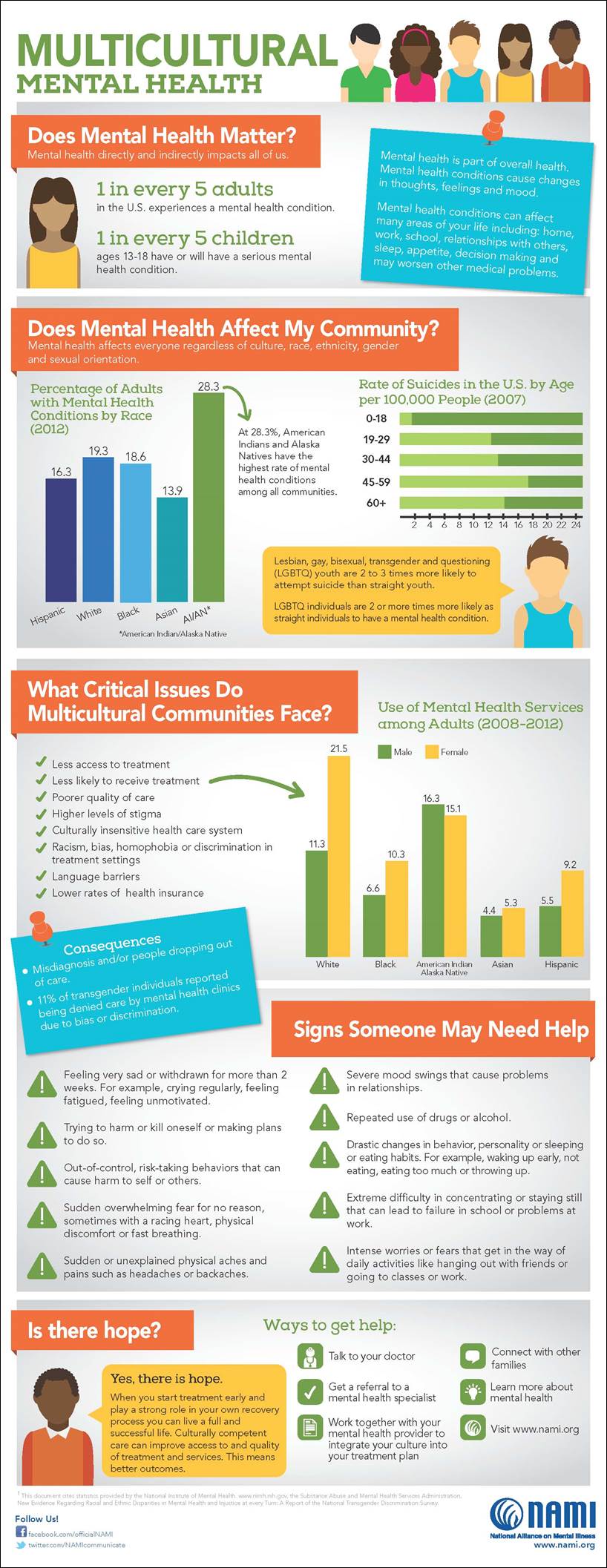
While mental health conditions do not discriminate based on race, color, gender or identity, these factors can make access to mental health treatment much more difficult. BIPOC are less likely to receive diagnosis and treatment for their mental health conditions, have less access to and availability of mental health services, and often receive a poorer quality of mental health care.
And, while chronic stress can have negative effects on everyone, exposure to racism and discrimination create additional daily stressors for BIPOC. The impact of racism-related events, chronic stress caused by inequities, and daily micro-aggressions are associated with higher risk factors related to poorer mental and physical health, depression and substance misuse.
DCHS has collected information and resources dedicated to Multicultural Mental Health. Learn more about resources for BIPOC as well as people in LGBTQIA+ communities below.
Race Based Trauma and Support
Chronic stress can have negative side effects on everyone. Frequent exposure to racism and discrimination create an additional daily stressor for people of color. Research shows this to be particularly true for African-Americans (APA, 2016). The Race Based Trauma Resources and Support web page contains a collection of resources for and information related to coping with racism and trauma on individual, interpersonal, family, community, national and global levels.
Multicultural Mental Health Resources
- Teaching Tolerance
- American Psychological Association: Immigration
- Mental Health America: Latino/Hispanic Communities and Mental Health
- Mental Health America: Asian American/Pacific Islander Communities and Mental Health
- NAMI Latino Multicultural Action Center
- City of Alexandria 24-Hour Crisis Lines
- Call 9-8-8 for 24/7 crisis intervention, suicide prevention and support for emotional trauma, personal and family crises.
- Mental Health First Aid Training
- Learn to Recognize Signs of Distress in Youth
Spanish Language Materials
- Asuntos Riesgosos: Adicción a internet
- Asuntos Riesgosos: Sexo
- Asuntos Riesgosos: Uso Indebido de Medicamentos Recetados
- Asuntos Riesgosos: Ejercicio
- Other Resources for Spanish-language speakers
From the Virginia Department of Behavioral Health & Developmental Services
Resources for Addressing Emotional Needs in the LGBTQ+ Community
Although there have been great strides in the legal and civil rights of individuals who are lesbian, gay, bisexual, transgender, or questioning, the LGBTQ+ population continues to experience worse health outcomes than their heterosexual counterparts. Due to factors like low rates of health insurance coverage, high rates of stress due to systematic harassment and discrimination, and a lack of cultural competency in the health care system, LGBTQ+ people are at a higher risk for cancer, mental health conditions, and other diseases.
Find out more:
Does Mental Health Affect My Community?
Resources for Immigrants
Learn about resources and support for immigrants and refugees offered by the City of Alexandria and community partners.
This is Recovery
“This is Recovery” is a 14 minute video featuring men and women across Northern Virginia who share their stories of recovery to help others who are dealing with similar challenges. They enable and inspire all of us to live in hope. This video was funded by the Virginia Department of Behavioral Health and Development Services and produced by members of the Virginia Recovery Initiative Region 2.