
Who knows your health better than you? Use what you know about our community's health and join neighbors to make a plan for what matters to you.

Landmark/Van Dorn
Get Involved
Workgroups are now meeting to create action steps for our plan - and we'd love you to join! Three workgroups are meeting for our top-voted focus areas:
- Create more opportunities for youth outside of school
- Improve community safety and prevent violence
- Increase green space, recreation, and safe outdoor places to be active
Vision Statement: Landmark/Van Dorn is a community where everyone has what they need to thrive. It is a neighborhood rooted in hope, strengthened by cultural richness, and connected by opportunities that lift every neighbor.
Meeting 4 (April 2026)
- Community members voted on top focus areas for work: Landmark/Van Dorn focus area voting results.
Open House (Februrary 21, 2026)
- Community members stopped by Patrick Henry Recreation Center to share focus area ideas and hear about the CHIP.
- We partnered with the Prevention of Blindness Society and the Lion's Club to connect people to eye care as they stopped by.
Meeting 2 (December 3, 2025):
- Meeting Two Presentation Slides (LMVD)
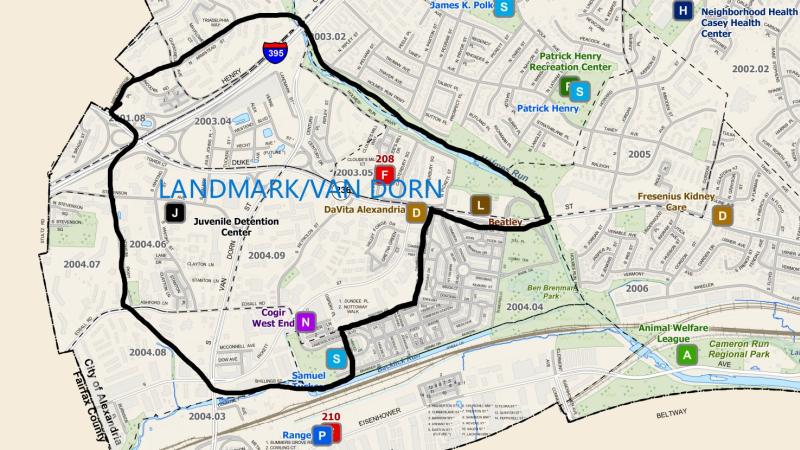
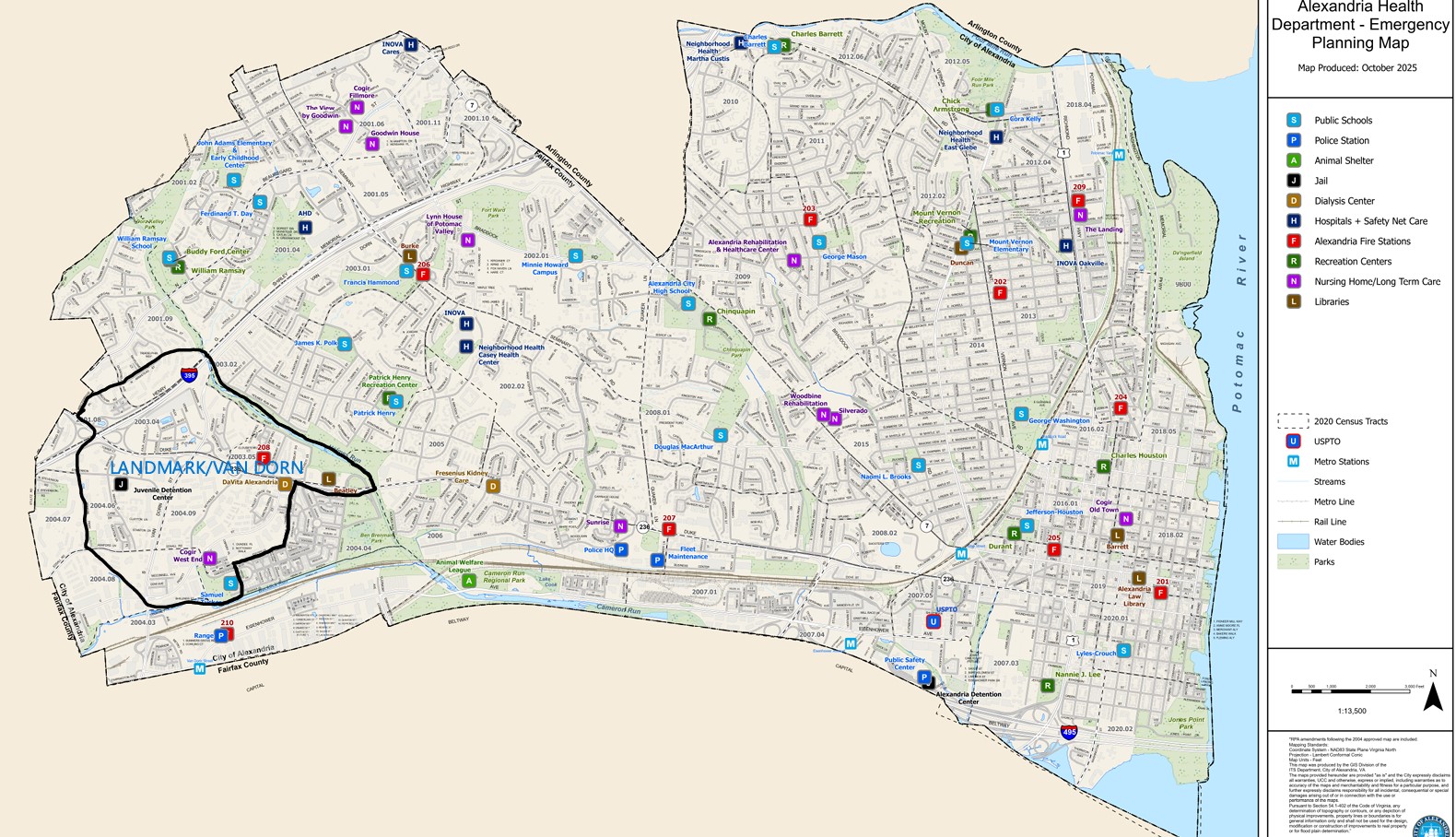
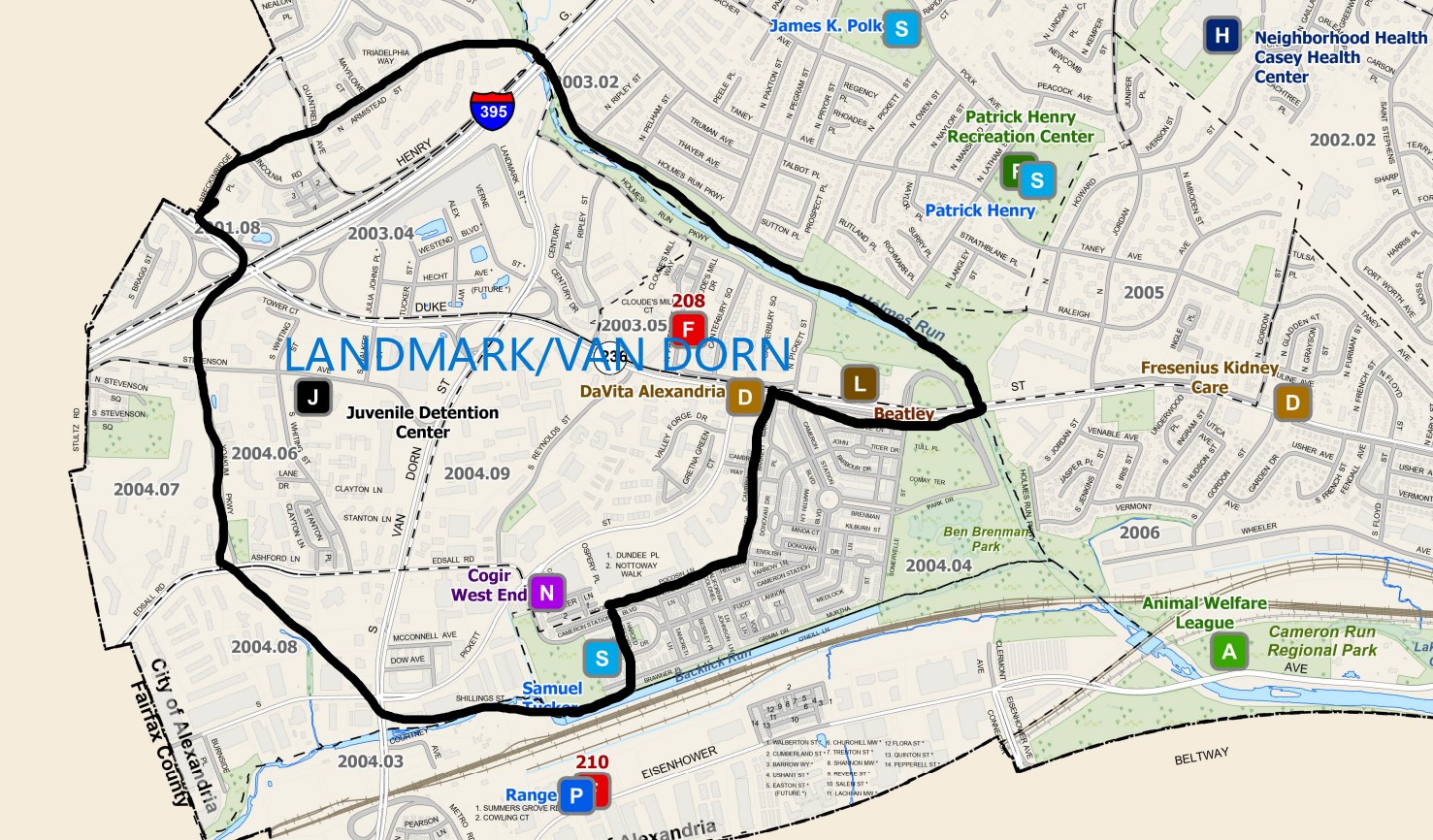
- The coalition finalized their defined "Landmark/Van Dorn" area boundaries - as outlined in this Landmark/Van Dorn map and this closeup map version.
Meeting 1 (November 5, 2025):
- Meeting One Presentation Slides (LMVD)
- The group completed a visioning activity to brainstorm how they envision a healthier Landmark/Van Dorn area. Check out our summary of themes and full results from the Landmark/Van Dorn vision Activity.
Landmark/Van Dorn residents value diversity and opportunities to be involved. Residents identified top health issues like mental health and drug abuse in their community and identified community health improvement opportunities like more job opportunities, support for families, and additional communal and green spaces.
According to Landmark/Van Dorn residents who responded to the 2024 CHA Survey:
- “Mental health,” “Alcohol, drug, opiate use,” and “Dental problems” were the top health problems.
- “Safe, healthy, affordable housing,” “Support for children, youth, and families,” and “Job opportunities” were the top health improvements.
- “Educational opportunities,” “Diversity of the community,” and “Opportunities to be involved in the community” were the top health strengths.
- In a neighborhood walk and talk, participants noted Landmark/Van Dorn’s many diverse small businesses and combination of industrial, residential, and commercial spaces, but also noted it is unsafe to walk from place to place and that Landmark/Van Dorn has a lack of green spaces and recreation opportunities.
Overall, adults living in this neighborhood have higher rates of several health conditions compared to the city averages. Activities that promote health, such as not smoking, regular screenings, and regular physical activity, tend to happen less often in this neighborhood, possibly due to difficulties accessing these activities.
- About 1 in 6 adults are in “fair” or “poor” health, 35-50% more often than the city.
- Adults in this neighborhood experience frequent mental and physical distress about 15-20% more often compared to the city.
- 14% of adults in this neighborhood have diabetes, one of the highest rates in Alexandria.
- 1 in 10 adults have asthma in this neighborhood.
- More than 1 in 3 adults have high blood pressure, one of the highest rates in Alexandria.
- About 1 in 7 adults age 65 or older in this neighborhood have lost all their teeth, more than double the city’s rate.
- Adults visited the dentist in the past year 13% less often here than compared to the city.
- Adults are physically inactive at a 25-40% higher rate compared to the city (about 1 in 5).
- 12% of adults are smokers in this neighborhood.
- 1 in 4 women are not getting regular mammograms, putting them at risk of undetected breast cancer.
See more in the Alexandria Health Data Dashboard
This neighborhood is very diverse, including a larger proportion of people who identify as Black/African American, residents born outside of the U.S., and people with a disability. Many in the community experience poverty, face high housing costs, lack health insurance, and do not have access to internet at home. All of this makes it harder to lead their healthiest lives.
- Median household income in this neighborhood (~$71,400) is 38% lower than the city’s ($113,638). About 1 in 5 residents in this neighborhood live below the federal poverty level.
- More than 70% of households are renters. And around 6 in 10 renters spend 30% or more of their income on rent.
- 2 in 5 adults over age 25 have a bachelor’s degree or better, compared to 2 in 3 across the city.
- More than 1 in 3 residents in this neighborhood identify as Black/African American, much higher than the city (1 in 5). About 1 in 10 residents were born in Ethiopia and 1 in 25 were born in Afghanistan.
- 14% of residents in one part of this neighborhood speak English “less than very well,” considerably higher than the city rate (3%).
- 1 in 5 residents in one part of this neighborhood and 1 in 10 in another part of the Landmark/Van Dorn neighborhood has a disability, both considerably higher than the city’s overall rate (1 in 14).
Arlandria
The Arlandria community voted, and these are the focus areas for our plan:
- Increase neighborhood safety and reduce community violence
- Expand access to affordable healthcare
- Strengthen economic opportunity and financial stability
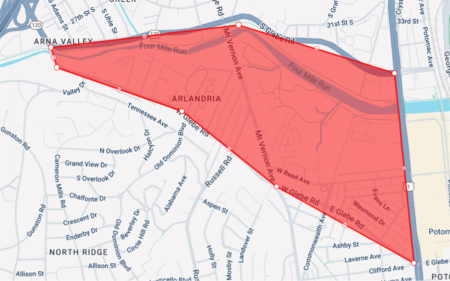
In the first several meetings, the Arlandria/Chirilagua coalition has created the following vision statement:
"A community where all people, regardless of their background or income level, have access to general, mental, vision, and dental healthcare, and where unconditional support fosters safety, connection, opportunities for growth, and fair wages that allow for a better quality of life."
Arlandria residents value strengths such as diversity, public transportation, and the environment for children, youth, and families. Residents in this neighborhood raised concerns about access to housing and healthcare, along with issues like alcohol and drug use, mental health, and violence and crime.
According to Arlandria residents who voted in the 2024 CHA Survey:
- Arlandria area ZIP code respondents selected “Alcohol, drug, opiate use” as the biggest health issue. All other ZIP codes selected “Mental health.” The second biggest issue, “Violence and crime” was third in other ZIP codes.
- “Safe, healthy, affordable housing,” “Access to healthcare,” and “Support for children, youth, and families” was selected as top opportunities for improvement.
- “Diversity of the community,” “A good place for children, youth, and families to live,” and “Public transportation” was selected as the biggest strengths.
The Arlandria neighborhood experiences higher rates of certain health issues, such as mental health concerns, obesity, and oral health needs. Higher rates of poverty and lack of healthcare access can impact community members’ ability to thrive.
- 1 in 5 adults do not have health insurance in one part of Arlandria, the highest rate in Alexandria. 1 in 8 lack health insurance in the other part of Arlandria, considerably higher than Alexandria’s overall rate (about 1 in 15).
- About 16% of adults in one part of Arlandria and 25% in another part of this neighborhood reported having “fair” or “poor” health, higher than the citywide rate (about 12%).
- More than 1 in 3 adults in this neighborhood are obese, one of the highest rates in Alexandria. Nearly 1 in 4 adults are not physically active.
- About 1 in 7 adults age 65 and older in this neighborhood have lost all their teeth, about double the city rate (1 in 15).
- About 2 in 5 adults did not visit the dentist in the past year, and one part of Arlandria had the city’s lowest rate (54%).
- Nearly 1 in 4 adults in this neighborhood have depression and about 1 in 5 report frequent mental distress (~30% higher than the city rate).
- 1 in 6 adults are smokers in this neighborhood.
- 1 in 4 adults in one part of Arlandria, and 1 in 3 in another part have a disability.
See more in the Alexandria Health Data Dashboard
Arlandria residents are predominantly Hispanic/Latino, younger, and have lower education attainment. Many in the community experience poverty, face high housing costs, lack health insurance, and do not have access to internet at home. All of this makes it harder to lead their healthiest lives.
- Arlandria’s median age is about 30.5 years, considerably younger than the city (37.5 years). 1 in 4 people in one area of Arlandria are under the age of 18.
- In one part of Arlandria, the median household income ($70,379) is considerably lower than the city rate ($113,638), and more than 1 in 5 people live below the poverty level.
- Arlandria has a predominantly Hispanic/Latino population. 67% of residents in one part of Arlandria and 38% of residents in another identify as Hispanic/Latino, compared to 18% of residents across Alexandria.
- Less than half of adults over age 25 in one part of Arlandria, and 76% in another part have a high school diploma or greater. The citywide rate is 93%.
- About 1 in 3 adults in one part of Arlandria use public transit to get to work, much higher than the city rate (1 in 8).
- More than 8 in 10 homes are occupied by renters. 3 out of 10 households in one part of Arlandria do not have internet (just 6% of homes across the city lack internet access).
Mental Wellness
Workgroups are now meeting to create action steps for our plan - and we'd love you to join! Five workgroups are meeting for our top-voted focus areas:
- Create safer spaces for vulnerable communities (unhoused people, immigrants)
- Strengthen community connections, support systems, and belonging
- Reduce access barriers for services and care (cost, availability)
- Expand early intervention and screening for child and youth mental health
- Improve crisis and serious mental illness services

Group Vision Statement:
"Alexandria is a community where everyone can feel safe, connected, and supported, because mental health and wellness are prioritized, accessible, and part of everyday life."
Focus Areas
- Reduce access barriers for services and care (cost, availability)
- Create safer spaces for vulnerable communities (unhoused, immigrants)
- Strengthen community connections, support systems, and belonging
- Expand early intervention and screening for child and youth mental health
- Improve crisis and serious mental illness services
See details in the tab below.
Meeting 4 (March 4, 2026):
- Voted on focus areas and started forming workgroups
Meeting 3 (March 2026)
Meeting 2 (December 3, 2025):
Meeting 1 (October 29, 2025):
- Meeting 1 Presentation Slides (MW)
- The group completed a visioning activity to brainstorm how they envision a city with improved mental wellness for all. Check out our summary of themes and full results from the mental wellness vision activity.
Focus Areas
- Reduce access barriers for services and care (cost, availability)
- Create safer spaces for vulnerable communities (unhoused, immigrants)
- Strengthen community connections, support systems, and belonging
- Expand early intervention and screening for child and youth mental health
- Improve crisis and serious mental illness services
See the Mental Wellness Coalition Vision Statement Voting Results and the Mental Wellness Coalition Focus Area Voting Results.
Mental health and substance use are Alexandria’s top issues according to residents. This matches Alexandria’s last health assessment.
- Nearly half of respondents to the CHA survey selected “Mental health” as a top health issue. It was a top-three issue in nearly every demographic group, except for those who completed surveys in Spanish, Dari, Arabic, and Pashto.
- “Alcohol, drug, and opiate use,” a major factor related to mental wellness, was the second highest health issue selected by CHA survey respondents (30%) and was a top three selection in several demographic groups, especially people with lower educational attainment, younger people, and English- and Spanish-speaking respondents.
- “Access to mental health and substance use services” was a top three selection for health improvements by CHA survey respondents (25%) and was a top three selection across most demographics. However, it was only a top three selection for respondents in English. All other languages did not have it in the top three.
- Mental health is one of the three priority areas in the 2020-2025 Community Health Improvement Plan.
While there are high rates of mental health issues across the city, such as depression and anxiety, suicide and drug overdose death rates are considerably lower than state rates. There are some large differences in the data, such as males have higher rates of dying by suicide or drug overdoses compared to females, and the youth LGTQIA+ community reports much higher rates of mental health concerns (including attempted suicide) compared to their heterosexual peers.
- One in five adults in Alexandria have depression.
- Males commit suicide at over double the rate (12.1/100,000 people) than females (5.9).
- Alexandria has the state’s lowest hospitalization rates due to self-harm (12.6/100,000 people), less than half the statewide rate (28.7). Alexandria also has a lower suicide rate (8.9/100,000 people) compared to Virginia (13.9) and the U.S. (14.5).
- In Alexandria, there is a mental healthcare provider for every 220 people, double the statewide rate (One provider per 410 people).
- Of ACPS’ Youth Risk Behavior Survey respondents, nearly half (47.6%) of 10th and 12th graders and 41.4% of 8th graders reported problems with anxiety – a slight increase from 2019. Females (54.2% 8th grade; 60.3% 10th & 12th grade) report at much higher rates than males (30% 8th grade; 34.2% 10th & 12th grade).
- Of ACPS’ Youth Risk Behavior Survey respondents, LGBTQIA+ respondents report considerably higher rates of anxiety, depression and attempting suicide compared to heterosexual respondents. Regarding attempting suicide, LGBTQIA+ respondents were 6x as likely (8th graders) and 3x as likely (10th and 12th graders) compared to heterosexual respondents.
- Males are hospitalized for opioid overdoses at much higher rates than females, especially among younger age groups.
- Alexandria has a much lower drug overdose death rate (13.2/100,000 people) than the state (28.7). African Americans (31.2) are 3x more likely to die of a drug overdose than other demographics, and males (20.0) are 2x more likely than females.
See more in the Alexandria Health Data Dashboard