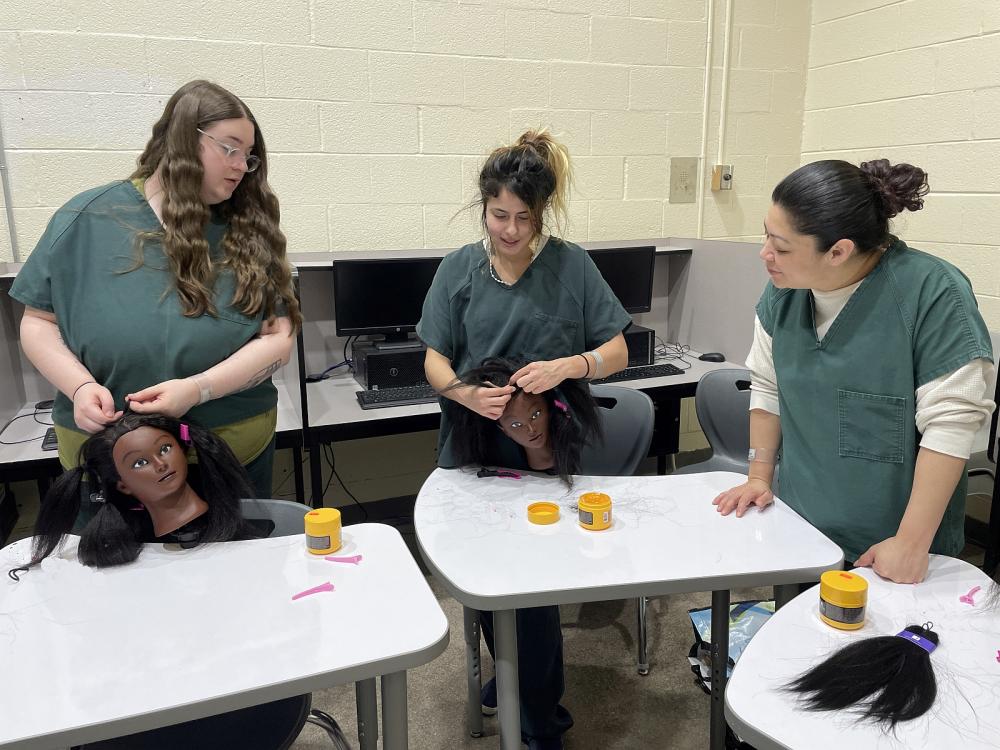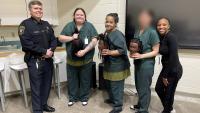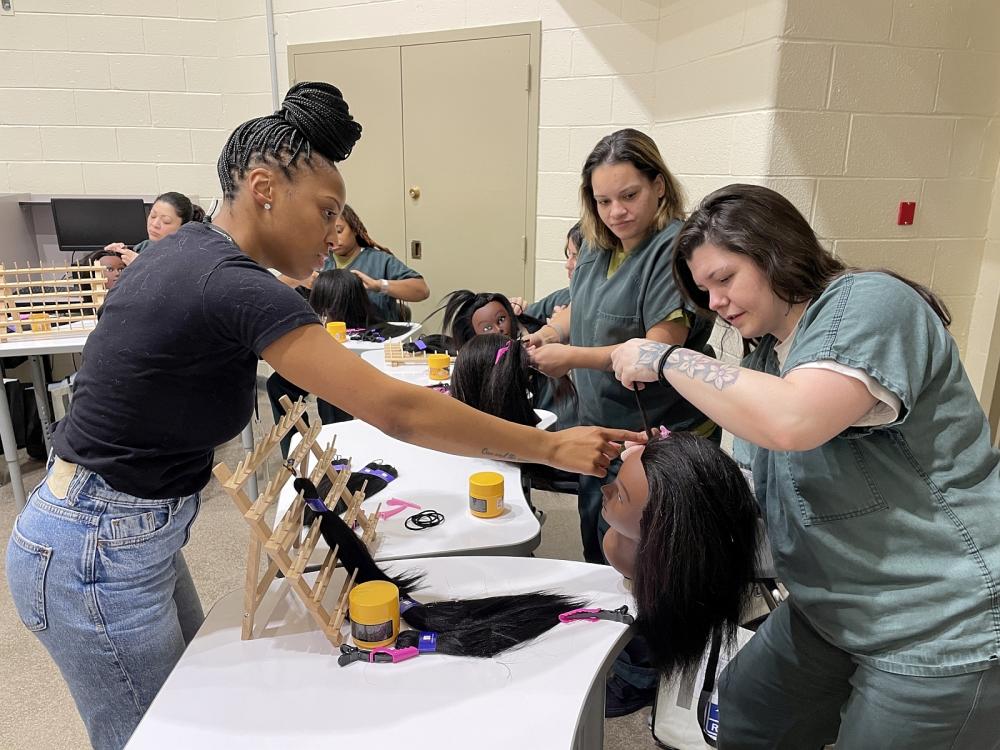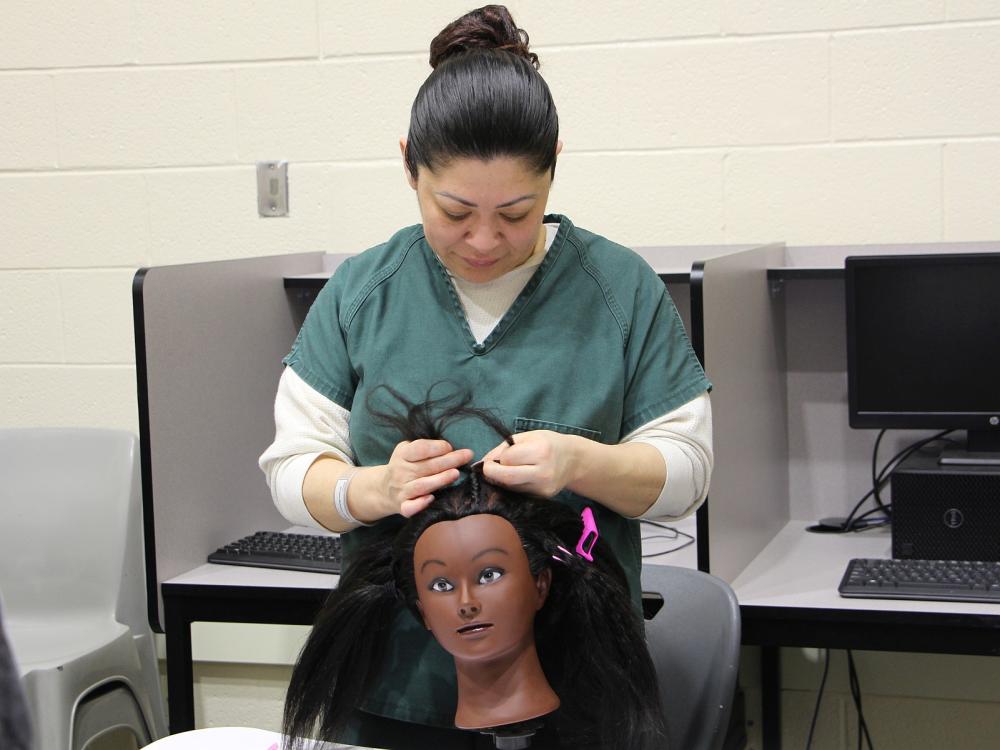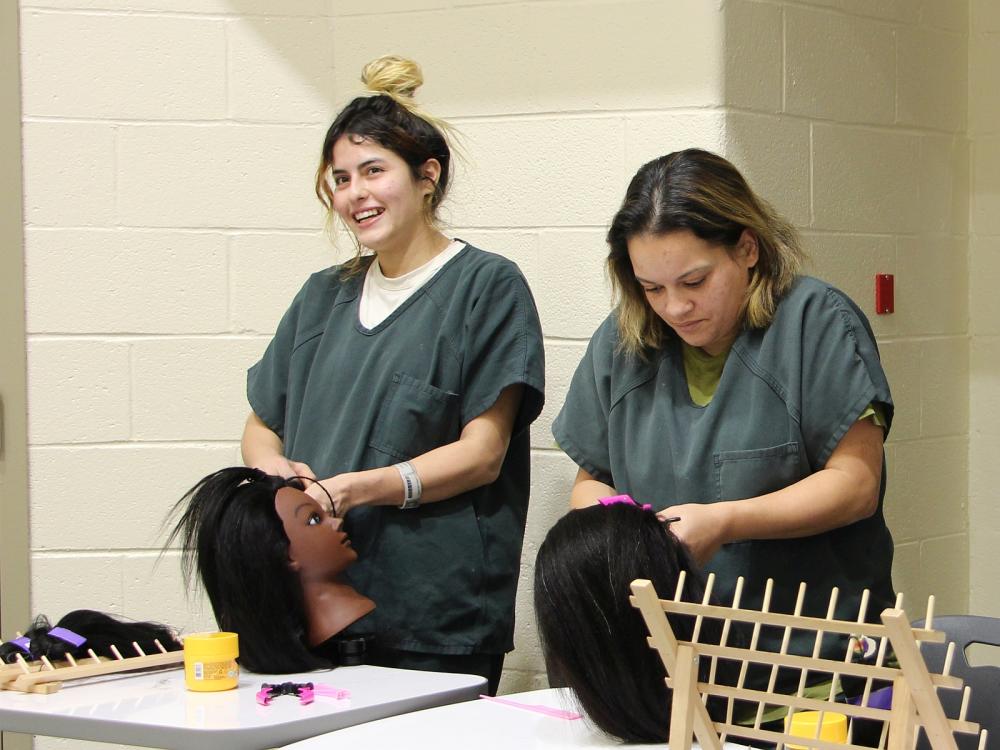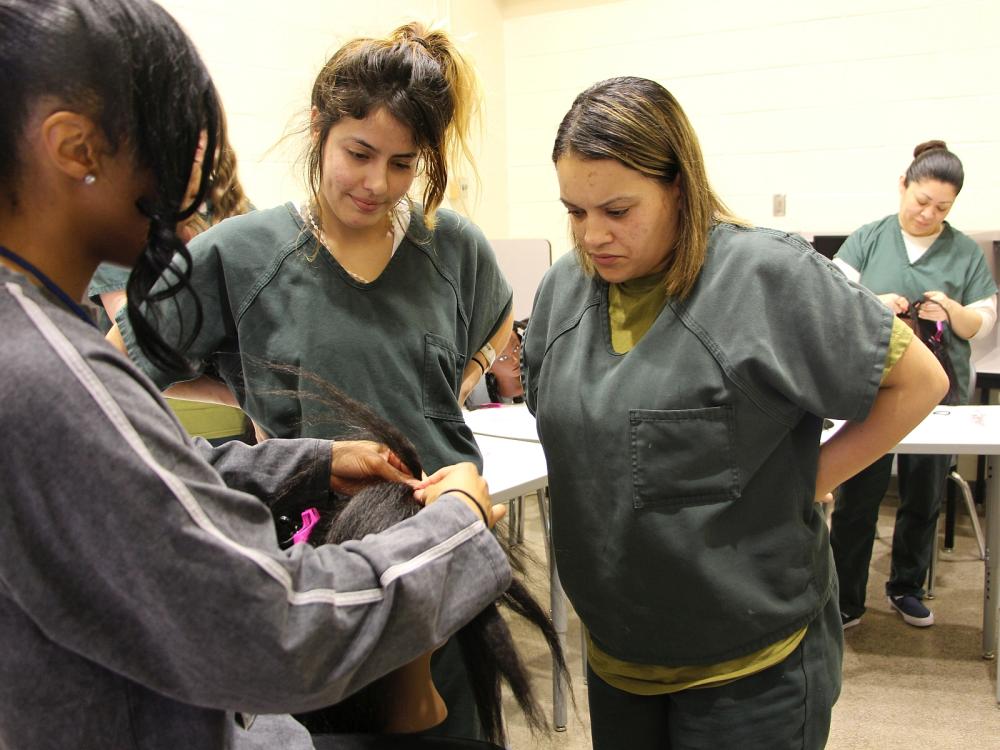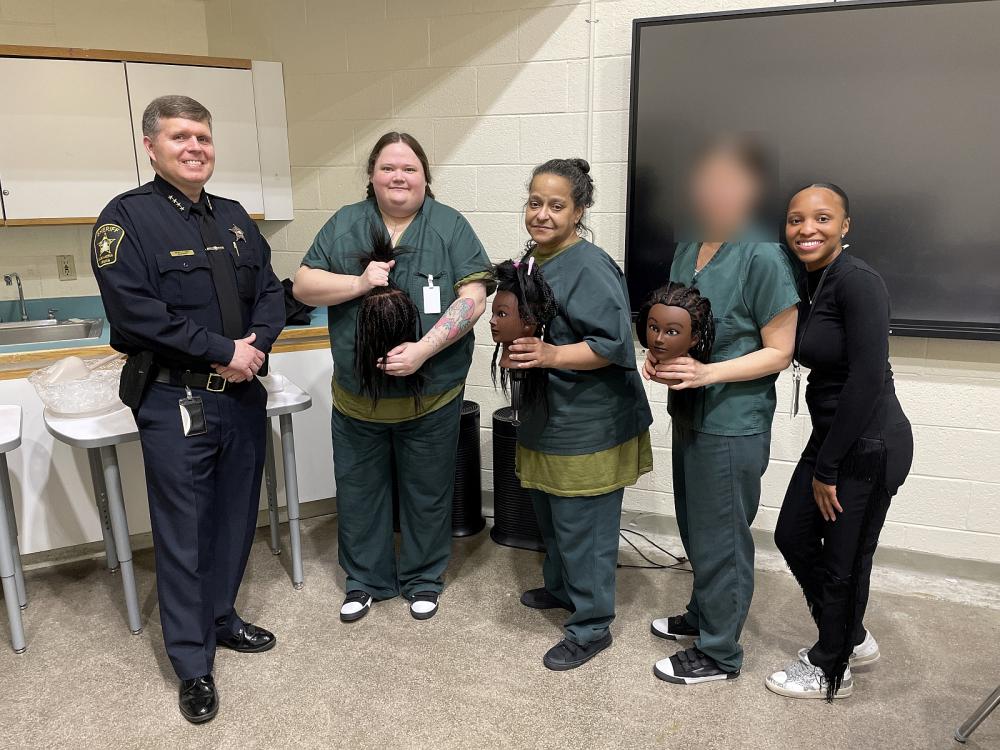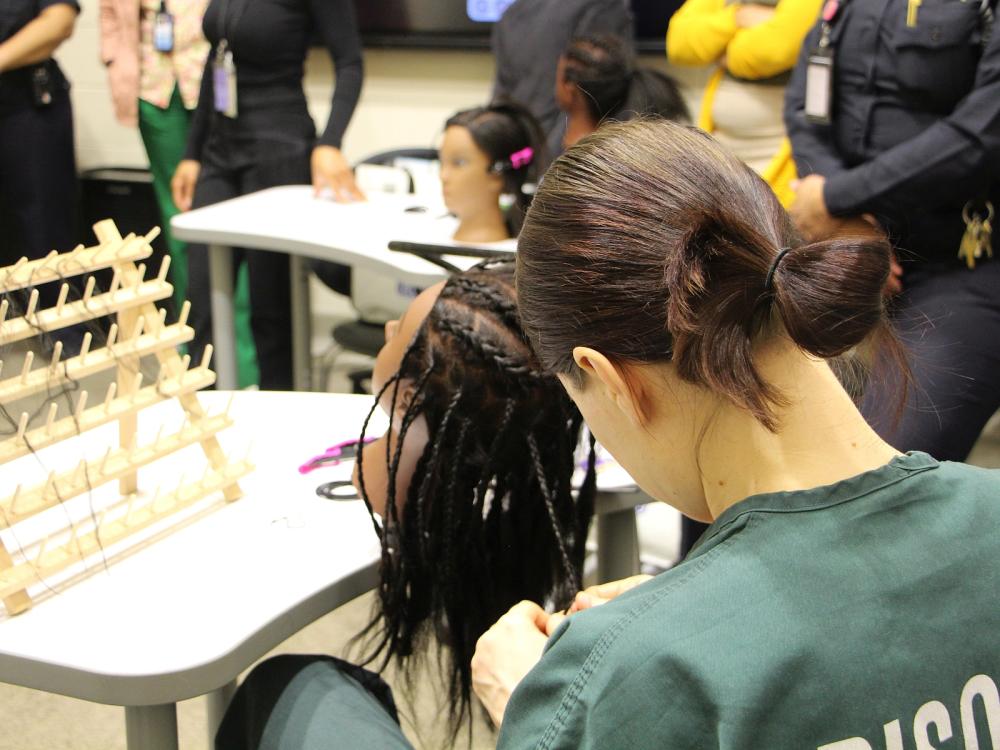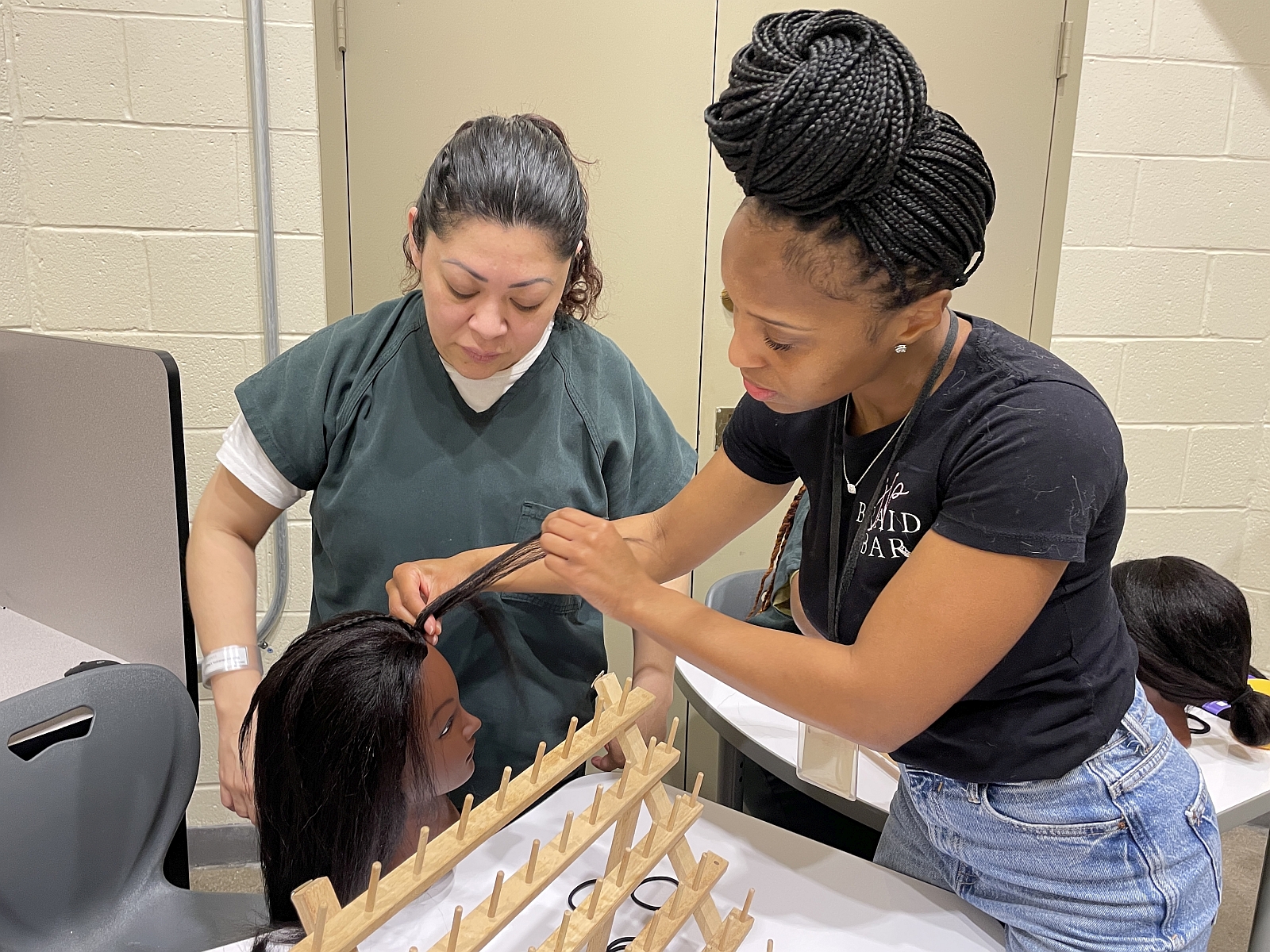

To expand avenues for women when they return to the community, the Sheriff’s Office offered hair braiding instruction to eligible female inmates. This February, nine women in custody began learning the art of braiding as well as important lessons in business. On March 12, three participants received certificate of completion for finishing the six-week program.
Thanks to Ja'Pria Tyler, a professional hair braider and braid instructor, these students are receiving a hands-on opportunity to develop skills and knowledge that can benefit them when they are released and throughout their lives.
“I am extremely grateful for the opportunity to provide them with a new skill that can be life changing,” Ms. Tyler said. “Each of my students has shown a positive attitude and expressed how enthusiastic they are about attending class weekly.”
Through this training program, students learned foundational braiding styles such as stitch and French braids, and advanced techniques like box braids, twists, cornrows, and protective styles. The instruction also covered hair care, hygiene, and maintenance, and customer service and professional etiquette in the beauty industry.
“We were eager to expand professional and personal development programs for women,” said Sheriff Sean Casey. “The new hair braiding class provides practical skill sets, enhances employability, and encourages financial independence. It also helps the participants develop valuable life skills by reinforcing patience, attention to detail, and time management while emphasizing communication, teamwork, and mutual support.”
Ms. Tyler has seen their development, noting “I am proud of how they encourage and hold each other accountable during class. Each class they remind one another to persevere and are always willing to assist when needed. I am excited to see them elevate themselves now having been provided a new skill and to witness their growth.”
At the end of the training, Sheriff Casey congratulated the students on completing the program. The students also talked about what the program meant to them and how much they looked forward to class, especially because they got to do something with their hands. One student told Ms. Tyler that she appreciated her as their teacher because she kept encouraging them and even when they had difficulty, she wouldn't let them give up.
The Sheriff’s Office offers other vocational programs, including opportunities for professional certifications in traffic flagging, food service, and worksite safety, however most participants in those programs are men.