You're logged in with MyAlex  |  Logout

City of Alexandria, VA

Search results cleared

Include archived pages
Most of the content here is written in English. Translate your search to find more content? Translating "" to English... Searching for English phrase ""
  • Live
  • Play
  • Services
  • Business
  • Government
  • Projects & Plans
  • Calendar
  • I want to…

Hayti: A 19th Century Free Black Neighborhood

Visit this exhibit in the Alexandria Archaeology Museum
Page updated on November 19, 2025 at 4:45 PM

Alexandria Archaeology

  • Historic Alexandria (Home)
    • The Museums
      • Museum Collections
      • Rentals and Private Events
    • Other Historic Sites
    • Alexandria Community Remembrance Project
    • Alexandria's History
    • Educational Resources
    • Historic Preservation
    • Museum Store
    • Self-Guided Tours
    • Stay Connected
    • Support Historic Alexandria
  • About Historic Alexandria
  • Alexandria Archaeology (Home)
  • Alexandria Archaeological Commission
  • Archaeological Process
    • Alexandria Archaeology Bibliography
    • Documentary Research and Historical Archaeology
  • Archaeology and Alexandria's First People
  • Archaeology and Preservation
    • Archaeological Protection Code
    • Archaeological Standards
    • GIS Tools for the Archaeologist
    • Metal Detecting Code
    • Resource Management Firms
  • Archaeology on the Waterfront
  • Make a Gift
  • News Releases
  • Programs & Events
    • Alexandria Archaeology Summer Camp
    • Educational Resources
  • Projects and Publications
  • Visit the Museum

Share

Bluesky Share on Facebook Share on X Share via Email
Translate icon
Translate icon
XWARNING: You have chosen to translate this page using an automated translation system. This translation has not been reviewed by the City of Alexandria and may contain errors.

A 19th Century Free African American Neighborhood

the heart of the hayti community is seen through three homes on south royal street.

Archaeologists excavated the Coleman Site in the 1980s before new townhomes were built on the lots of 418-422 South Royal Street. The site included evidence of early 19th century free Black households. These homes were part of Hayti, one of the oldest neighborhoods in Alexandria. Artifacts and historical research offer a glimpse into the lives of people who lived there. 

The name "Hayti" reflects the pride of the Black community. "Hayti" likely honors the enslaved people of the country of Haiti and their successful fight for freedom against French colonial rule in 1804. 
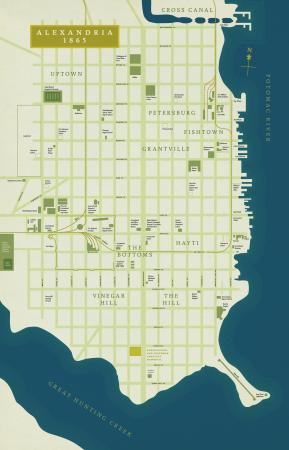
A map depicts Alexandria in 1865 with areas labeled with the African American neighborhoods of Cross Canal, Uptown, Petersburg, Fishtown, Grantville, Hayti, The Bottoms, Vinegar Hill, and The Hill.
This map of Alexandria highlights African American neighborhoods at the end of the Civil War, with Hayti near the center of the map. Courtesy of Alexandria Black History Museum.

The first federal census of 1790 lists 52 free Black Alexandrians, many living in the neighborhoods of The Bottoms and Hayti. The Civil War led to the formation of new communities and an increase in the free Black population from 836 people in 1820 to 5,300 by 1870. 
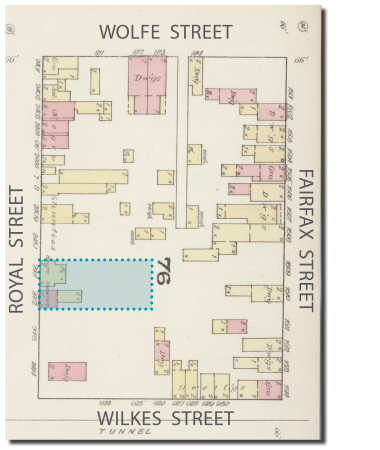
The two Coleman Site properties are highlighted on an 1885 Sanborn map showing one block of the Hayti neighborhood.
The 1885 Sanborn map shows "Negro Dwellings" at the location of the Coleman Site (44AX30) excavation, shaded in blue.


Calling Hayti home

Over 100 years of history found in tax lists and census records show that the 400 block of South Royal was home to mostly free Black property owners and tenants in the 1800s. An 1832 tax record lists Fanny Camble (Campbell), George Brooks, and William Dudly (Dudley) living as tenants on property owned by James Coleman, a white grocer. Unlike Coleman, they are described as "Col-d," or "Colored."

On this 1832 tax document, James Coleman is listed as owning houses and lots along South Royal Street that are lived in by "Colored" tenants: Fanny Camble, Geo [George] Brooks, and Wm [William] Dudly.
1832 Personal Tax List, Ward 1

Not all were free on 400 South Royal. George Brooks and his wife Harriet lived at 420 South Royal. While Harriet was free, George was enslaved by John Wiggs, who lived on the same block. Harriet purchased George's freedom in 1834, but he was not legally listed as free until 1848. By the 1850s, all renters and owners on the block were free.
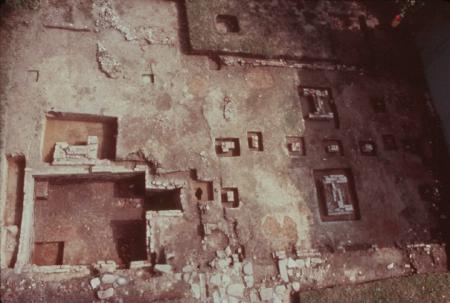
View of the Coleman Site (44AX30) excavation showing foundations.
The Coleman Site (44AX30)
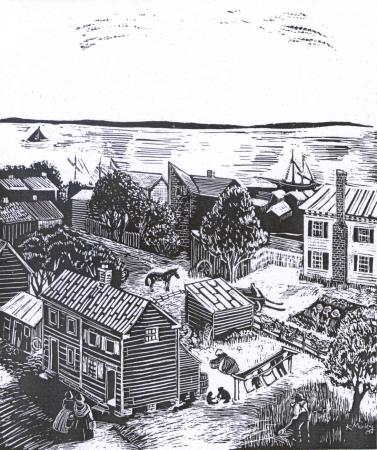
An artist's depiction of 1830s Hayti shows the Potomac River in the background with sailing ships, and the neighborhood in the foreground with frame two-story houses and duplexes, small outbuildings, livestock, and families doing work in the yards.
This depiction of 1830s Hayti is based on archaeological excavations. Woodcut by Karen Murley.


In the kitchen

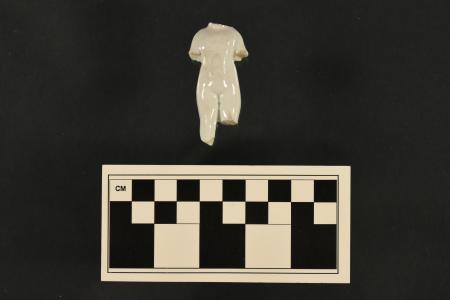
An approximately 5cm tall white porcelain doll with broken arms, legs, and head.
Children played with these inexpensive porcelain figurines, known as "Frozen Charlottes" or "penny dolls." They were also baked into cakes as party favors and used to cool down tea. Frozen Charlotte, 418 S Royal, Feature 80, ca. 1850-1899. 
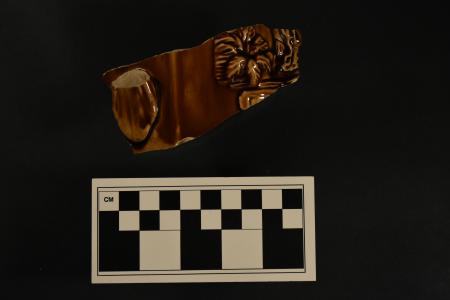
A fragment of a ceramic teapot with a molded brown decoration.
This inexpensive Rockingham ware teapot depicts the biblical story "Rebekah at the Well." The design was first made in Baltimore in 1851. Teapot fragment, 418 S Royal, Feature 90, ca. 1851-1899. 


In addition to store-bought goods, Hayti residents sourced food from the nearby river and land. 
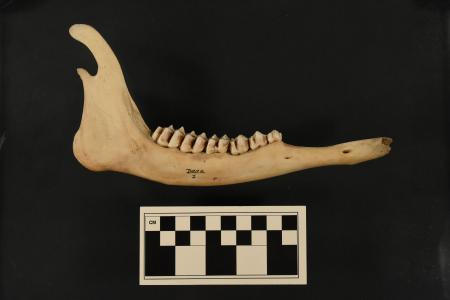
A deer jawbone, approximately 20 cm in length
Deer jawbone, 418 S Royal, Feature 99. 
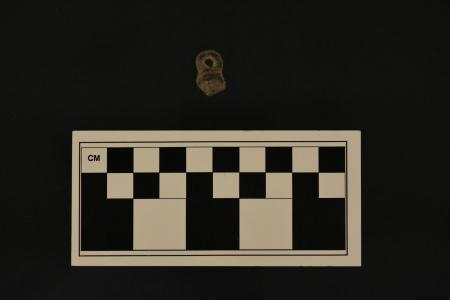
A small lead fishing weight with a hole, approximately 1 cm wide
Lead fishing sinker, 418 S Royal, Feature 99, ca. 1750-1950


life in the neighborhood

The community was made up of a wide range of households, from short-term single renters to large families. These artifacts suggest a lively neighborhood filled with kids and music. 
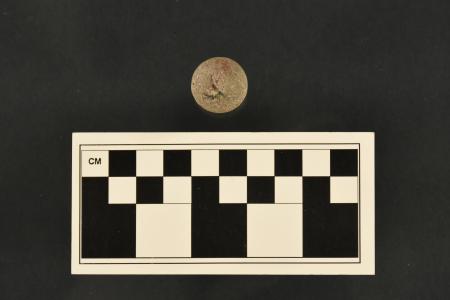
A glass marble, approximately 2.5 cm in diameter
Glass marble, 418 S Royal, Feature 80, ca. 1846-1926.
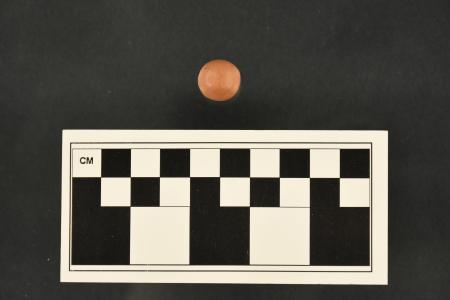
A brown clay marble, approximately 1.5 cm in diameter
Clay marble, 422 S Royal, Feature 103, ca. 1750-1940. 
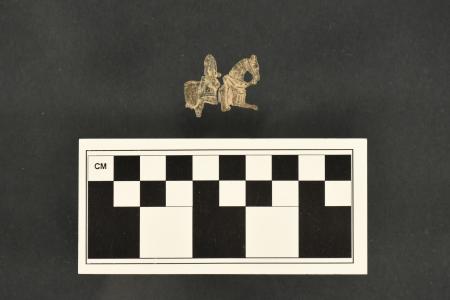
An approximately 4 cm flat molded lead horse with a soldier on its back
This molded lead horse was most likely mounted on a stand and used as a toy. Lead horse, 418 S Royal, Feature 80.
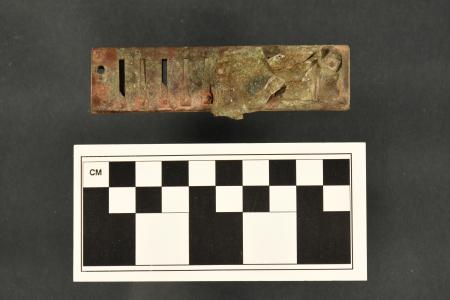
Harmonica fragment, approximately 10 cm in length
This harmonica is missing most of its cover plate, revealing the inner reeds. Harmonica, 418 S Royal, Feature 99, ca. 1860-1899. 


Daily routine

Work, school, and health were all a part of everyday life in Hayti. 
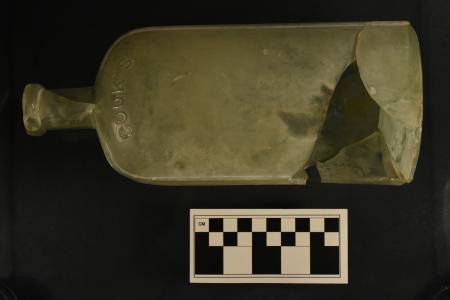
A partially mended glass bottle, approximately 20 cm tall
Henry Cook, who operated an Alexandria drug store from 1838-1878. "Cook's Balm of Life" was a patent medicine that promised to cure "whatever ailed you." "Cook's Balm of Life" bottle, 418 S Royal, Feature 99, ca. 1838-1878. 
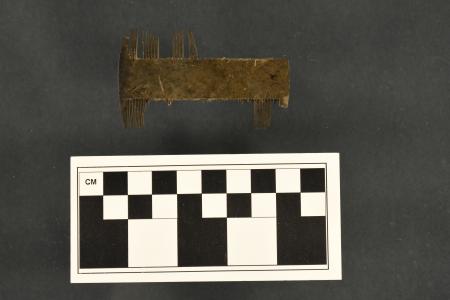
A fine-tooth comb, approximately 7 cm in length
This comb's tiny teeth removed lice, a common pest of the time. Vulcanized rubber comb, 418 S Royal, Feature 90, ca. 1700-1899. 
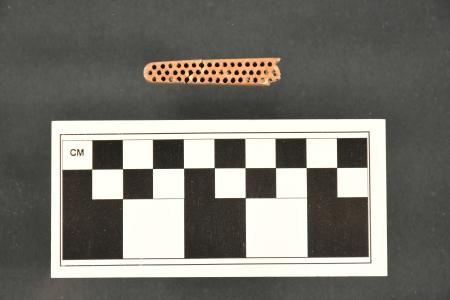
The head of a broken bone toothbrush shows three rows of holes that used to hold bristles.
The holes in this bone toothbrush likely held boar (pig) hair bristles. Toothbrush head, 418 S Royal, Feature 90, ca. 1700-1899. 
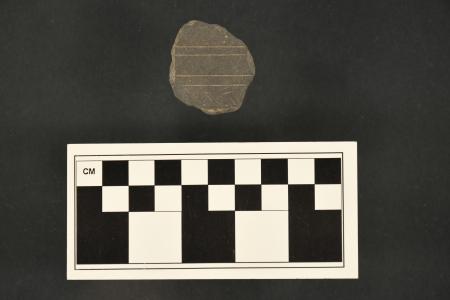
An approximately 4 cm fragment of a slate tablet, with two sets of inscribed parallel lines
In the 18th and 19th centuries, students often wrote on slate tablets instead of lined paper. The slate could be easily wiped clean and reused. The Snowden School and the Hallowell School for Negro Girls were both located nearby. Slate, 422 S Royal, Feature 103, ca. 1700-1895. 
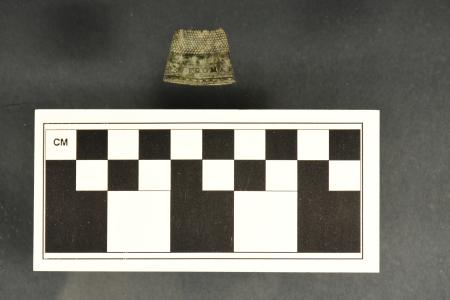
A flattened brass thimble fragment with letters around the base
This brass thimble was used for sewing. It includes the inscription "FROM A FRIEND." Thimble, 418 S Royal, Feature 90, ca. 1800-1899. 

Who Lived Here?

Neighborhood growth and change is seen through maps, historical documents, and artifacts excavated from the Coleman Site's three properties: 418, 420, and 422 South Royal Street. 

A timeline showing the changes in the Hayti neighborhood from the 1780s until excavation in the 1980s

1780's - 1810s: The Early Years

White homeowners and businesses primarily occupied the block, including Joseph Coleman's cooper (barrel) shop. Mordecai Miller, a Quaker merchant, rented out houses to free Black families. 

1820s - 1860s: Founding a Community

In 1823, 22 year-old William Savoy rented a house from the Coleman family, becoming the first free Black person to live in one of the Coleman Site properties. More families soon followed, renting and purchasing homes from white landowners. Mordecai Miller's son, Robert, later sold many properties on the block to free Black families. 

1870s - 1900: A Community in Motion

After the Civil War, working class renters replaced households like the family of George Brooks, who had lived on the block from 1832 to 1873. The average rental period was five years. 

1907: The Final Residents

The original Coleman property (418 S Royal) was demolished in 1883. Robert E. Knight, a white merchant, purchased the remaining duplex at 420 and 422 S Royal in 1902. Both were razed by Knight in 1907, marking the end of the Coleman properties. 

1980-1983: Excavation

Archaeologists excavated the Coleman Site ahead of new townhome construction. This work further showed the significance of Hayti and its residents. 

Household Trash

Many households lived in Hayti at 418 South Royal Street. Before municipal trash collection, residents often threw away their trash in the backyard. Historical records can help connect the artifacts found behind the house to the residents who may have used them. 
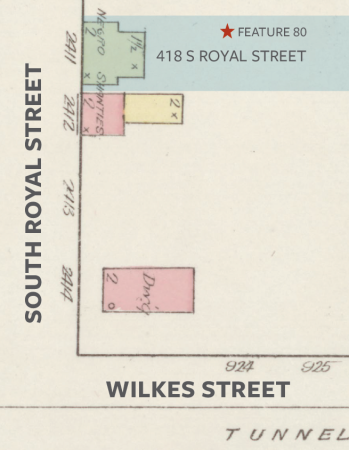
1885 Sanborn map showing the 418 South Royal Street property with location of the excavated Feature 80 in the backyard.
1885 Sanborn Map showing the location of Feature 80 in the backyard of 418 S Royal Street. 

who's trash is this?

  1. Look at the artifacts from Feature 80. They were thrown away sometime after 1850.
  2. Look through the historical records. They include the ages of people in the house. 
  3. Which household seems like the closest match? Use the hints below if you get stuck.

Helpful Hints

  • Were the items used by a household with children? Which households fit that description?
  • Which households lived at 418 South Royal Street during, or after, 1850?
  • Archaeology
  • Historic Alexandria
  • Museums
Contact Us
Alex311 | 703.746.4311
Follow Us
  • BlueSky
  • Facebook
  • X
  • YouTube
Visitor Information

VisitAlexandriaVA.com

  • Jobs
  • Payments
  • Departments
  • Newsroom
  • Social Media
  • Emergency Hotlines
  • Accessibility
  • FOIA Requests
  • Privacy & Legal

Alexandria City Hall
301 King Street
Alexandria, VA 22314

City of Alexandria Seal
© 1995–2023 City of Alexandria, VA and others.
Hold on, redirecting...