
Archaeologists are at work in Alexandria
Archaeology happens in every corner of the city, not just in our historic districts. There are over 250 registered sites within the City of Alexandria, most of which are due to the City's Archaeological Protection Code.
If you find an Archaeological Work in Progress sign, you have found an active archaeological site.
What is the Archaeological Protection Code?
The Alexandria Archaeological Protection Code was established in 1989 and has since served as a preservation model for local jurisdictions across the nation. Under the Code, archaeology is part of the development process in Alexandria. City archaeologists review all building permits that involve ground disturbance to determine their impact on archaeological resources and whether there is a need for preservation action prior to site development. If there is potential for significance, developers are required to hire archaeological consultants to do work ahead of any disturbance.
On projects which do not require site plans, such as small additions to private homes, City archaeologists may ask permission to excavate prior to construction, monitor the site during construction, or be informed if anything is found.
Learn more about archaeology and preservation, including the permit review process, metal detecting code, State and Federal laws and procedures, and your role in preserving Alexandria's history.
Who funds the work?
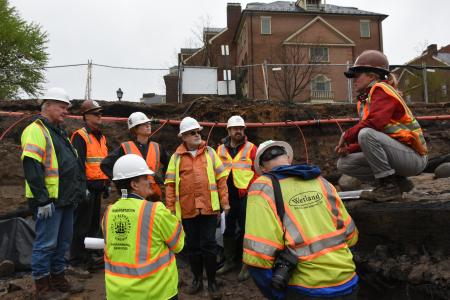
Under the Code, developers are required to hire archaeological consultants to conduct investigations of potentially significant site locations and produce both technical and public reports on their findings. City archaeologists oversee this process and review all work. Many projects will also require some form of historic interpretation, such as an interpretive sign on the site, that incorporates or shares the significance of the site with the public.
Where do the artifacts go?
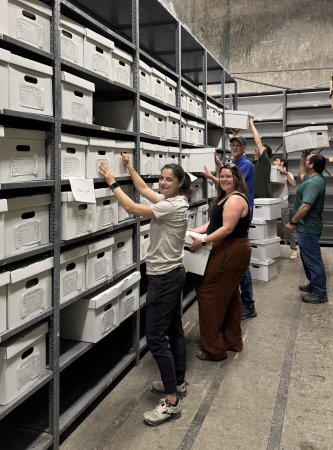
Recovered artifacts are the property of the landowner. Once excavated, these collections must be curated at a facility that meets Federal standards for archaeological curation and collections management. Most property owners donate the entire collection to the City of Alexandria to ensure its long-term care and preservation, and to keep it accessible for continuing research and exhibition. Alexandria Archaeology does not charge a curation fee for collections deeded to the City.
What is produced from archaeological work?
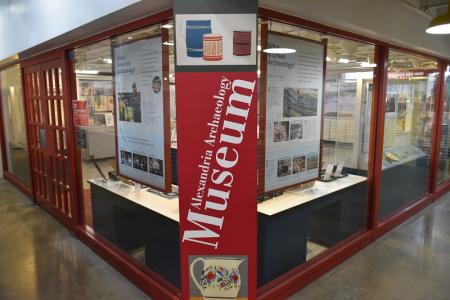
The Alexandria Archaeology collection includes over 3 million artifacts, as well as the field notes and final site reports. A rotating selection of artifacts are on view at the Alexandria Archaeology Museum. Archaeological Site Reports, Documentary Studies, journal articles and in-house publications, and other historical research are listed alphabetically in the Alexandria Archaeology Bibliography and as an interactive map through the Alexandria Archaeology Report Finder (AARF).
Code projects bring the past to the public and are incorporated into the very fabric of the community. Information from Code projects is used to create interpretive markers and signs throughout the city as seen through the interactive Alexandria Historical Sign Finder map. Many projects are adapted into school lessons and other educational programming by Alexandria Archaeology educators, and elements of the past, such as large foundation stones, have been saved and interpreted for the public in the city's open spaces.
What has been learned from Code projects?
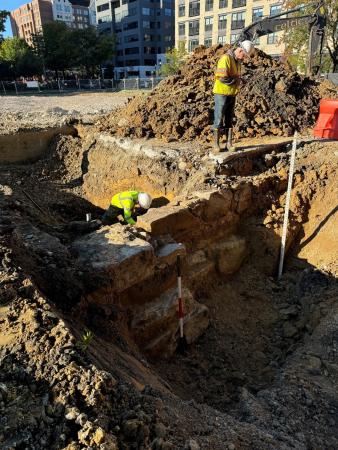
There are over 250 registered archaeological sites in Alexandria. The vast majority of those sites are due to the Archaeological Protection Code. A special thanks goes out to all of the landowners, developers, planners, and archaeological consultants who have helped to save the information from these sites and contributed to making the past come alive in Alexandria. A small portion of code-based projects are highlighted below.
Alexandria Canal, Site 44AX0028
901 N. Pitt Street
Hotel Indigo Site, 220 S. Union Street
Robinson Terminal South, 2 Duke Street
Robinson Terminal North, Oronoco and N. Union Streets
Use the Alexandria Archaeology Report Finder to learn more about what has been found in Alexandria.