You're logged in with MyAlex  |  Logout

City of Alexandria, VA

Search results cleared

Include archived pages
Most of the content here is written in English. Translate your search to find more content? Translating "" to English... Searching for English phrase ""
  • Live
  • Play
  • Services
  • Business
  • Government
  • Projects & Plans
  • Calendar
  • I want to…

The Lee Street Site: Conserving Fragile Artifacts

Visit this exhibit in the Alexandria Archaeology Museum
Page updated on November 19, 2025 at 4:48 PM

Alexandria Archaeology

  • Historic Alexandria (Home)
    • The Museums
      • Museum Collections
      • Rentals and Private Events
    • Other Historic Sites
    • Alexandria Community Remembrance Project
    • Alexandria's History
    • Educational Resources
    • Historic Preservation
    • Museum Store
    • Self-Guided Tours
    • Stay Connected
    • Support Historic Alexandria
  • About Historic Alexandria
  • Alexandria Archaeology (Home)
  • Alexandria Archaeological Commission
  • Archaeological Process
    • Alexandria Archaeology Bibliography
    • Documentary Research and Historical Archaeology
  • Archaeology and Alexandria's First People
  • Archaeology and Preservation
    • Archaeological Protection Code
    • Archaeological Standards
    • GIS Tools for the Archaeologist
    • Metal Detecting Code
    • Resource Management Firms
  • Archaeology on the Waterfront
  • Make a Gift
  • News Releases
  • Programs & Events
    • Alexandria Archaeology Summer Camp
    • Educational Resources
  • Projects and Publications
  • Visit the Museum

Share

Bluesky Share on Facebook Share on X Share via Email
Translate icon
Translate icon
XWARNING: You have chosen to translate this page using an automated translation system. This translation has not been reviewed by the City of Alexandria and may contain errors.

A Community Digs its Past: The Lee Street Site

The Lee Street exhibit reveals the archaeological process and the history of Alexandria as seen through the lens of the Lee Street Site (archaeological site 44AX180) and several other waterfront sites.

Preserved on the Lee Street Site was a cross-section of Alexandria's history from its founding in 1749 into the 20th century. Eighteenth-century wharves remained intact below remnants of a bakery, taverns, and residences that had sprung up on the bustling waterfront. The block was later used by the Union Army as a hospital support facility for the huge influx of soldiers during the Civil War. These layers of time were preserved under shallow foundations and a paved parking lot. The exhibit weaves together the story of the wharves, taverns, bakery and Civil War privy excavated at the corner of Lee and Queen Streets with the step-by-step process of archaeology from research and excavation to lab work and conservation.

Conserving Fragile Artifacts

Conservators triage history, caring for every artifact.

Conservators and archaeologists must work quickly to slow the decay of fragile materials like metal, leather, and wood once they are out of the ground. These materials need physical and chemical treatment to preserve them.

A lack of oxygen in waterlogged features like privies and wells prevents organic artifacts from breaking down. This wet soil preserves objects that typically do not survive.
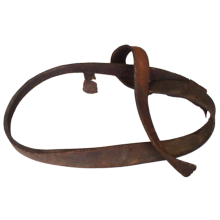
Curled leather strap, approximately one inch wide and two feet long
Conserved leather strap
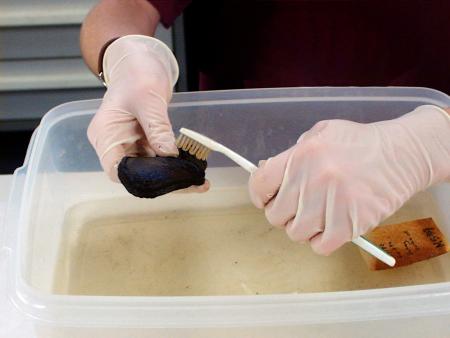
An archaeology lab volunteer uses a toothbrush to gently clean a leather object.


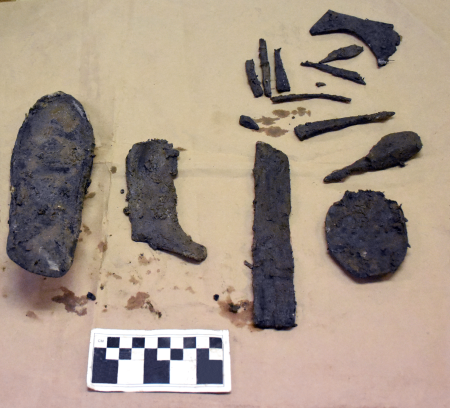
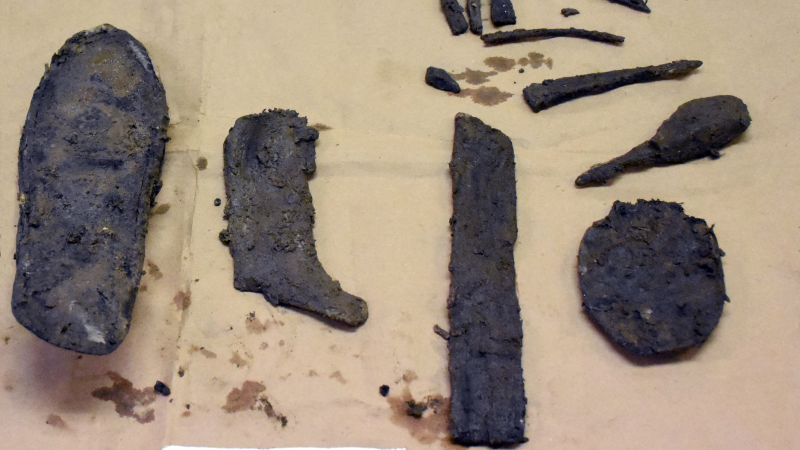
Pieces of leather shoes are laid out on brown paper to be photographed with a scale.


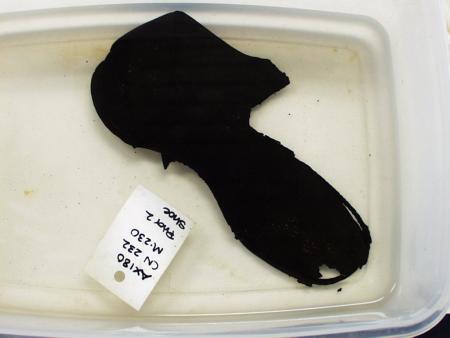
A leather shoe sits in a tub with its artifact tag while in the process of being conserved.


Waterlogged leather objects from the Lee Street Site were cleaned by hand and desalinated to remove damaging salts. The water was replaced by polyethylene glycol (PEG) and then the leather was freeze dried to remove any remaining water. PEG is used in household products like lotions and soaps. It is a waxy material that takes the place of water and does not evaporate, preventing wood and leather objects from shrinking and cracking.

Artifacts are photographed before conservation to document their condition. Some artifacts, like these shoes, are also illustrated to show fine details that would not be seen in a photograph.
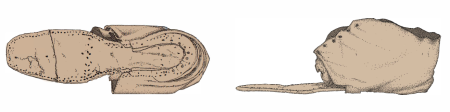
Bottom and side view illustrations of a leather shoe from the Lee Street site show how the shoe was constructed. The toe portion of the upper is missing.
A leather shoe recovered from the Civil War privy at the Lee Street Side. Illustration by Adele Dunne.


Privy Preservation

Leather objects remained wet while buried in the Lee Street Site privy for more than 130 years. Once excavated, a sample of this preserved leather was conserved.
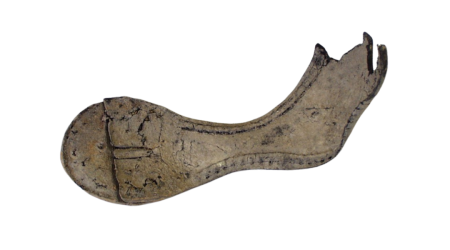
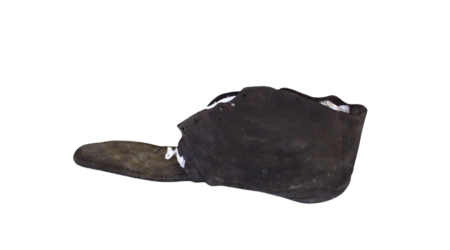
A leather shoe sole that has not been conserved appears lighter and shows significant cracks in the material.
This dried-out shoe sole was found near the site’s surface. It is brittle and cracked, showing what happens to leather that is not conserved.
A conserved leather shoe from the Lee Street site appears darker and without cracking
Wet organic materials like wood and leather shrink and expand with changes in humidity. Replacing water with polyethylene glycol (PEG) conserves the material.

Call the experts!

A conservation team treated and preserved a wide variety of wood, leather, metal, and synthetic materials like rubber from the Lee Street Site. These objects all came out of the same wet soil of a privy.


How are the artifacts conserved?

The type of material and the environment it was found in determines the methods used to conserve each object. Follow three types of artifacts on their conservation journey. 


Object: Fire bucket

A faded, red label on the fire bucket identified it as made by the Gutta Percha Company. 
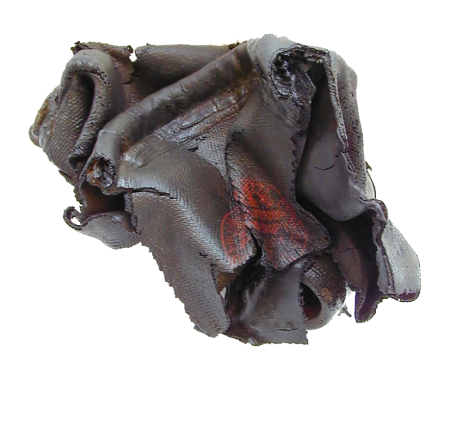
Image of a conserved fragment of a fire bucket recovered from the Lee Street Site. The rubber has a partial red stamp, showing that it is made of Gutta Percha.
Fire bucket


Material Type: Gutta Percha (rubber)

This rubber is made from the sap of a Malaysian plant, known as gutta percha. Starting in the early 1850s, it was used to make hard rubber objects like buttons and combs, and rubberized canvas for tarps, tents, and fire buckets.
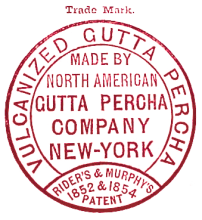
An image of a trade mark for "Vulcanized Gutta Percha" that is "Made by North American Gutta Percha Company New-York." It includes: "Rider's & Murphy's 1852 & 1854 Patent" at the bottom of the mark.
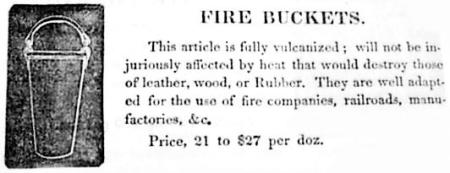
Advertisement for fire buckets that reads: "This article is fully vulcanized; will not be injuriously affected by heat that would destroy those of leather, wood, or Rubber. They are well adapted for the use of fire companies, railroads, manufactories, &c. Price, 21 to $27 per doz.

Condition: Brittle

Conservation: The artifact was gently brushed to clean it before desalinating. It is stored in an anoxic (low oxygen) and low-light environment. The fire bucket is too fragile to be exhibited.


Object: Water keg top

Small water kegs were used on ambulances during the Civil War.
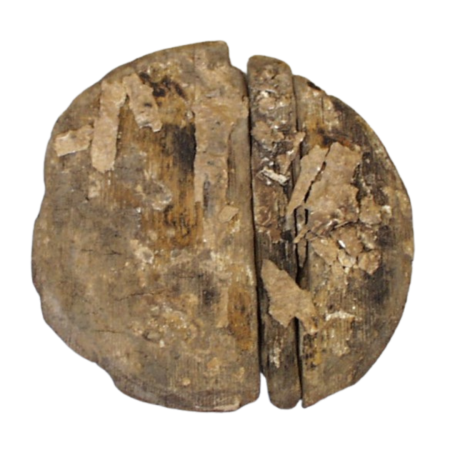
A round wooden lid, approximately four inches in diameter, with a vertical crack through the middle, following the grain of the wood
Water keg top

Material type: White oak (wood)

Condition: Waterlogged, traces of paint can still be seen.

Conservation: This wood was treated by slowly replacing the water in the object with PEG and then freeze drying the artifact to remove any remaining water. This procedure stabilized the keg top while retaining its shape and preventing cracking.


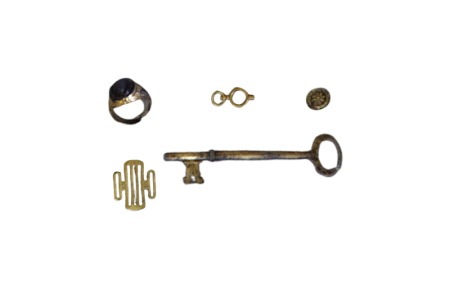
Object: Buttons, key, ring, buckle, lamp, and bodkin
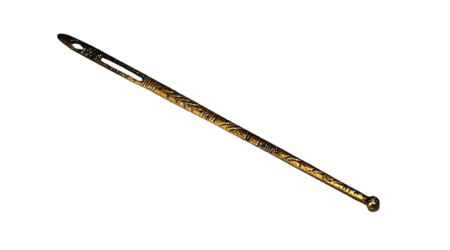
 

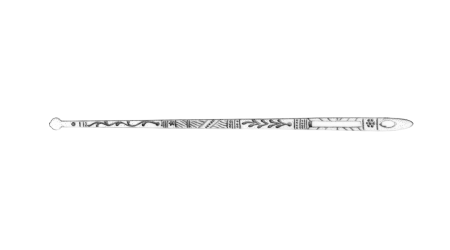
Approximately 2.5 inch bodkin with intricate designs, a rounded end, and two holes on the far side, similar to a sewing needle
The bodkin (1) may have been used to thread ribbon through lace.
An illustration of the bodkin shows its intricate designs more clearly.
Illustration: Andrew H. Flora


Material type: Copper alloy (metal)

Condition: Corroded

The wet environment of the privy covered the copper and brass artifacts with a layer of black sulfide and copper carbonate corrosion. The sulfide corrosion preserved the shiny surface of the metal beneath. 

Conservation: The objects were cleaned mechanically, chemically stabilized, and coated with resin. 
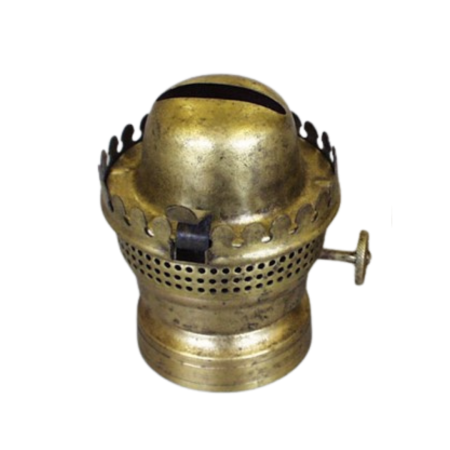
A conserved metal gas lamp with a knob on its side to move the wick, a hole for the wick at the top, and a thin metal ring that would have held the glass portion of the lamp in place.
The gas lamp (2) was made by E.F. Jones, patented 1858.
A small grouping of conserved metal objects that includes a ring and a key
Conserved
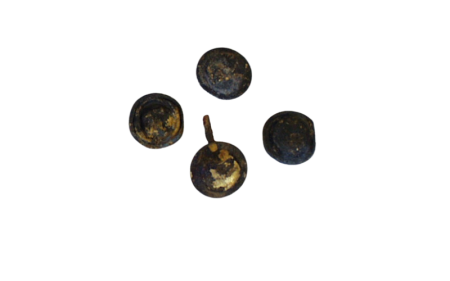
Four metal buttons that have not been conserved have a dark patina covering the otherwise shiny metal surface.
Not conserved


Conserving Lee Street Site artifacts

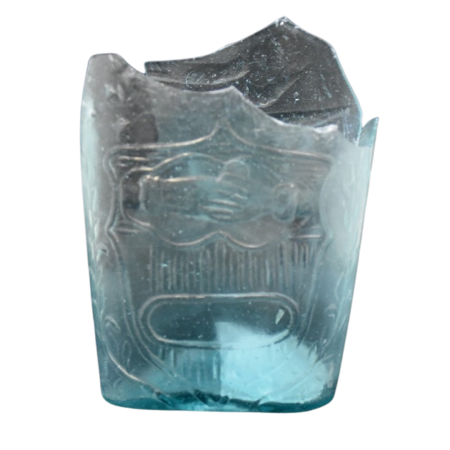
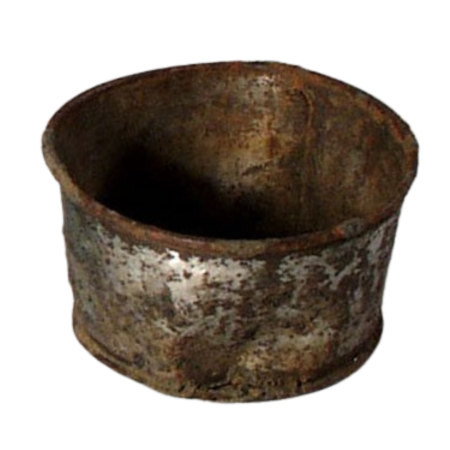
These artifacts were found in the Lee Street Site privy. The conservator used air abrasion to remove corrosion from the canteen and tin cup. This process involves using an instrument that forces out a fine powder, in a delicate version of sandblasting. They then applied a corrosion inhibitor. For the glass flask, the conservator consolidated the flaking surface, desalinated it, dehydrated it using acetone and water, and then coated it with resin.
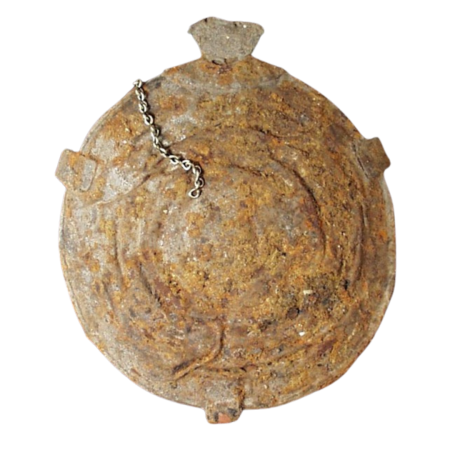
Flattened metal canteen with a small length of chain
Canteen
A short, roughly-made tin cup, approximately four inches across.
Tin cup
A broken aqua glass whiskey flask
Glass flask

The Lee Street Site Exhibit

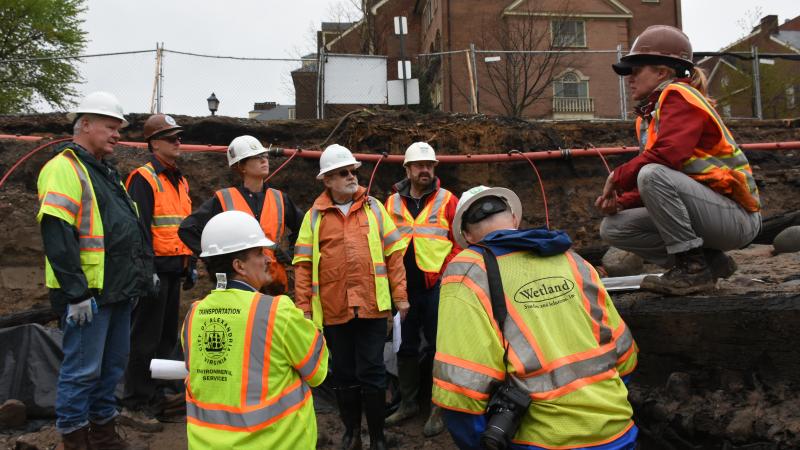
City Archaeologist, Eleanor Breen, talks with contract archaeologists at the Robinson Landing Site (44AX235).

1. What is Alexandria Archaeology?

This City of Alexandria public archaeology program and museum exists because the community recognizes the importance of preserving and interpreting the area's unique history.

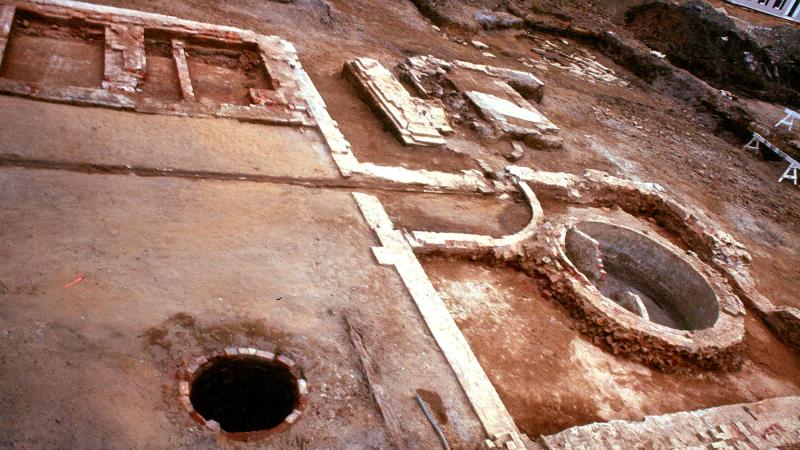
Foundations of a bakery at the Lee Street Site (44AX180)

2. What is Urban Archaeology?

The ground beneath modern Alexandria contains a record of the lives of Native Americans, European colonists, enslaved and free Black people, and later immigrants. Buildings, parks, and pavement preserve the buried evidence of the everyday lives of past town residents. 

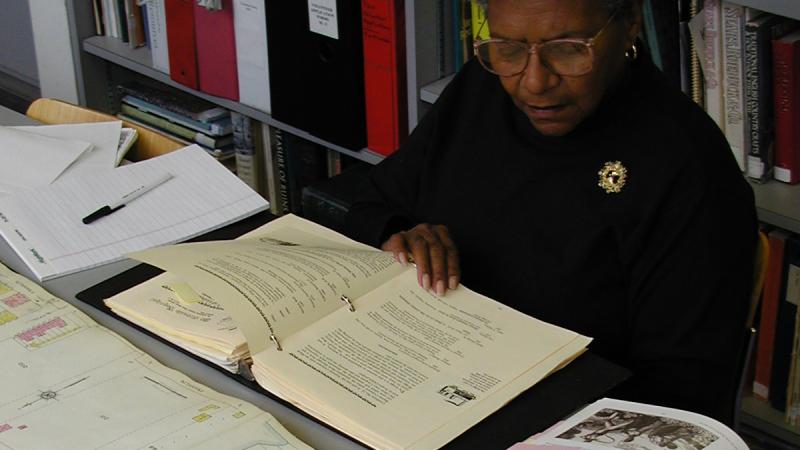
A researcher looks over maps and books.

3. What Do Archaeologists Do?

Artifacts like bottles, buttons, and bones and features like building foundations and privies show what happened in a particular place and time. Archaeologists use this evidence to learn about people’s lives.

Layers of different soil colors and types

4. What Did Alexandria Look Like?

The Lee Street Site is a cross-section of Alexandria’s history from its founding in 1749 to today.

Watercolor of Alexandria in the 18th century showing tall ships on the Potomac and a small port town in the distance.

5. 18th Century - Building a Bustling Port

You are standing on manmade land that helped create a successful port.

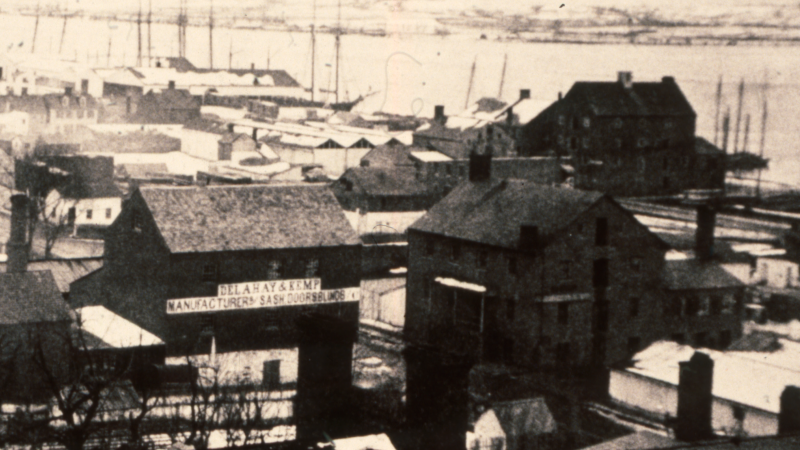
A black and white photo shows buildings along the waterfront with the masts of tall ships in the background. The Jamieson Bakery building is a three-story building with loft, circled in the foreground.

6. 19th Century - The Rise of Industry

Buried foundations show the industrialization of the waterfront.

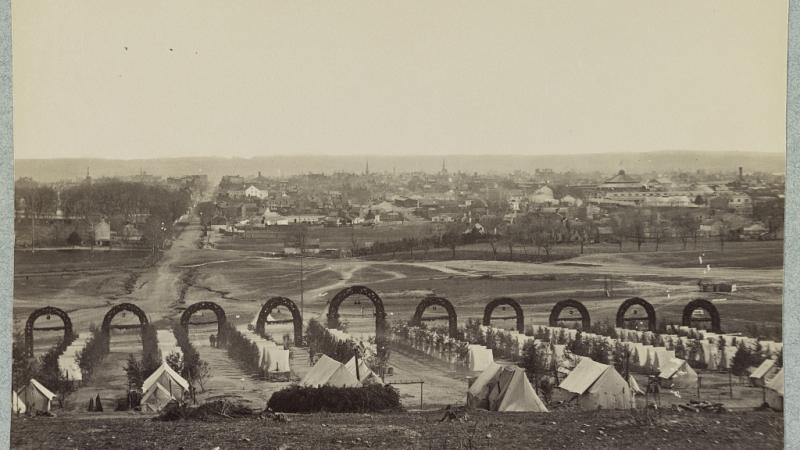
Photo taken from Shuter's Hill, the site of the George Washington Masonic National Memorial, looking east. Alexandria is visible in the background. The foreground shows lines of army tents with archways marking the roads between them.

7. Civil War - Fighting for Freedom

The fight to end slavery permanently changed life in Alexandria.

A stylized archaeological map of the Lee Street site showing the exposed brick foundations of a tavern.

8. The Archaeological Site

Historical documents and archaeological evidence work together to answer questions.

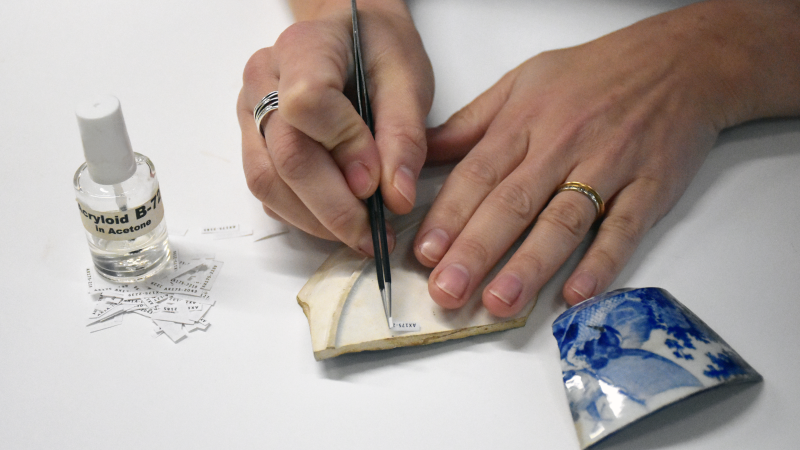
An archaeologist uses tweezers and a removeable glue to add small paper labels to the base of a ceramic artifact

9. The Archaeology Lab

From studying bones to buttons, the lab is where true discovery happens.

Pieces of leather shoes are laid out on brown paper to be photographed with a scale.

10. Conserving Fragile Artifacts

Conservators triage history, caring for every artifact.

  • Archaeology
  • Historic Alexandria
  • Museums
Contact Us
Alex311 | 703.746.4311
Follow Us
  • BlueSky
  • Facebook
  • X
  • YouTube
Visitor Information

VisitAlexandriaVA.com

  • Jobs
  • Payments
  • Departments
  • Newsroom
  • Social Media
  • Emergency Hotlines
  • Accessibility
  • FOIA Requests
  • Privacy & Legal

Alexandria City Hall
301 King Street
Alexandria, VA 22314

City of Alexandria Seal
© 1995–2023 City of Alexandria, VA and others.
Hold on, redirecting...