
Disease and the Apothecary
In Alexandria, like other cities, the proximity of people and constant arrival of travelers led to outbreaks of deadly diseases. During the Apothecary’s 141 years of operation, yellow fever, smallpox, and influenza swept through the city with devastating effect.
This exhibit highlights three diseases with deadly outbreaks in Alexandria and what the government and medical professionals, including this apothecary shop, did to prevent the spread and alleviate symptoms.
Inoculate, Variolate, Vaccinate
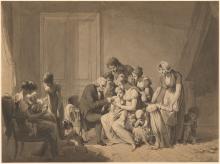
Inoculate: To implant a disease agent or antigen in a person to produce a disease to stimulate resistance.
Variolation: Where a person was intentionally infected by a person with the disease. This is the first version of inoculation.
Vaccination: Introduces a small amount of killed, weakened, or otherwise modified version of the disease. In 1796, Edward Jenner developed the first vaccine when he used milder cowpox scabs to inoculate people against smallpox.
Mortality Rates
Mortality rates are noted where possible. The mortality rate is based on the number of deaths due to a disease within the overall population. A 5% mortality rate means 5,000 out of 100,000 people die from that disease.
Smallpox
What is smallpox?
Smallpox is transmitted via air droplets or direct contact with an infected person or object. Symptoms include headache, fever, chills, nausea, skin rash, and pustules. The disease had a mortality rate of up to 15% in non-inoculated populations. Survival did confer life-time immunity but often left sufferers with scars on their fac or body and could cause blindness.
With no cure, patients were usually given a diet of gruel or clear liquids, peruvian bark (cinchona) with water, or cinnamon water. Blister plasters were applied to their wrists and ankles. Post-infection treatment included purging with rhubarb mixtures and jalap to fully rid the body of toxins.
Smallpox Outbreaks
Smallpox was one of the most widespread and deadly diseases during the 141 years of this business. Inoculations began in the colonies as early as 1721. With a vaccine developed in 1796, it still took until 1980 for the World Health Organization to declare the disease to be eradicated worldwide.
Alexandria tried to inoculate as many people as possible to manage outbreaks. In the early 1800s, Alexandria newspapers advertised doctors providing vaccinations to all, including free vaccinations for the poor, on orders from the city’s Board of Health. The influx of soldiers, African American freedmen, and civilians during the Civil War called for three smallpox hospitals in the city to attempt to contain any possible widespread outbreaks.
Archival Items on View:
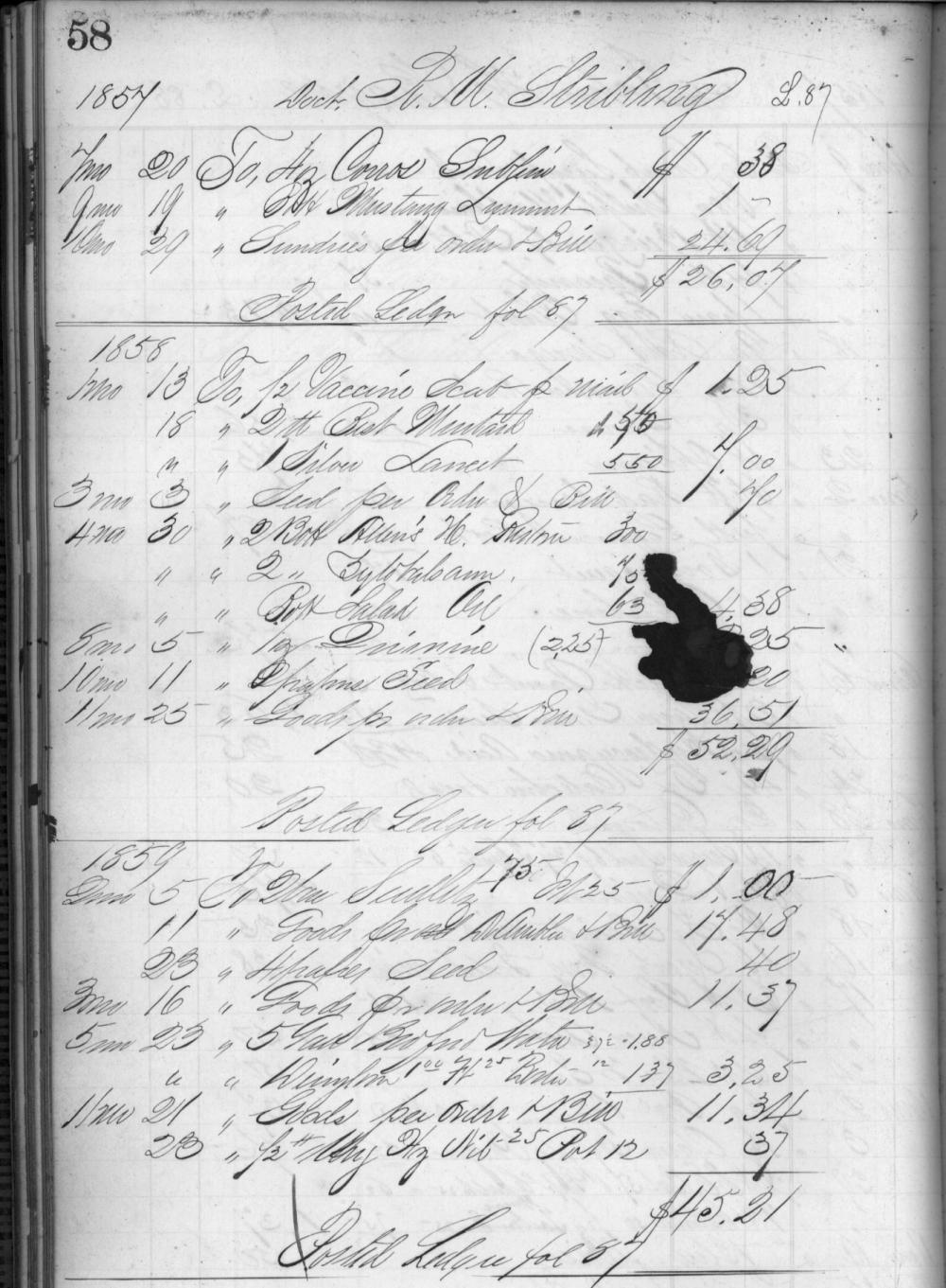
Vaccine Scab Order, January 13, 1858
Doctors from rural areas often sought scabs for vaccinations from urban doctors and pharmacies with more exposure to the disease and availability of material to treat their patients. Here, the apothecary is responding to a request for a smallpox scab from Dr. Robert M. Stribling of Fauquier County, Virginia placed. Letter from the collection of the Stabler-Leadbeater Apothecary Museum.
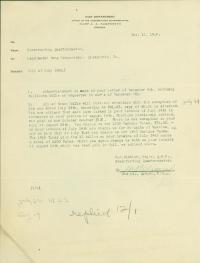
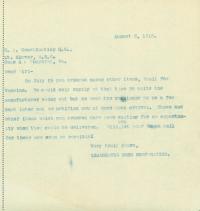
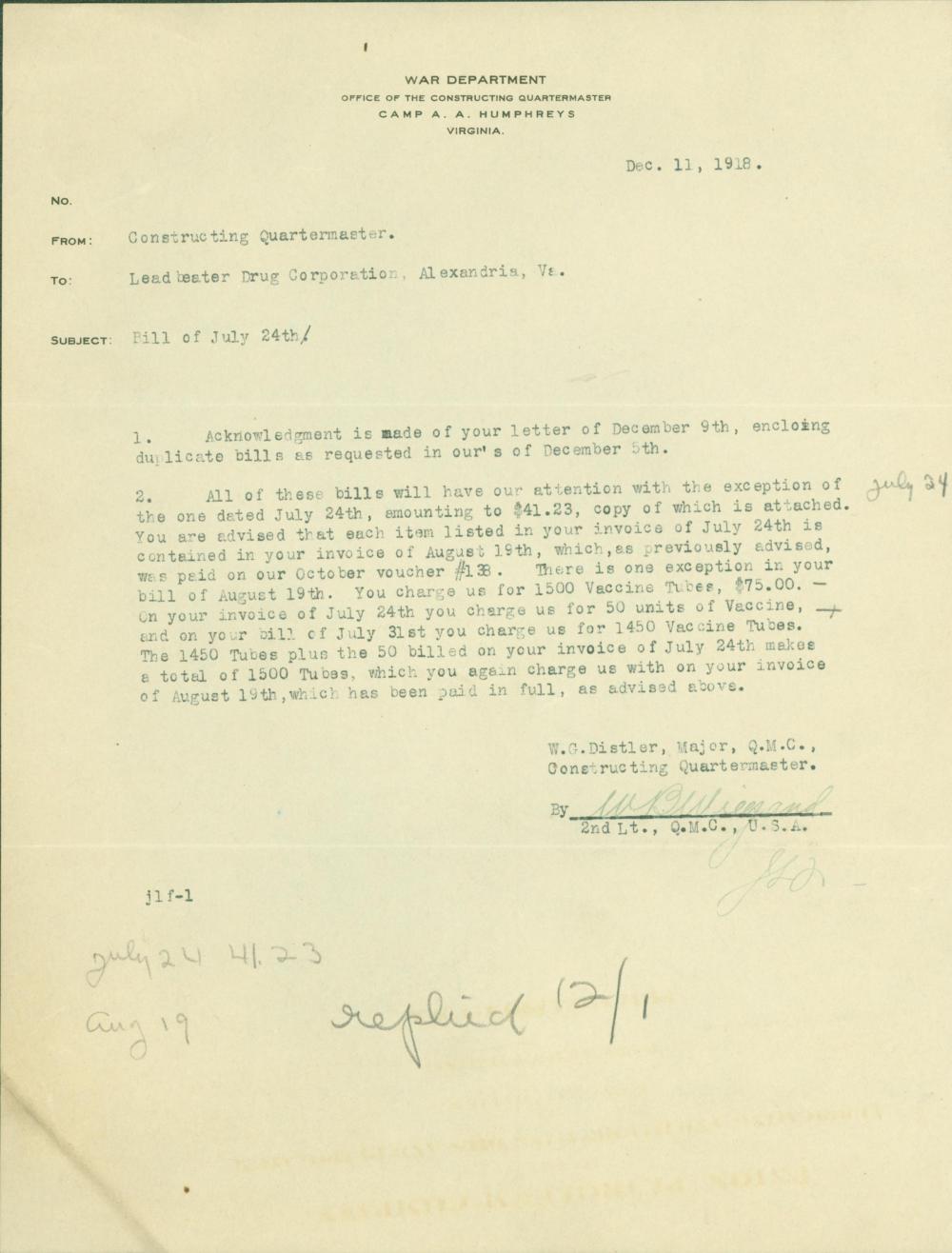
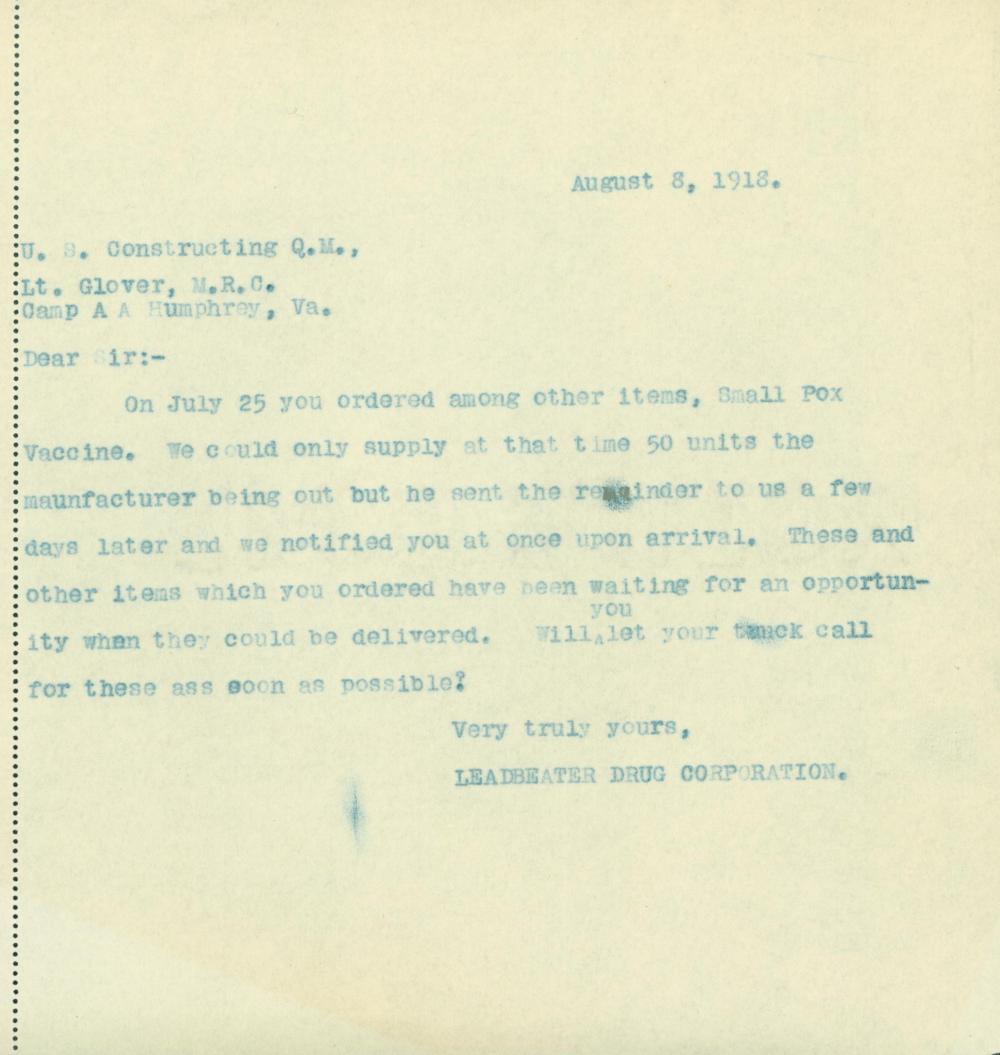
World War I Smallpox Vaccines Letters
These letters between the Leadbeater Drug Corp. and nearby Camp Humphreys (now Fort Belvoir) mention smallpox vaccines. The Army camp needed large quantities of supplies to prepare soldiers for service overseas.
Continuing a tradition begun by George Washington during the Revolutionary War, soldiers were required to be vaccinated. By the 1900s, medical advancements allowed the smallpox vaccine to be stored and administered from tubes via an incision versus from infected scabs.
Yellow Fever
What is Yellow Fever?
Yellow fever, found primarily in tropical areas, is transmitted by mosquitoes. Symptoms include fever, vomiting, and jaundiced skin. The mortality rate varies widely by region and population density. While severe cases were deadly, survival provided life-long immunity.
In the 1700s and 1800s, this disease was spread via ships to port cities. Doctors could only alleviate symptoms through herbal remedies and prescribed bleeding and purging to rid the body of “bad humors.” The first successful use of a yellow fever vaccine was in 1936.
Yellow Fever Outbreaks
The most significant American outbreak occurred in Philadelphia in 1793, where around 10% of the population died. Philadelphia was the nation’s capital at the time, and the federal government had to adjourn during this crisis. Doctors, including the esteemed Benjamin Rush, could not agree on the cause of the disease or best way to cure it.
Concerned the outbreak would spread to Alexandria, the city established a quarantine. In September 1793, Dr. Elisha Cullen Dick, George Washington’s doctor and an Alexandria resident, was appointed as the Superintendent of Quarantine for Alexandria. The quarantine stopped ships south of Alexandria until they were determined free of disease. Alexandria managed to mostly avoid this outbreak, but suffered others in 1798, 1803, and 1821.
Archival Items on View:
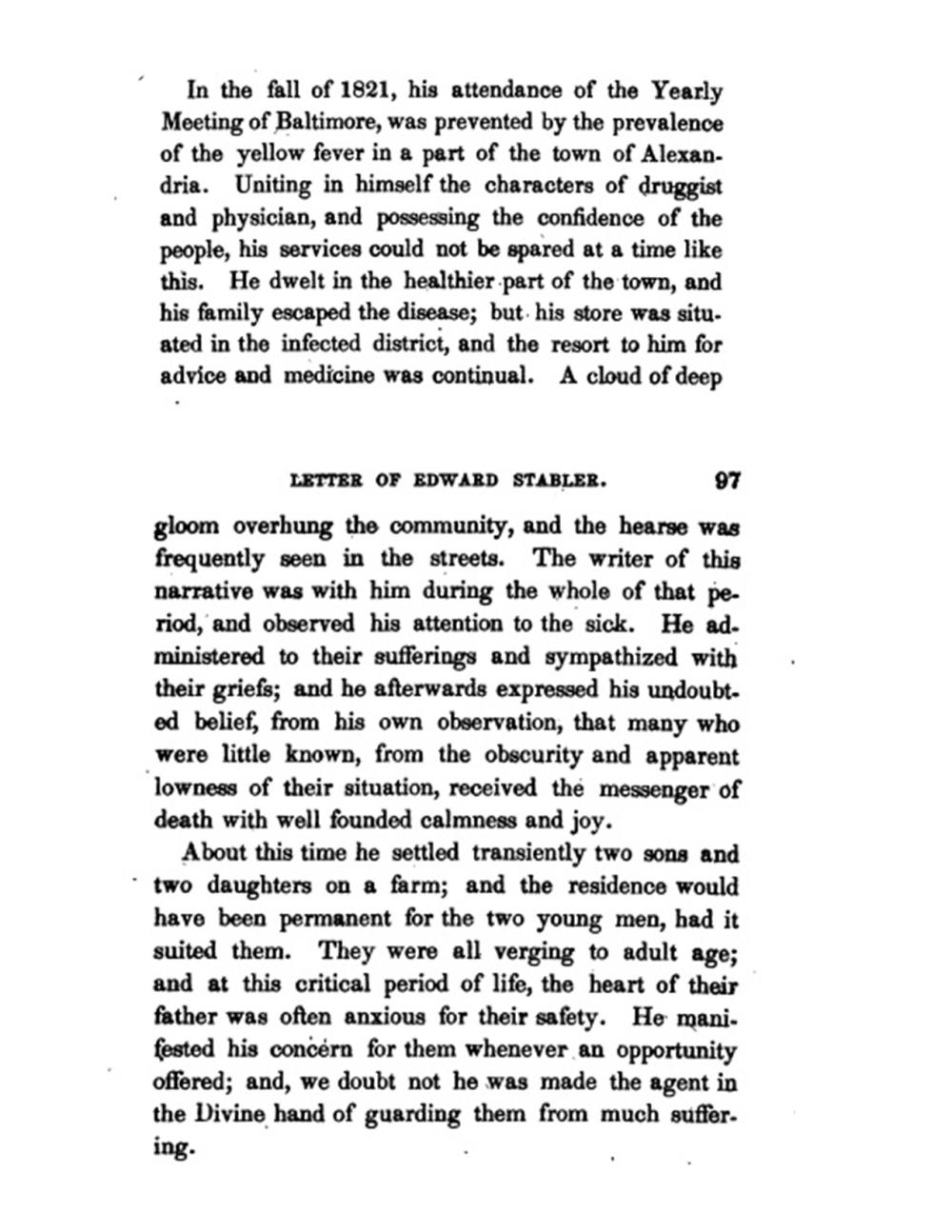
Excerpts from Memoir of the Life of Edward Stabler by William Stabler, 1846
In a biography of his father, William Stabler described a significant 1821 Yellow Fever outbreak that lasted several months and disrupted business and daily life in areas where the fever was prevalent.
“…his services could not be spared at a time like this. He dwelt in the healthier part of town, and his family escaped the disease; but his store was situated in the infected district, and the resort to him for advice and medicine was continual. A cloud of deep gloom overhung the community, and the hearse was frequently seen in the streets.”
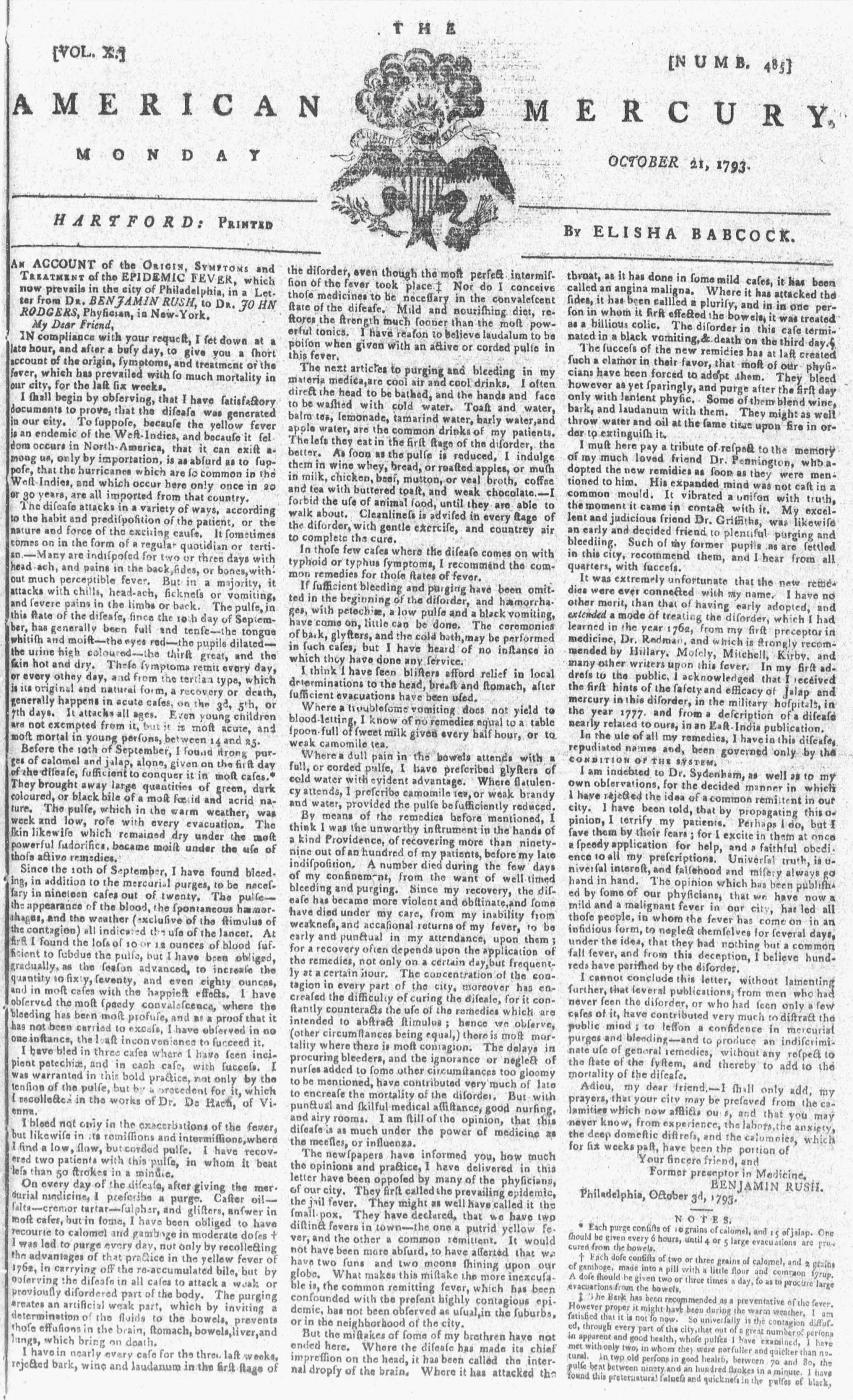
Letter from Dr. Benjamin Rush to Dr. John Rodgers, published in the American Mercury, October 21, 1793
This letter describes the yellow fever outbreak in Philadelphia, including the supposed cause of the outbreak and Dr. Rush’s treatment regimen of a bland diet, bleeding and purging, and herbal remedies. This transcription includes the full article.
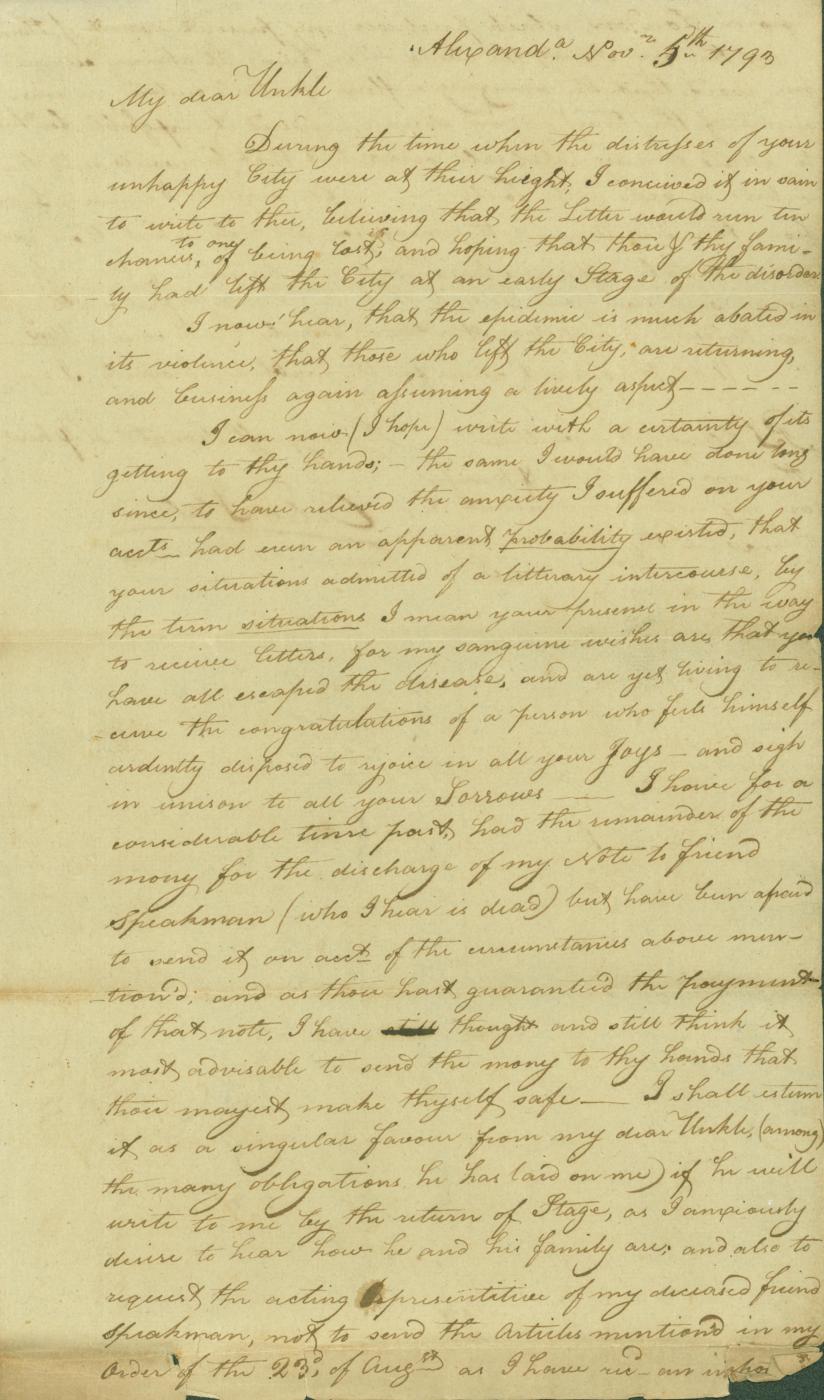
Letter -Edward Stabler to (his uncle) William Robinson- November 5, 1793
This letter expresses deep concern for Robinson’s health, hoping he left Philadelphia during the worst of the yellow fever outbreak.
“I now hear, that the epidemic is much abated in its violence, that those who left the City, are returning, and business again affirming a lively aspect----”
In addition to asking after his uncle’s health, Stabler inquires after the estate administrator of Townsend Speakman, who had died during the outbreak. Stabler frequently placed orders with this apothecary wholesaler. This transcription includes the full letter.
Influenza
What is Influenza?
Influenza is transmitted via air droplets or direct contact with an infected person or object. Commonly known as the flu, symptoms can include fever, chills, sore throat, and cough. The morality rate varies widely by season and region, typically with the youngest and oldest populations at the highest risk.
With no known cure, people turned to home remedies like camphor around the neck and drinking turpentine or kerosene with sugar or honey, which were incorrectly believed to have curative properties.
Influenza Pandemic
The deadliest worldwide outbreak of influenza was 1918-1920. In the U.S. alone, approximately 675,000 American died. Unlike most strains, this one was particularly deadly for young adults who were otherwise healthy. It became known as the Spanish Flu due to the coverage in Spanish newspapers, which were not censored to protect military disadvantages of troop losses. Ultimately, the pandemic killed upwards of 50 million people globally before abating.
The flu pandemic disrupted daily life in American towns and cities. October 1918 alone saw 195,000 deaths across the country. (In comparison the Centers for Disease Control and Prevention counted 3,975 deaths in all of 2023.) To curb the spread, public places like movie theatres, churches, and schools were closed to avoid the gathering of crowds. Public health officials also encouraged the wearing of cotton masks.
Objects on View:
Influenza Products
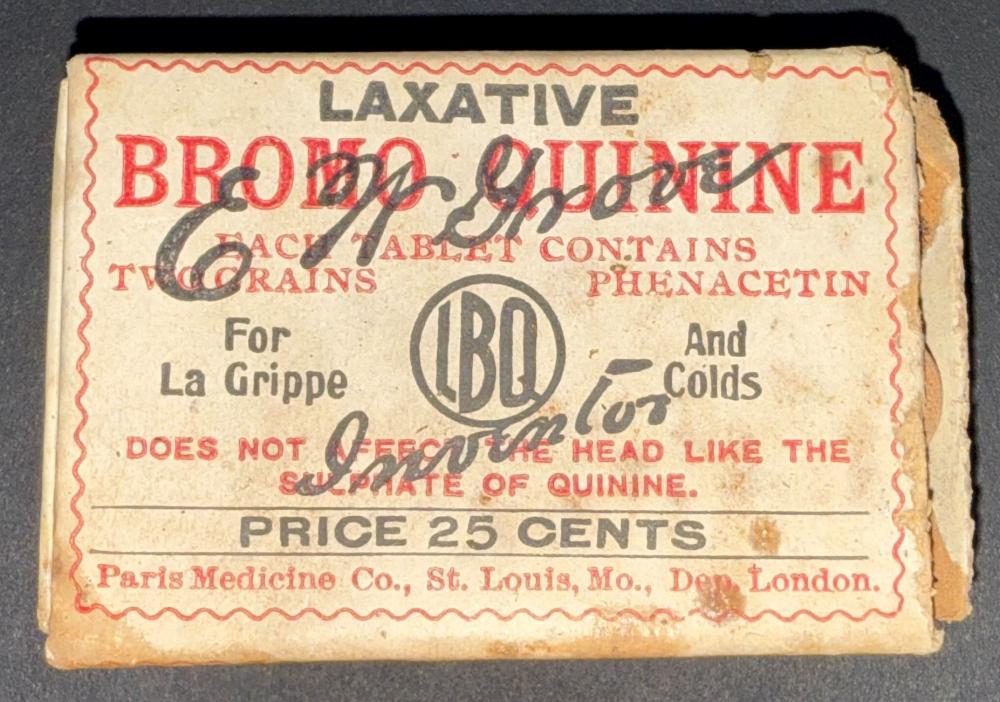
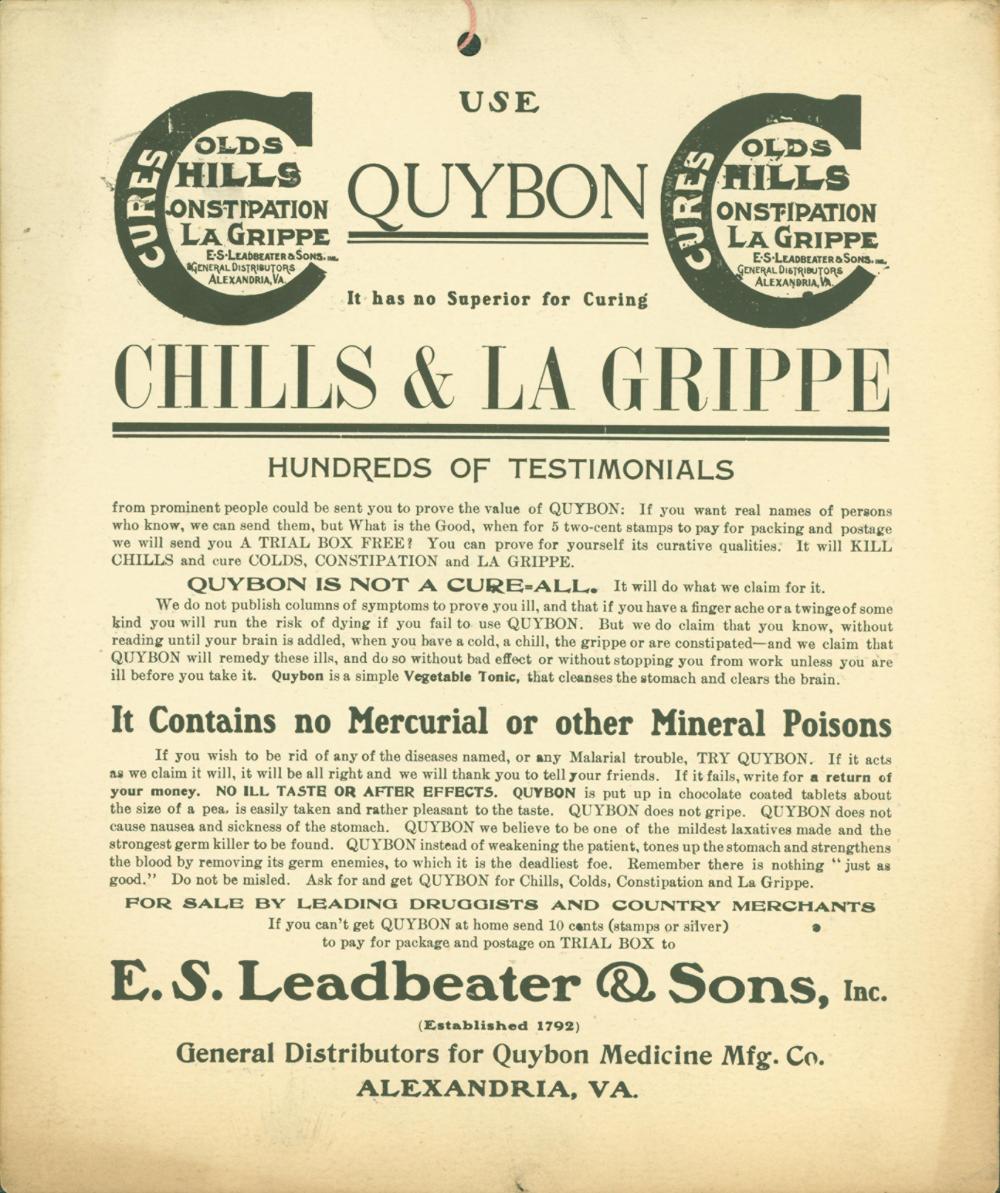
Over-the-counter products promised relief from flu symptoms and were labeled with the French term for influenza, La Grippe, or the Americanized Grip.
Bromo Quinine, made by the Paris Medicine Co., St. Louis, Missouri, promised relief from La Grippe and colds using phenacetin, a pain and fever reducer.
Quybon, distributed by the Leadbeaters, promised to cleanse the stomach and clear the brain by taking this “vegetable tonic” coated in chocolate.
Additional Resources
Learn more about smallpox, yellow fever, and the influenza pandemic.
- Arnold, Catherine. Pandemic 1918: Eyewitness Accounts from the Greatest Medical Holocaust in Modern History. New York: St. Martin’s Press, 2018
- Barry, John M. The Great Influenza: The Epic Story of the Deadliest Plague in History. New York: Penguin Books, 2005
- Caldwell Crosby, Molly. The American Plague: The Untold Story of Yellow Fever, The Epidemic That Shaped Our History. New York: Penguin Books, 2007
- Coss, Stephen The Fever of 1721: The Epidemic That Revolutionized Medicine and American Politics. New York: Simon and Schuster, 2016
- Price, Polly J. Plagues in the Nation: How Epidemics Shaped America. Boston: Beacon Press, 2022
- Watson, Robert P. America’s First Plague: The Deadly 1793 Epidemic That Crippled A Young Nation. Lanham, MD: Rowan and Littlefield, 2023
- An in-depth article about the 1918 influenza and Camp Humphreys.
- A Brief History of Public Health in Alexandria and Alexandria’s Health Department, by Dr. Krystyn Moon, 2014
- Learn about diseases and medical care during the Civil War in Alexandria
Materials produced by PBS related to the Influenza Pandemic of 1918.