Collecting the Past
Historic Alexandria collects objects to preserve them and make them publicly available to share. Museum collections do not just reflect the past; they provide a resource for future generations. Everyday items, art, photographs, and documents help tell Alexandria’s stories. How have objects shaped your world?
Artisans
As Alexandria grew, it attracted a variety of artisans who could locally craft everything from furniture to smaller household items. Alexandrians purchased goods from the town and beyond to highlight their status and tastes. Some of the artisans used their thriving business and connections to serve the community in broader ways, much like local business owners do today.
On display
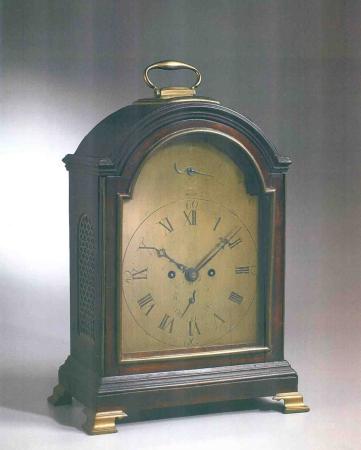
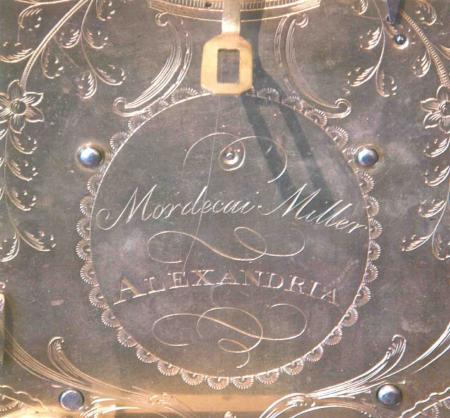
Bracket Clock, ca. 1788-1799, marked “Mordecai Miller”
Mordecai Miller (1764-1832) was an Alexandria silversmith, clockmaker, and very successful shipping merchant. A Quaker, Miller used his profits and standing in the community to advocate for Alexandria’s African American population. He assisted with emancipation efforts and testified in support of free Blacks who often had to prove their status. He and his son Robert also helped develop the early Black neighborhood of Hayti by building and renting homes on South Royal Street to free African Americans.
The Alexandria History Museum at The Lyceum Collection, Museum Purchase
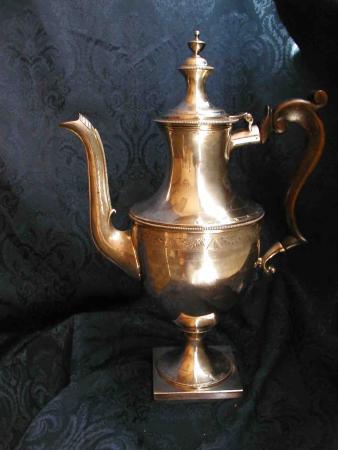
Coffeepot, ca. 1796, marked “A Lynn” for Adam Lynn
Adam Lynn (1775-1835) was a gold and silversmith and skilled engraver. He also sold jewelry, military goods, and hardware. By 1798, he was speculating in real estate. While an artisan, Lynn also was a civic leader. He was a Justice of the Peace for the Alexandria County Court (1817 – 1835), an officer in the militia, served on the first vestry of St. Paul's Episcopal Church, and was a member the Sun Fire Company.
The Alexandria History Museum at The Lyceum Collection, Museum Purchase
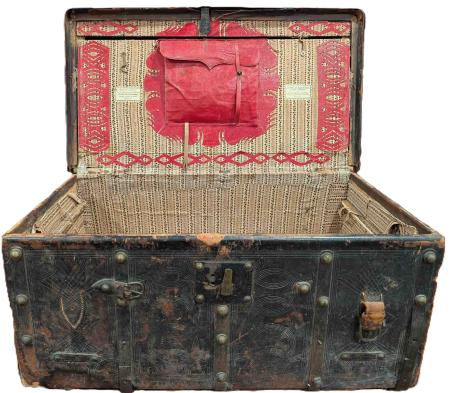
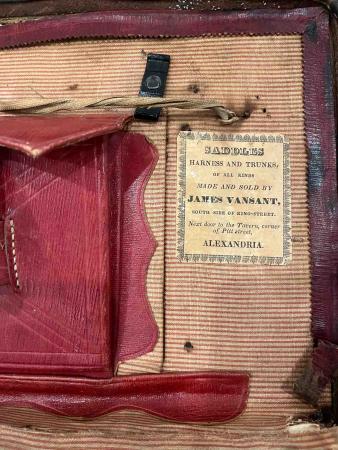
Trunk, ca. 1850s, labeled James Van Sant
James Van Sant was a trunk and saddle maker. His business was on the corner of King and Pitt Streets near the Marshall House Hotel. This small trunk would have held personal items and papers for travelers. An envelope was discovered in a hidden compartment containing a newspaper article about the death of Col. Elmer Ellsworth, who was killed at the Marshall House by proprietor James W. Jackson.
Gadsby’s Tavern Museum Collection, Gift of the Historic Alexandria Foundation
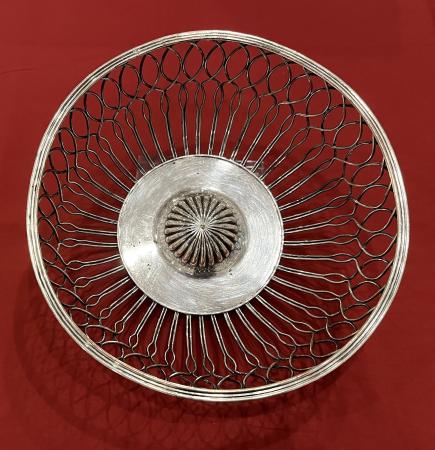
Fruit or Breadbasket, ca. 1800, belonged to Tavern-keeper John Gadsby
Stamped “Gadsby” on the underside, this silver serving basket conveyed to hotel guests and friends of the tavern-keeper’s refinement and hospitality. Polished by enslaved workers, it was likely used at his Decatur House residence or the National Hotel, both in Washington, D.C.
Gadsby’s Tavern Museum Collection, Museum Purchase
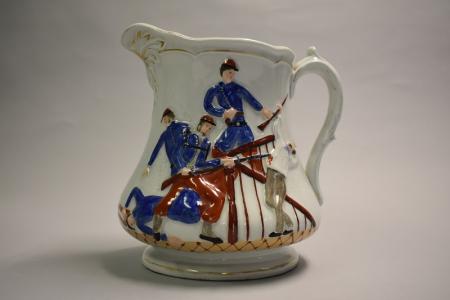
Ellsworth Pitcher, ca. 1861
Events in Alexandria inspired artisans beyond the town. Millington, Astbury & Poulson Pottery in Trenton, New Jersey produced this porcelain pitcher to commemorate the death of Col. Elmer Ellsworth on May 24, 1861 at the Marshall House in Alexandria. Ellsworth, the first Union officer killed in the Civil War, was fatally shot by innkeeper James W. Jackson after removing a secessionist flag from the hotel’s roof. The molded relief imagery presents Ellsworth as a fallen patriot and Jackson as “The Traitor.” Designed for a Northern clientele, this is one of the earliest pieces of American pottery made to depict a historical event.
Fort Ward Museum Collection, Museum Purchase
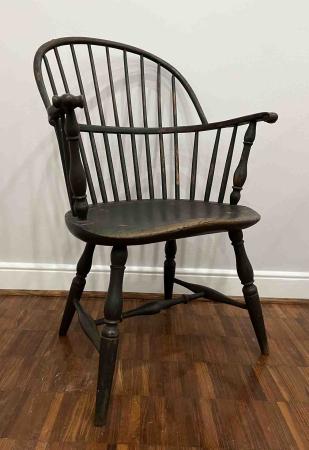
Windsor Chair, ca. 1785-1795, marked by Ephraim Evans
This sack back Windsor chair was made by Alexandria furniture maker Ephraim Evans, likely at his chair factory on Royal Street. In business from 1785-1828, Evans was part of a larger furniture-making tradition in the city that included the Green and Muir families. It is stamped “Evans” under the seat. This style of utilitarian chair would have been found in both taverns and personal homes.
Gadsby’s Tavern Museum Collection, Museum Purchase
Business
Businesses are more than economic engines—they reflect local innovation, labor practices, trade, cultural values, and social change. By preserving Alexandria business history - from small family enterprises to major industries - we learn about the city’s place in the American economy, and how that impacted the daily lives of residents.
On display
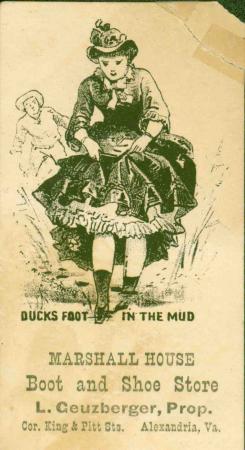
Trade Cards & Billheads
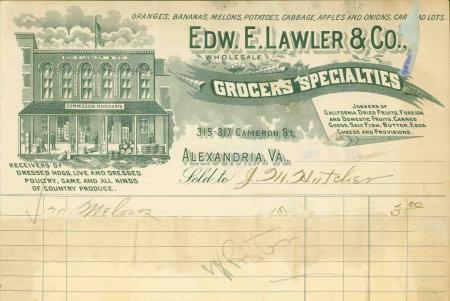
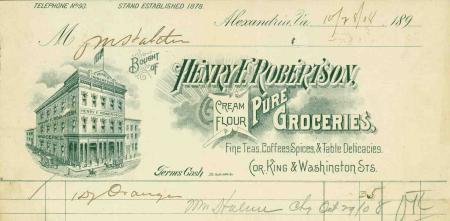
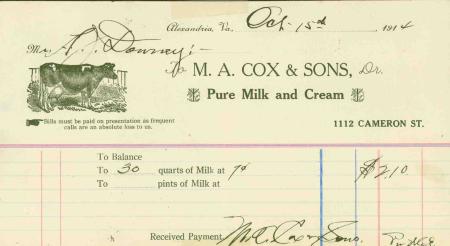
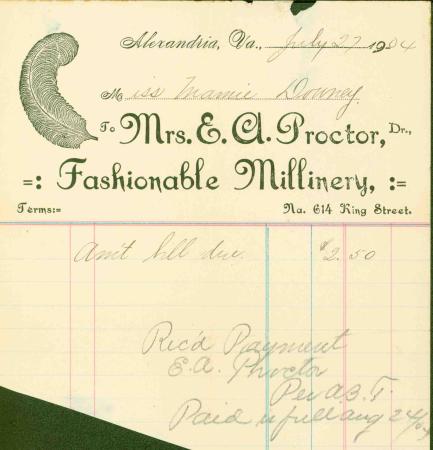
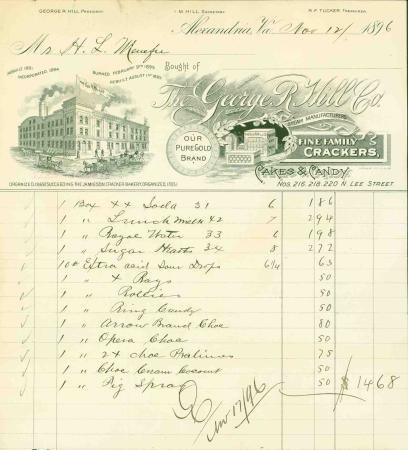
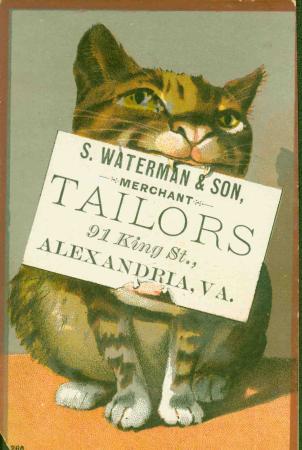
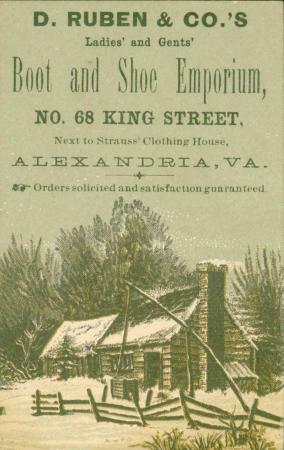
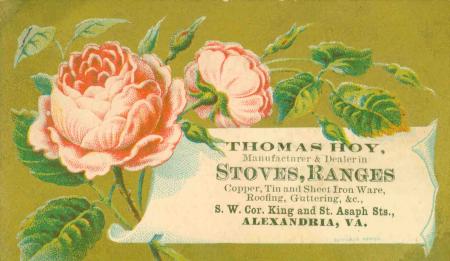
Though utilitarian in nature, trade cards and billheads served as both advertisements for goods available for sale in Alexandria and as records for those who operated these businesses. Alexandria in the mid-to-late 1800s saw an increase in foreign-born residents, many of Irish and Germanic descent. These families established thriving businesses, social and cultural clubs, and worship communities.
The Alexandria History Museum at The Lyceum Collection, Museum Purchase
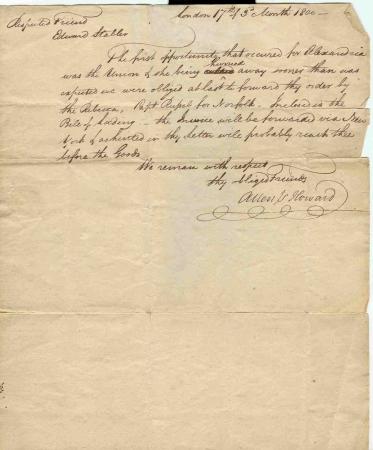
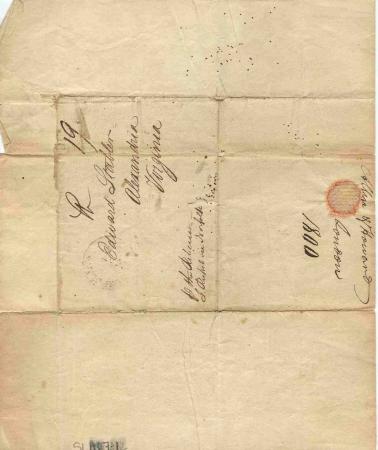
Letter, Allen and Howard to Edward Stabler
This letter shows how goods from all over the world passed through Alexandria’s growing port during the 18th and 19th centuries. Dated March 17, 1800, it is from London pharmaceutical merchants Allen and Howard to Alexandria apothecary owner Edward Stabler. It notes that the delivery of goods ordered and the bill of lading for these items will be coming via different ships through various American ports.
Stabler-Leadbeater Apothecary Museum Collection
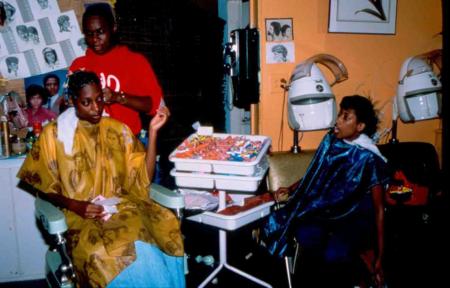
DeeDee's Beauty Shop, 1985, photograph by Carol Siegel
Taken as part of a project documenting the Parker-Gray Historic District in 1985-1986, funded by a grant from the Alexandria Commission on the Arts, this image features a neighborhood beauty shop as a site of business, creativity, and conversation. Black salons have long functioned as cultural anchors within the City’s historic African American community.
Division of African American History Collection
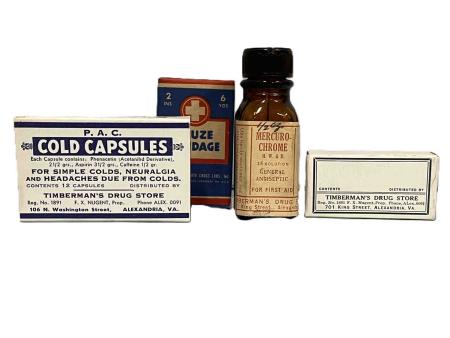
Medical Supplies from Timberman’s Drug Store, mid-20th century
Timberman’s Drug Store operated from 1906 until 2004. It was located at the corner of King and North Washington Street until around 1950, when it moved a few doors north on Washington Street.
Alexandria History Museum at The Lyceum Collection, Gift of F.E. Earley
Portrait of John S. Miller, oil on canvas, ca. 1835; artist: Thomas Sully
This portrait of John S. Miller (1800-1878), painted by noted Philadelphia artist Thomas Sully, depicts the son of Mordecai Miller around the age of 35. After establishing himself in the family shipping business in Alexandria, John married Susan Earl and moved to Philadelphia. He remained close to his family, though, and maintained his involvement in their real estate ventures. This portrait was passed down through his family.
Alexandria History Museum at The Lyceum Collection, Museum Purchase from Miller descendant Roger Henderson
Home
Household items give a glimpse into the daily life of a home and who was living there. Even everyday objects can be works of art. Alexandria-made salt-glazed stoneware would be found in 19th-century kitchens and pantries regardless of the ethnic, social, or economic status of the householder. Other objects reflect the status of the family or current events of the time.
On display
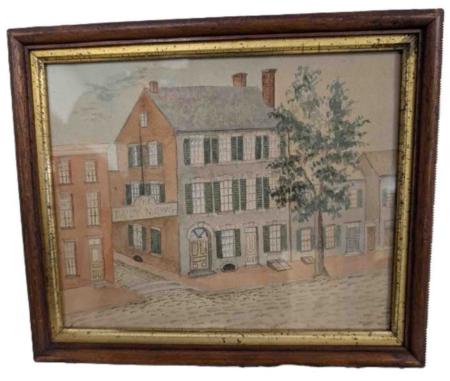
Exterior of the Daily News Building
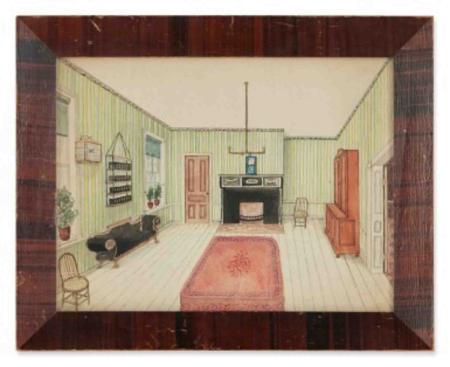
Interior of the Daily News Building
Watercolors on paper, ca. 1870; artist: Ross Sterling Turner
According to tradition, David Turner, the artist’s father, published the Alexandria Daily News from 12 South Royal Street. He also owned the house next door, and it is thought the interior scene is probably a room there. Ross Sterling Turner (1847-1915) left to study in Europe in 1876, and went on to become a painter, watercolorist, illustrator, and instructor based in the Boston area.
Alexandria History Museum at The Lyceum Collection, Museum Purchase
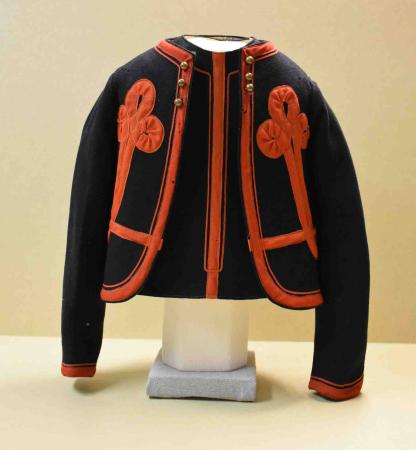
Child’s Zouave Uniform, ca. 1861-1865, maker unknown
The colorful, flamboyant uniform style worn by Civil War Zouave troops inspired replica versions for children. Even President Abraham Lincoln’s son Tad owned a Zouave uniform and a Zouave doll. The distinctive Zouave uniform originated in North Africa and was adopted by the French army in the 1830s. The style was popularized in America by Col. Elmer Ellsworth, whose 11th New York Zouaves were part of the Union occupation of Alexandria.
Fort Ward Museum Collection, Museum Purchase
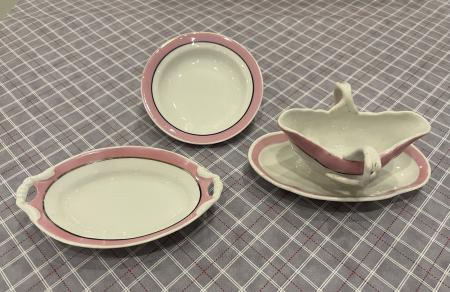
Toy Dishes, ca. 1875, maker unknown
These dishes originally belonged to Eliza Llewellen Randolph. Her father was Alfred McGill Randolph, the rector of Christ Church after the Civil War.
Alexandria History Museum at The Lyceum Collection, Gift of Betsy Thomsen
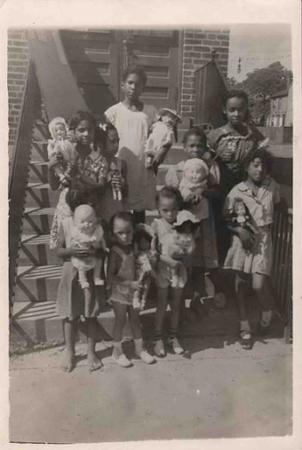
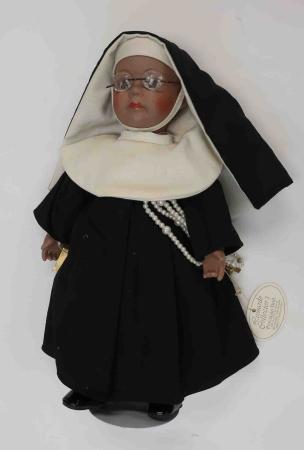
Alexandria Children at Play, Porcelain Nun Doll, ca. mid-to-late 20th century, photographer and maker unknown
Dolls often mirrored the social words children inhabited or were encouraged to imagine.
Division of African American History Collection
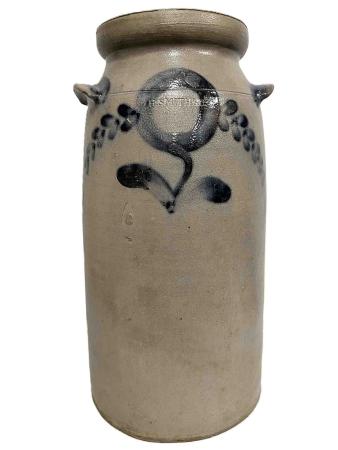
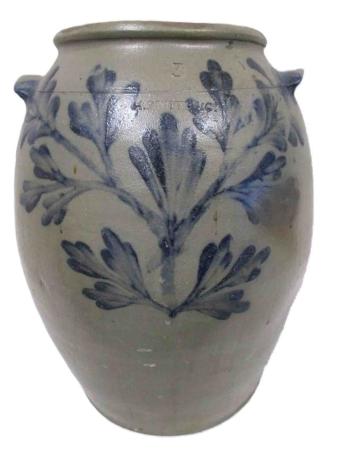
Churn and Jar, salt-glazed, brushed cobalt decoration
These wares were produced ca. 1825-1831. The “H. Smith & Co.” stamp is for Hugh Smith, the owner of the pottery on Wilkes Street. Production of the jar is attributed to David Jarbour an African American potter who worked there.
Alexandria History Museum at The Lyceum Collection, Churn: Museum Purchase, Jar: Gift of Mary Berryman
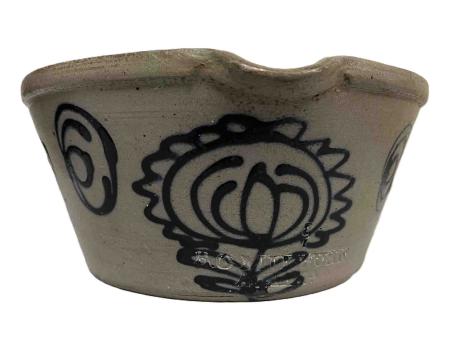
Milk pan, salt-glazed, slip-trailed cobalt decoration
Produced ca. 1841-1873, this piece was made when Benedict C. Milburn owned the pottery on Wilkes Street.
Alexandria History Museum at The Lyceum Collection, Museum Purchase
People Make Our History
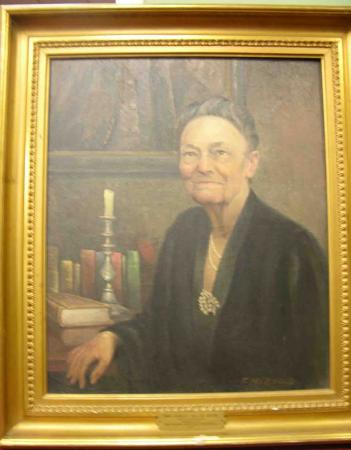
Rebecca Ramsay Reese, oil on canvas, mid-20th century, artist unknown
Lifelong Alexandria resident Rebecca Ramsay Reese (1870-1955) was a dedicated preservation advocate for the city’s historic buildings. A descendant of 18th-century Alexandria’s Ramsay family, Reese led fundraising and restoration efforts in the 1930s-1940s for sites including Gadsby’s Tavern Museum, the Stabler-Leadbeater Apothecary Museum, and the Ramsay House Visitors Center.
Alexandria History Museum at The Lyceum Collection, Gift of the Alexandria Visitor’s Center
Conservation supported by the Gadsby Tavern Museum Society
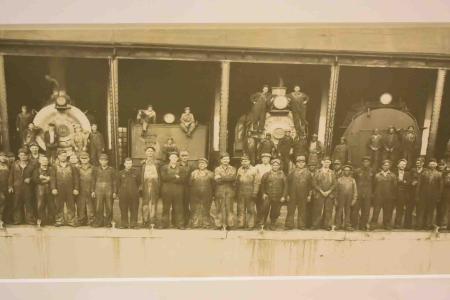
Employees of the Richmond, Fredericksburg, and Potomac Railroad (R. F. & P.) at Potomac Yard, October 11, 1940, photographer unknown
This photograph appears to include all R.F. & P. employees working at Potomac Yard, from upper-level management to engineers and laborers. Alexandria's Potomac Yard was a freight classification facility and vital interchange point for rail traffic for 75 years.
Alexandria History Museum at The Lyceum Collection, Gift of Bob Barron
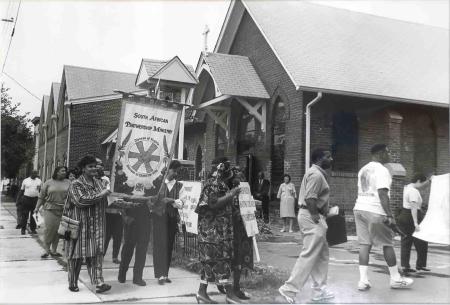
Procession, Burying Apartheid Celebration, Meade Memorial Episcopal Church, June 1994, Nina Tisara photographer
Alexandrians are shown marching in solidarity as apartheid, the government-enforced system of racial segregation in South Africa (1948–1994), came to an end. The gathering shows how Alexandria’s Black community connected international liberation movements to their own long struggle for justice at home.
Division of African American History Collection, Museum Donation
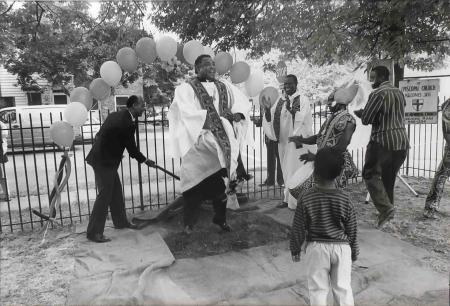
Burial of the Sign, Burying Apartheid Celebration, Meade Memorial Episcopal Church, June 1994, Nina Tisara photographer
A clergyman jumps on a symbolic “grave” marking the end of the horrors of apartheid. Tisara’s documentation reflects how Alexandrians expressed solidarity with global freedom movements while continuing their own traditions of faith-based activism.
Division of African American History Collection, Museum Donation
Private Francis Brainerd’s Service in the Defenses of Washington
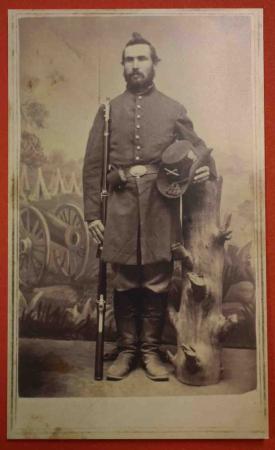
Private Francis E. Brainerd of Co. E, 1st Wisconsin Heavy Artillery was stationed at Fort O’Rourke near Alexandria in 1864-1865. Many items were saved by his family, which together provide a glimpse into daily life in the area and the Civil War more broadly.
All objects from the Fort Ward Museum Collection, Museum Purchase
Pvt. Brainerd
Reproduction of a Civil War-era carte-de-visite
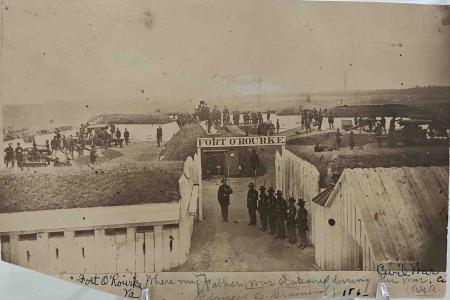
Fort O’Rourke, albumen photograph, ca. 1864-1865
As part of the Union defenses that guarded the Southern approaches to Alexandria, Fort O’Rourke protected the Mount Vernon Road and Kings Highway. This rare photograph includes the inscription in pencil along the bottom: “Where my father was stationed during the war.”
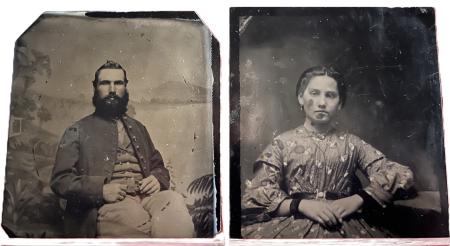
Pvt. Francis E. and wife Mary Brainerd
Tintypes, Civil War era.
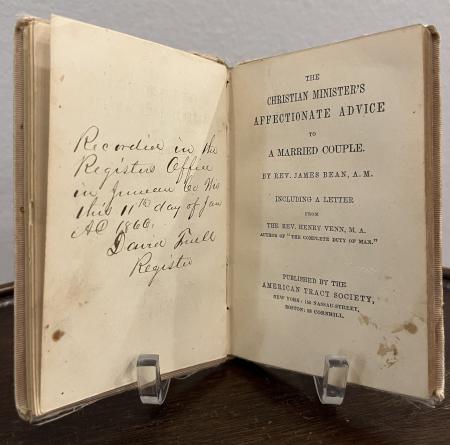
The Christian Minister’s Affectionate Advice to a Married Couple, 1820
The book’s frontispiece records the Brainerd’s marriage on January 1, 1859.
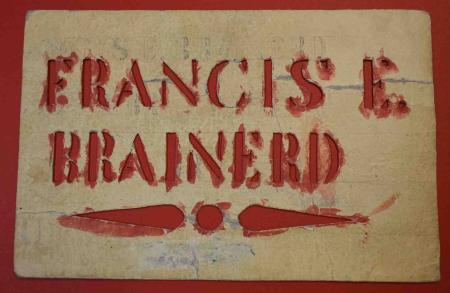
Stencil, Civil War era
Soldiers like Brainerd sometimes used stencils to neatly personalize their equipment.
Letters from Fort O’Rourke, dated March 19 and June 15,1865
Brainerd wrote his wife Mary often after enlisting. In a letter dated March 19, he describes going to St. Mary’s Catholic Church in Alexandria and hearing hymns sung in Latin. In his last letter to her from June 15, written as he waited “to be mustered out at any moment,” he anticipates their reunion: “I am so anxious to see you that I cannot contain myself.” He never made it home, dying from dysentery the day before his unit was discharged.
(Note: Transcriptions below the image of the letters retain the original spelling.)
March 19,1865
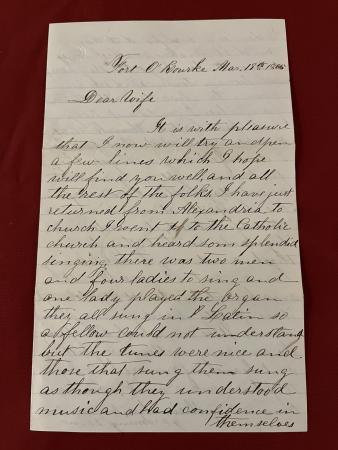
Fort O’Rourke Mar. 19th 1865
Dear Wife
It is with pleasure that I now will try and pen a few lines which I hope will find you well, and all the rest of the folks. I have just returned from Alexandria to church I went to the Catholic church and heard som splendid singing, there was two men and four ladies to sing and one lady played the organ they all sung in Latin so a fellow could not understand but the tunes were nice and those that sung them sung as though they understood music and had confidence in themselves
To day is a beautiful day and it makes me feel lones some to be oblige to stay here; whilst in town and see men going to church with their families I could not help but to feel bad; to think that I was deprived of that priveliege I don’t feel very well yet, they put me right on guard the next day after I come from the hospital it made one dreadful tired, it made my legs ach so that they forely throb, and my back fels very lame, but I guess I will make out to stand it, although it is pretty hard for me just now. It is very much like spring the weeping willows are putting out leaves, farmers have begun to plow over a week, and are trimming their shrubs and gardening some
Well dear although I am lonesome I live in hope that God will spare our lives to see each others faces again; that he will keep us in the right path and free from the evils of this world; and was it not from this hope I should be miserable. I had a letter from Ellen a few days, they had all been sick but were getting better. I saw David last night, he is getting pretty well again his cold is near gone I mailed yesterday a record of the company you let me know if you get it, and you take good care of it dear one, but I suppose I have no need of giving you any such caution, for I know you will take good care of all I send you of that kind
Well dear I have not much to write, here is two photographs of boys in this company as you will see Kellog is a cousin to George Hamilton’s wife. I shall try and get the officers photograph so you can see what for looking men are over me. Well dear my mind is in such a state that I am run ashore for something to write. You will have to excuse this uninteresting letter be cheerful dear and take good care of yourself and of our little pet bird and let me know how things are getting along give my love to all I remain your ever loving husband
F.E. Brainerd
June 15,1865
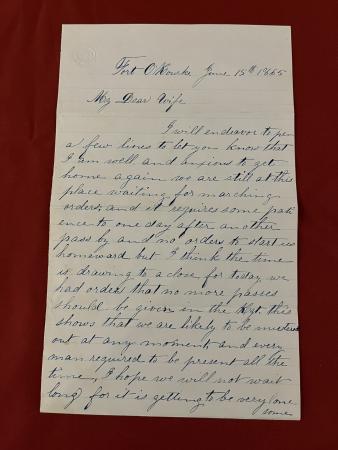
Fort O’Rourke June 15th, 1865
My Dear Wife
I will endeavour to pen a few lines to let you know that I am well., and anxious to get home again we are still at this place waiting for marching orders; and it requires some patience to one day after another pass by and no orders to start us homeward, but I think the time is drawing to a close, for today we had orders that no more passes should be given in the Rgt. This shows that we are likely to be mustered out at any moment, and every man required to be present all the time, I hope we will not wait long for it is getting to be very lone some and I can scarcely think of anything else but home and the dear ones there. Oh I hope this letter dear will find you much better, and by the time I get home I may find you quite well, it would be a great joy for me, dear one I am so anxious to see you that I can’t hardly contain myself, but I trust that before this month is ended I shall be with you and our little dear, You must excuse a short letter for there is no news to write about well take good care of yourself and try and be patient a little longer, I don’t think that it can be a great while before we shall leave. Give my love to all, and be assured that I remain your ever loving and fond husband
F. E. Brainerd
Souvenirs
Objects serve as tangible connections to personal experiences, places, and moments in time. These souvenirs can capture the emotions and memories associated with travel, events, or everyday life, transforming them into lasting keepsakes and future objects for collecting.
on display
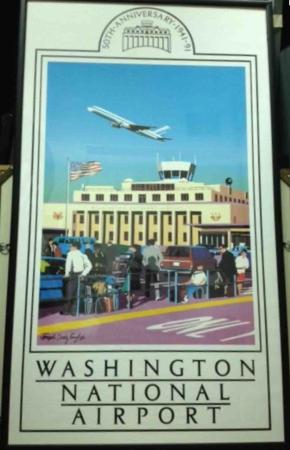
Washington National Airport Commemorative Poster, 1991
Washington National Airport, now known as Ronald Reagan Washington National Airport, opened June 16, 1941 and marked its 50th anniversary in 1991.
Alexandria History Museum at The Lyceum Collection, Gift of Gregory S. Lloyd
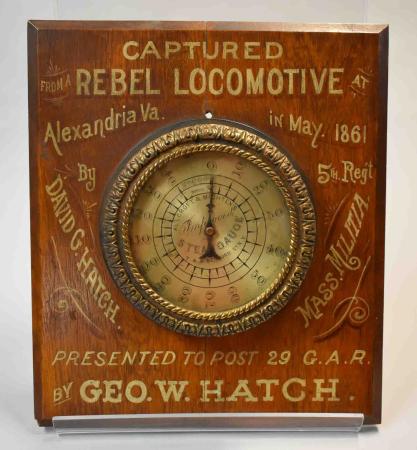
Locomotive Steam Gauge
During the Federal occupation of Alexandria in May 1861, Union troops took control of the town’s important railroad facilities. Private David G. Hatch, of the 5th Massachusetts Infantry, took this steam gauge as a “trophy” from one of the two locomotives stranded in the city. Hatch mustered out of his 90-day regiment on July 31, 1861, returning home with his war souvenir. He re-enlisted shortly after in the 16th Massachusetts Infantry but would never see his memento from Alexandria again. He was killed July 2, 1863 at the Battle of Gettysburg. Hatch’s father, George, presented David’s steam gauge to Post 29 of the Grand Army of the Republic to be displayed in its veterans’ hall.
Fort Ward Museum Collection, Museum Purchase
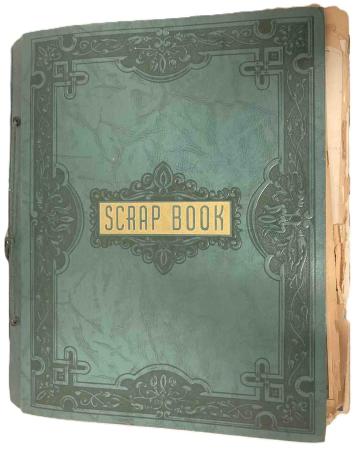
Scrapbook assembled by the Snart family, 1940s
In 1940, George Snart, a former pilot for the British Air Ministry, was posted in the United States as a civilian to facilitate the manufacture of British aircraft in this country. His wife Edith and children June and Colin joined him in Virginia a few months after he arrived. The family kept this scrapbook to document their time living in Alexandria.
The Alexandria History Museum at The Lyceum Collection, Gift of Colin Snart
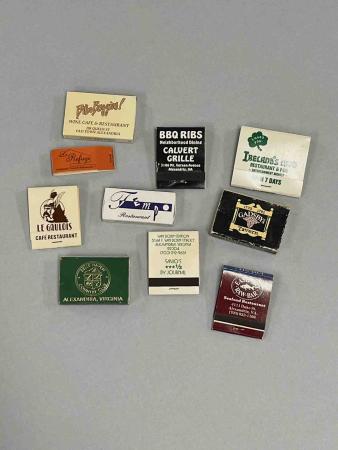
Matchbooks, late 20th and early 21st century
These matchbooks were acquired from Patricia S. “Patsy” Ticer’s estate and provide a glimpse into this civic leader’s life, as well as local commerce and entertainment. Patsy Ticer was mayor of Alexandria from 1992-1996, and served as a Virginia State Senator from 1996-2012.
The Alexandria History Museum at The Lyceum Collection
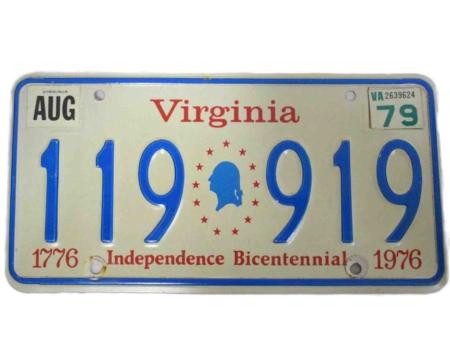
U.S. Bicentennial Virginia License Plate, ca. 1976
Alexandrian Raymond A. Gallagher displayed this license plate on his 1972 Pontiac during the United States Bicentennial celebration. Note the 13 stars surrounding the silhouette of George Washington.
The Alexandria History Museum at The Lyceum Collection, Gift of Raymond A. Gallagher
Trunk belonging to Capt. Rufus D. Pettit, 1st New York Light Artillery, Battery B, ca. 1861-1865
Capt. Rufus D. Pettit was stationed in the Arlington/Alexandria area of the Defenses of Washington, a system of Union forts that protected the capital during the Civil War. Later he served in the 12th Veteran Reserve Corps, where he was assigned to the District of Alexandria, Provost Department (military police). While here, he inspected guards and picket posts along the main approaches to Alexandria. Pettit's trunk was passed down through his family and donated in 2025 by a descendant.
Fort Ward Museum Collection, Gift of Matthew Anderson